
Last updated September 20, 2026
Free on-site gate assessment - hinges, posts, and your LiftMaster or Nice gate operator checked before anything is quoted
The assessment is free and the quote is the invoice.
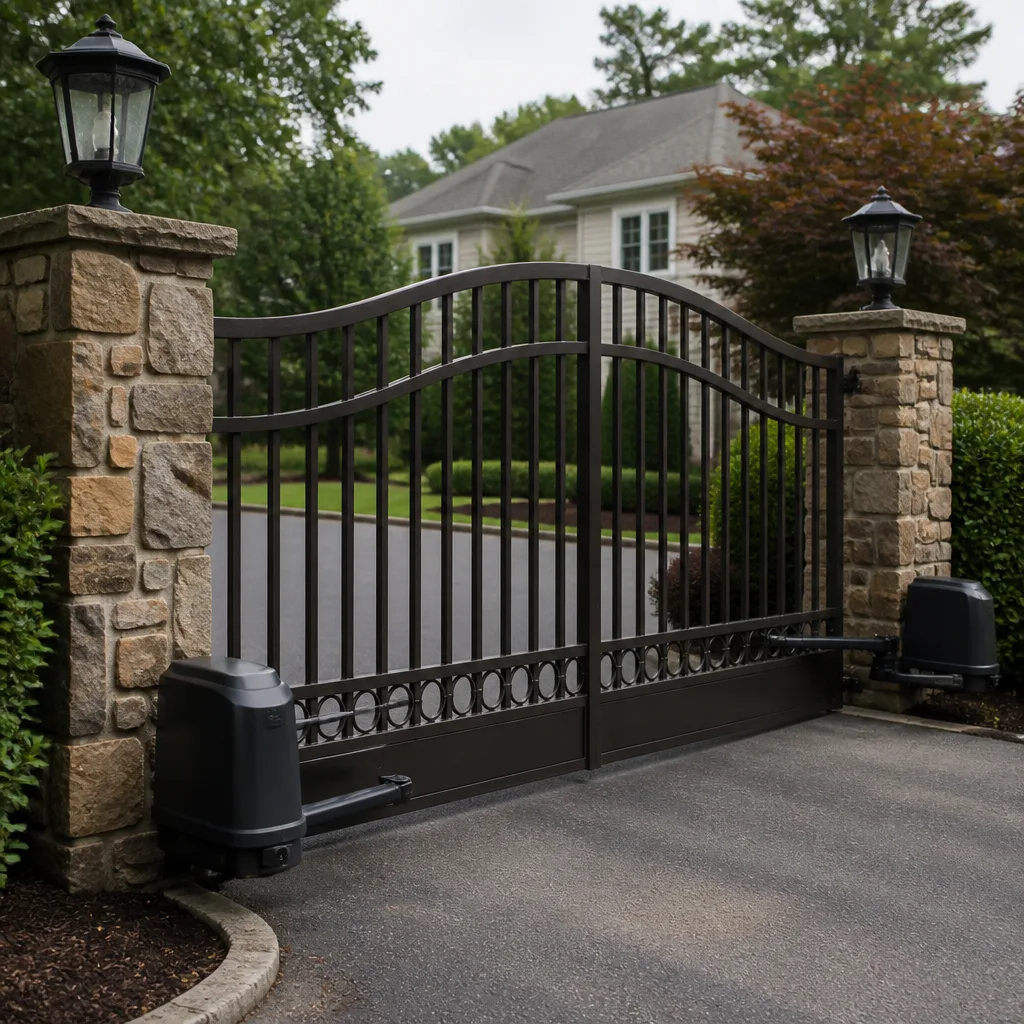
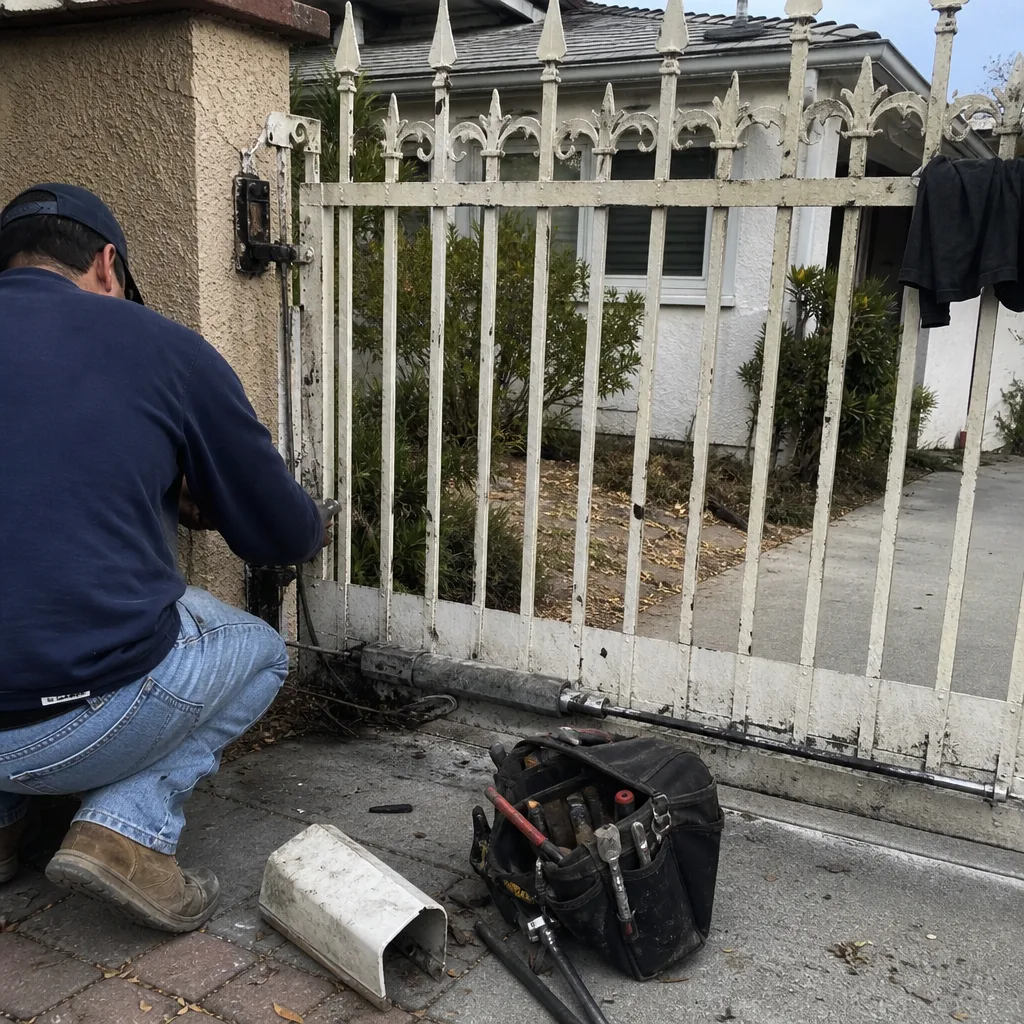 Before
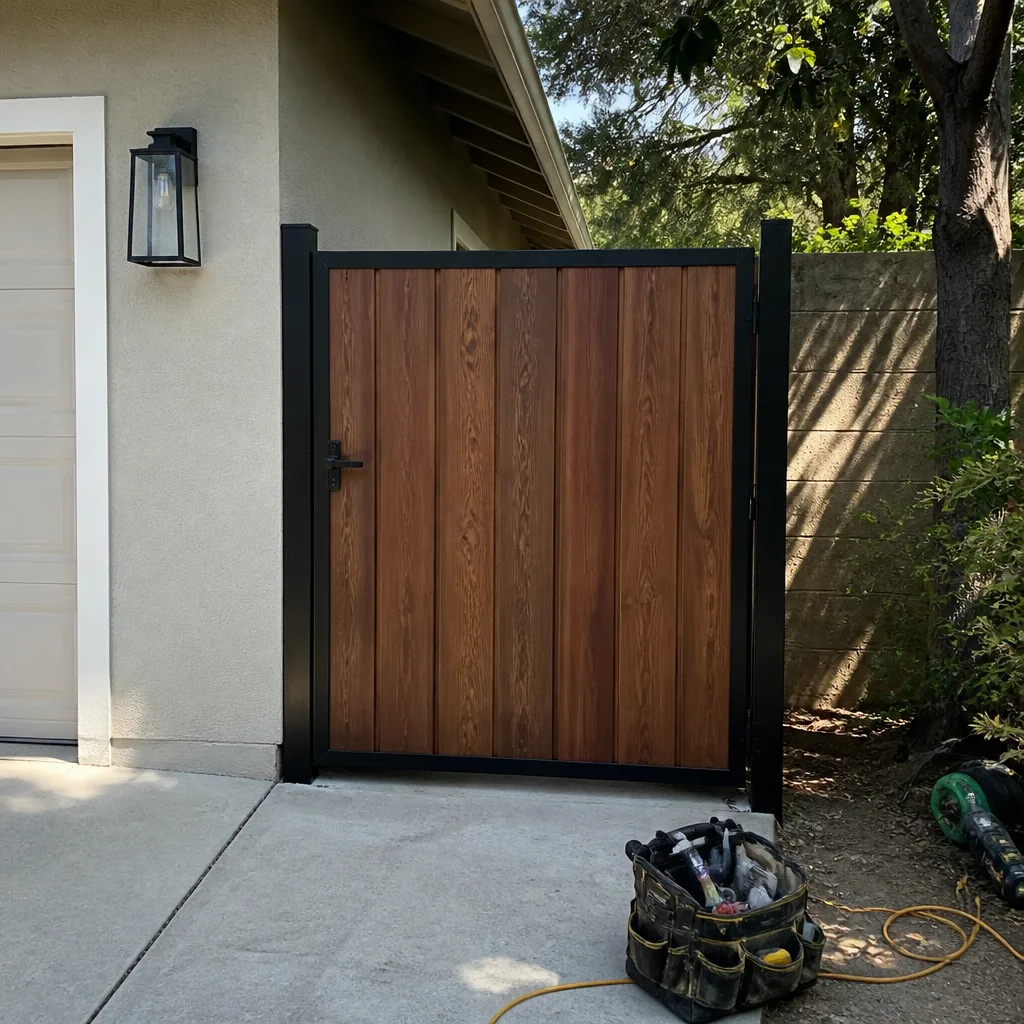 After
After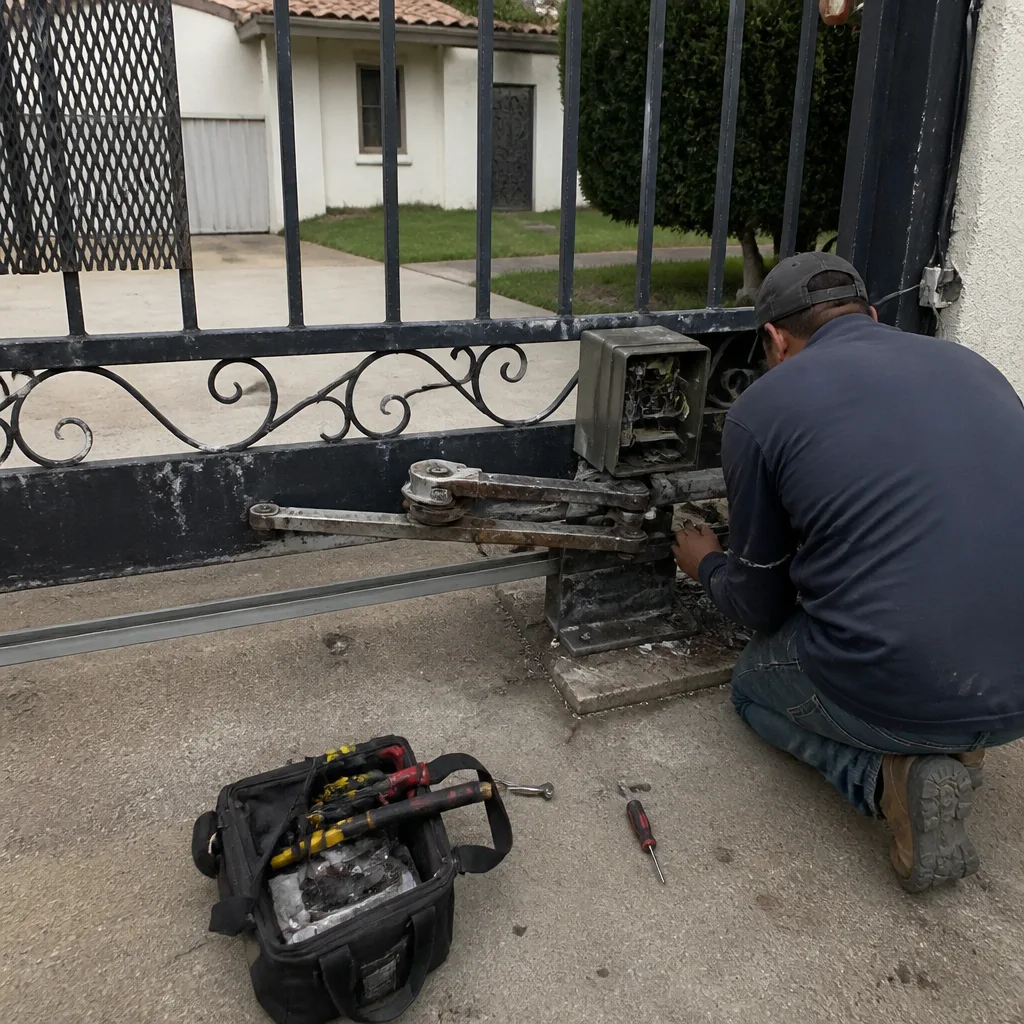 Before
 After
After Before
 After
AfterThe Complete Guide to Gate Repair in Arcadia
The gate motor is the last thing a good technician replaces, but it’s almost always the first thing a homeowner gets quoted for. In Arcadia, where drought-compacted soil and 1990s tract-home wiring create predictable failure patterns, that quote is often addressing the wrong component entirely. This guide walks through gate failure the way a working technician actually diagnoses it, starting with the limit switches, ground connections, and hinge hardware that cause most Arcadia gate problems. For a deeper look at whether to tackle issues yourself or call in a pro, see our DIY vs Professional Gate Repair: The Arcadia Homeowner’s Decision Guide. You’ll learn what each repair involves, what it should cost in this market, and what documentation protects you from paying twice for the same fault.
Quick Answer
Gate repair in Arcadia typically costs $180 to $340 for mechanical adjustments like hinge realignment or limit-switch resets, and $450 to $1,100 when a circuit board or motor replacement is genuinely involved. For a detailed breakdown of what drives these numbers, see our Gate Repair Cost Breakdown: The Arcadia Homeowner’s Reference for 2026. The most common Arcadia gate failures trace back to three systems: limit switches, ground connections, and hinge hardware, not the motor itself. A complete repair should always include a written price before work starts and a photographic record of what was found and changed.
Table of Contents
- The Three Systems That Actually Fail First
- Limit Switches: The Misdiagnosed Component
- Ground Connections and Arcadia’s Soil Cycle
- Hinge Hardware: The Mechanical Culprit
- Reading Blink Codes Before You Call
- Arcadia’s 1990s Tract-Home Wiring Problem
- What a Written Repair Scope Should Include
- Why Photographic Documentation Matters
- What Gate Repair Costs in Arcadia
- Common Mistakes to Avoid
- When to Call a Professional
- Frequently Asked Questions
BeforeAfterThe Three Systems That Actually Fail First
When a gate stops working in Arcadia, the assumption is almost always the motor. The motor sits in a metal box, it hums or stays silent, and it’s the most expensive component in the system. But in our experience, the motor is the last component to fail because it’s the most mechanically isolated. The components that actually fail first are the ones exposed to movement, weather, and electrical stress: the limit switches that tell the motor when to stop, the ground connections that complete the electrical circuit, and the hinge hardware that carries the gate’s entire weight.
Here’s the order a working technician follows when diagnosing a dead gate in Arcadia:
- Power check: Is the outlet or breaker delivering power? In Arcadia, plug-in units on garage circuits sometimes share a GFCI that has tripped from a passing storm.
- Limit switch inspection: Has the gate traveled past its stop point? A gate that grinds or reverses at the end of travel has a limit-switch problem, not a motor problem.
- Ground wire inspection: Is the ground connection at the control board or the motor chassis intact? Arcadia’s alkaline soil accelerates corrosion on copper, especially where the wire enters the ground or a conduit body.
- Hinge and bracket inspection: Has a hinge plate shifted on its mounting post? A gate that sags, scrapes, or binds is transferring mechanical strain into the motor, which then draws excess current and burns out.
- Motor test: Only after the first four checkpoints clear does a good technician apply direct power to the motor and measure its amp draw.
This sequence matters because it determines what you pay. A limit-switch reset is a sub-$200 repair. A motor replacement is a $500 to $1,100 job. If the company you call starts with the motor, you’re not getting a diagnosis; you’re getting a sales pitch.
Limit Switches: The Misdiagnosed Component
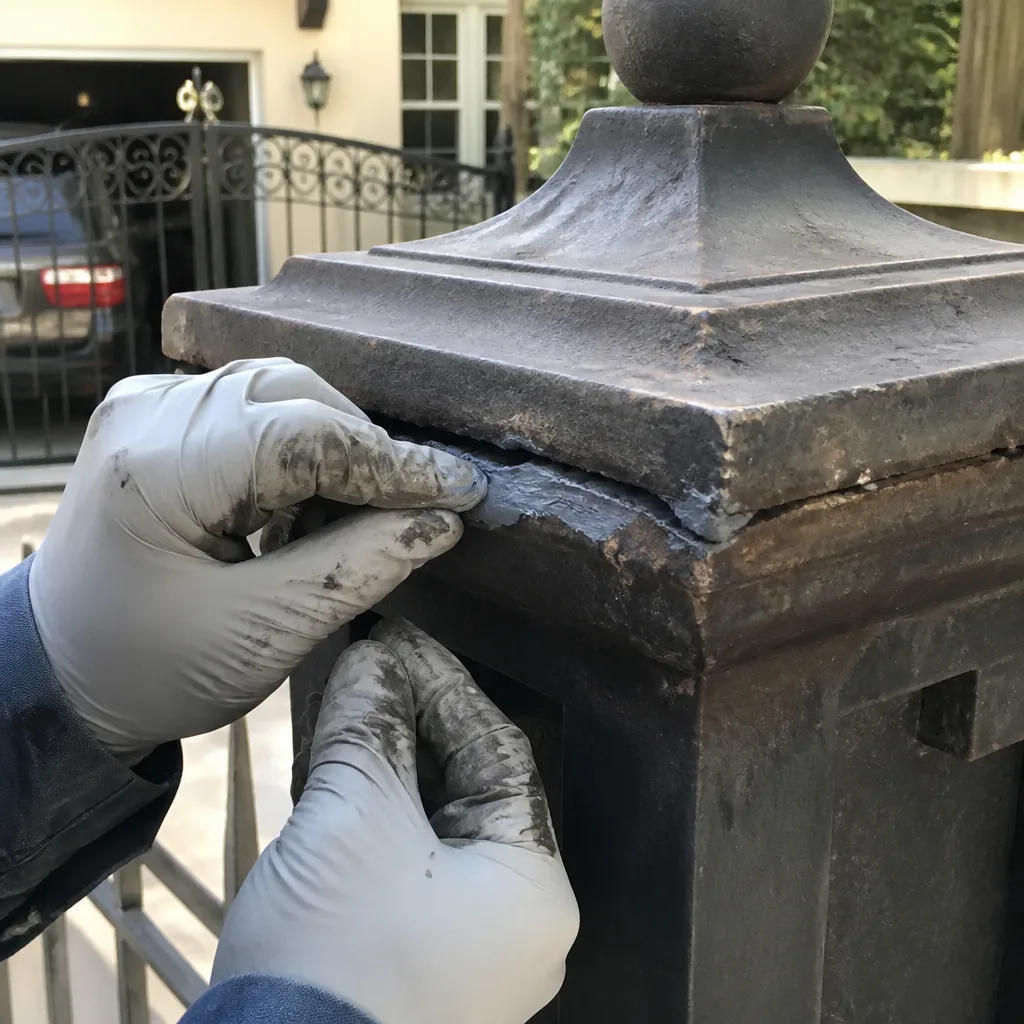
A limit switch is the component that tells the gate operator where the gate’s travel ends. On most residential gates in Arcadia, this is either a mechanical switch with a small arm that gets physically tripped, or a magnetic reed switch that closes when a magnet on the gate passes over it. When a limit switch drifts, the gate doesn’t know it has reached the closed position, so it either keeps pushing against the endpoint, reverses unexpectedly, or stops short with a fault light blinking on the control board.
The most common misdiagnosis we see in Arcadia is a gate that refuses to close fully, or reverses immediately after closing. Homeowners are told the motor is failing or the board is bad. In reality, the limit switch has shifted by a fraction of an inch, usually because the mounting bracket has vibrated loose or the switch arm has accumulated enough debris to change its tripping point.
Here’s what a proper limit-switch repair involves:
- Removing the switch cover and inspecting the switch arm, cam, or magnetic trigger for wear, looseness, or corrosion
- Bench-testing the switch for continuity so the failure is confirmed, not assumed
- Resetting the travel limits to the gate’s actual open and closed positions, then cycling the gate five to ten times to confirm consistent stopping
- Photographing the final limit positions and recording them in writing so any future drift is measured against a known reference, not against a guess
A limit-switch repair in Arcadia typically runs between $160 and $230, including the switch itself if replacement is needed. That’s the price range a good shop should state in writing before anyone touches the gate.
Ground Connections and Arcadia’s Soil Cycle
Arcadia sits on soil that expands when winter rains arrive and contracts during summer drought. That’s a building-site fact, but it matters for gate systems because many residential gate conduits in this city run underground from a garage or post-mounted outlet to the gate operator. When the soil cycles through expansion and contraction, underground conduit joints shift, and the copper ground wire inside can pull loose from its lug or shear inside the conduit body.
The result is a gate that behaves erratically: it opens but won’t close, it trips the breaker intermittently, or the keypad and remote controls both stop responding even though the board appears to have power. A bad ground creates resistance, and resistance generates heat, and heat eventually kills control boards. So what started as a soil-induced ground fault becomes a $400 board replacement that would never have been necessary if the ground had been checked first.
In Arcadia specifically, we see three recurring ground-fault locations:
- The conduit transition point where the wire leaves the garage wall and enters the ground. Moisture sits there almost year-round in this climate, and the copper corrodes inside the insulation.
- The grounding lug inside the operator housing. Vibration from gate movement gradually loosens the screw, and the connection resistance climbs.
- The splice at the post-mounted outlet. On Arcadia homes built before current code revisions, the gate circuit sometimes shares a ground with a pool pump or landscape lighting circuit, and the shared ground carries noise that confuses the logic board.
A ground-fault diagnosis requires a multimeter and about twenty minutes of methodical testing. The fix is usually a new lug, a cleaned connection, or a short ground wire replacement. When we hand over a repair report for this, it includes the resistance reading we measured, the reading after the repair, and a photograph of the new connection. You can’t argue with a number.
Hinge Hardware: The Mechanical Culprit
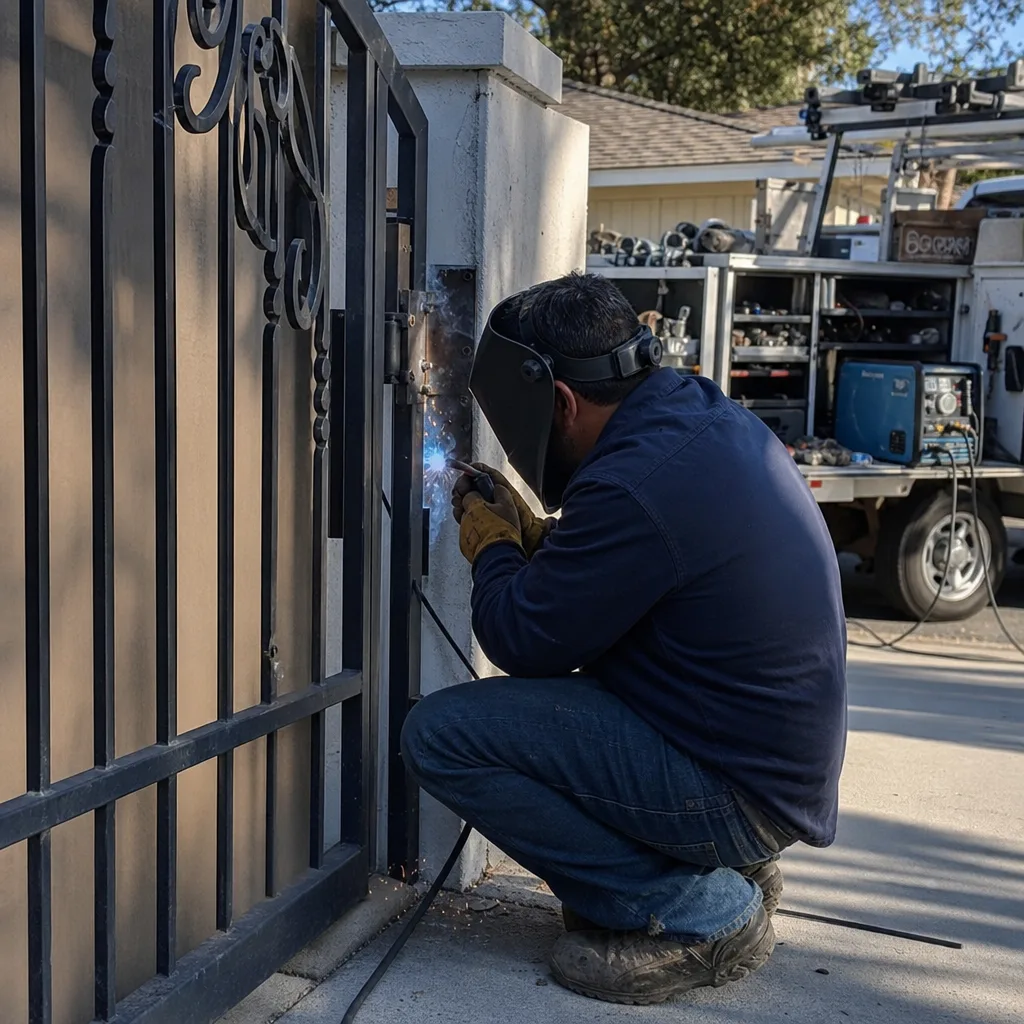
Arcadia’s post-tensioned fences and decorative steel gates look substantial, but they are often hung on hinge hardware that was never designed for the gate’s actual weight. A gate that weighs 400 pounds on hinges rated for 250 pounds will sag. The sag changes the gate’s center of gravity, which forces the opener to work harder at the beginning of every cycle, which shortens the motor’s life and eventually misaligns the photo-eye safety beam.
This is the failure mode that gets misdiagnosed as motor strain more often than any other. A homeowner reports that the gate has started moving slower, or that the motor sounds labored. The quote comes back as a motor replacement. But the motor isn’t the problem; the hinge post has leaned out of plumb, or the hinge plates themselves have worn their pin holes into ovals, creating play that translates into motor load.
Here’s what we check on every hinge-related gate repair in Arcadia:
- The post’s verticality, measured with a level on two faces. A post that has moved as little as half an inch out of plumb can create enough gate drag to add measurable amp load to the motor.
- The hinge pin holes. Oval wear means the gate is cycling through a wobble with every opening.
- The hinge fasteners. Arcadia’s older installations often used lag bolts into stucco-covered posts, and the stucco holds moisture against the bolt heads, accelerating rust.
- The gate’s overall weight distribution. A gate that was originally balanced but later modified (a decorative panel added, a heavier lock installed) may need a hinge upgrade or a counterweight adjustment.
Mechanical hinge repair generally runs $200 to $380 in this market, depending on whether the post needs to be reset or the hinges need replacement. It’s a repair that extends the entire system’s life, and it’s the kind of work we document with photos of the before and after measurements.
Reading Blink Codes Before You Call
Most gate operators in Arcadia, including units from Ghost Controls, DoorKing, and Elite, have a diagnostic LED that blinks out a code when something fails. That blink pattern is the single most useful piece of information you can bring to a repair call, because it distinguishes a board fault from a motor fault before anyone disassembles anything.
The tricky part is that the codes are not universal. A DoorKing board might use two blinks for a photo-eye obstruction and five for a motor overcurrent. A Ghost Controls unit uses a different sequence entirely. But the concept is the same: the board is reporting which input or sensor it considers failed, and a trained technician can read that pattern in under a minute.
Here’s the step-by-step for a residential gate that won’t operate:
- Locate the LED on the control board. It’s usually visible through a small window on the operator cover, or the cover lifts off to expose it.
- Note the pattern: how many blinks, how long the pause between groups, and whether the blinking is steady or erratic.
- Check the operator’s manual for the code legend. Most manufacturers post these online as a single-page PDF.
- Write the code down. Include the brand name, the model number from the operator’s data plate, and the blink pattern. Bring that information to the phone call.
- If the code is not documented in the manual, photograph the board with the LED lit and note whether the gate moved at all before the fault appeared.
Knowing the code doesn’t mean you should attempt the repair yourself. Gate operators contain capacitors that hold a charge even after power is disconnected, and a control board can deliver a shock that stops your heart. But knowing the code means you can have a smarter conversation with any repair company, and it means the company that shows up doesn’t have to bill you an hour of diagnostic time to re-discover what the board was already reporting.
Arcadia’s 1990s Tract-Home Wiring Problem
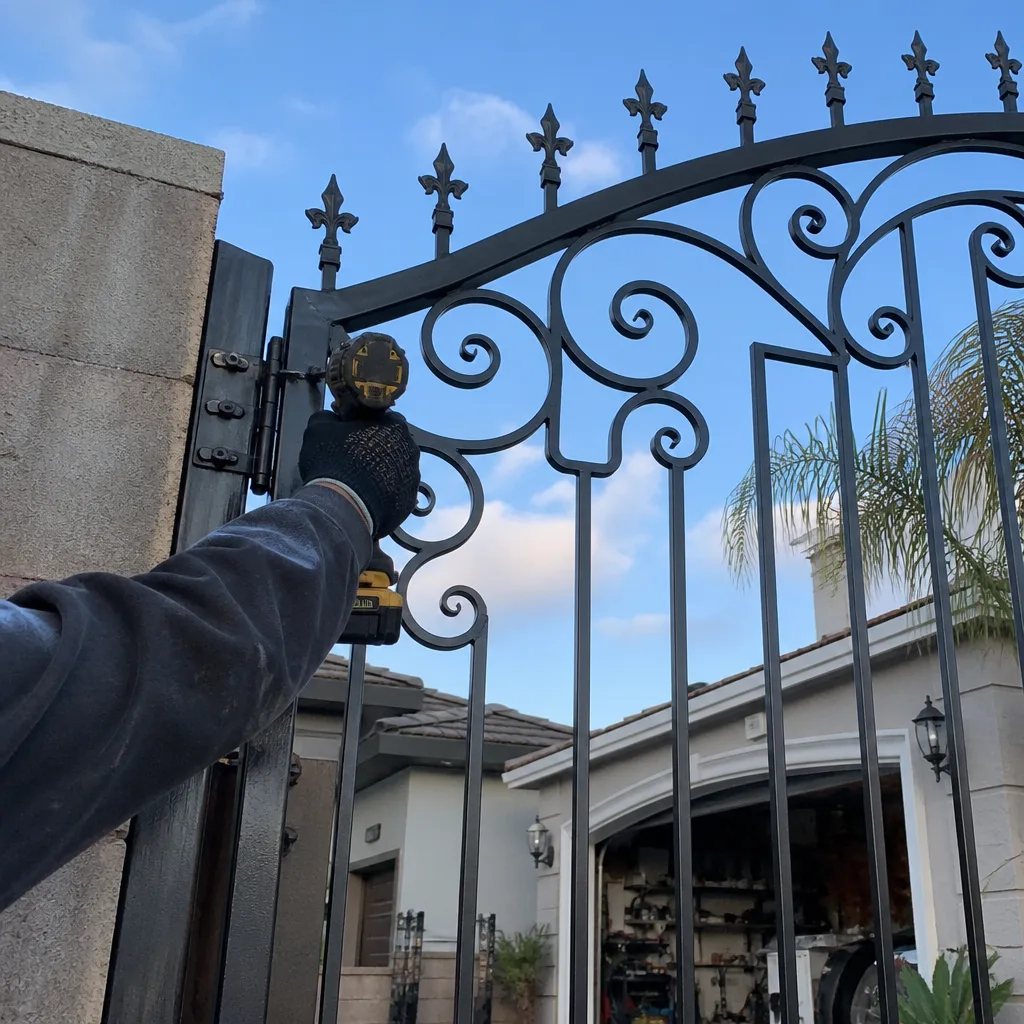
A large share of Arcadia’s residential housing stock went up during the 1990s construction boom, and the gate installations from that era share three wiring weaknesses that we still see on service calls today.
First, many of those installations ran low-voltage control wire in the same conduit as 120-volt line power. The current in the line voltage wire induces a field in the control wiring, and on humid Arcadia evenings or during rain, that induced noise is enough to confuse the logic board. The gate opens by itself, or the remote range drops to a few feet, or the board resets at random. The fix is separating the two circuits, which in an old installation often means running new conduit and re-pulling wire.
Second, the 1990s crews sometimes used wire nuts in underground splice boxes. Wire nuts have no place below grade, but the practice was common because it was fast. Twenty-five years later, the splice box is full of corroded copper and the gate circuit fails intermittently. We find these all over Arcadia, and the repair involves cutting back the corroded ends, making a proper splice with heat-shrink and sealant, or replacing the entire segment.
Third, the original installations often grounded the gate operator to the nearest metal post rather than to a dedicated ground rod. A steel post stuck in the ground reads as a functional ground on the installer’s meter the day the job is finished, but over decades the steel rusts and the soil around it shifts, and the ground resistance climbs until the system starts misbehaving. The correct repair is a driven ground rod or a home run back to the building’s verified ground bar.
These three wiring issues are specific to this city’s building era. They’re also the reason a cheap repair quote that only replaces the board or the remote receiver often fails within a year. The board was never the problem. The wiring was.
What a Written Repair Scope Should Include
Every gate repair in Arcadia, no matter how small, should produce a written scope before the work begins. If the company you’re talking to won’t put the price in writing, you’re hiring a guess. A proper written scope for a gate repair includes specific language that lets you compare quotes on equal terms, and it covers three categories of work: weld, electrical, and mechanical.
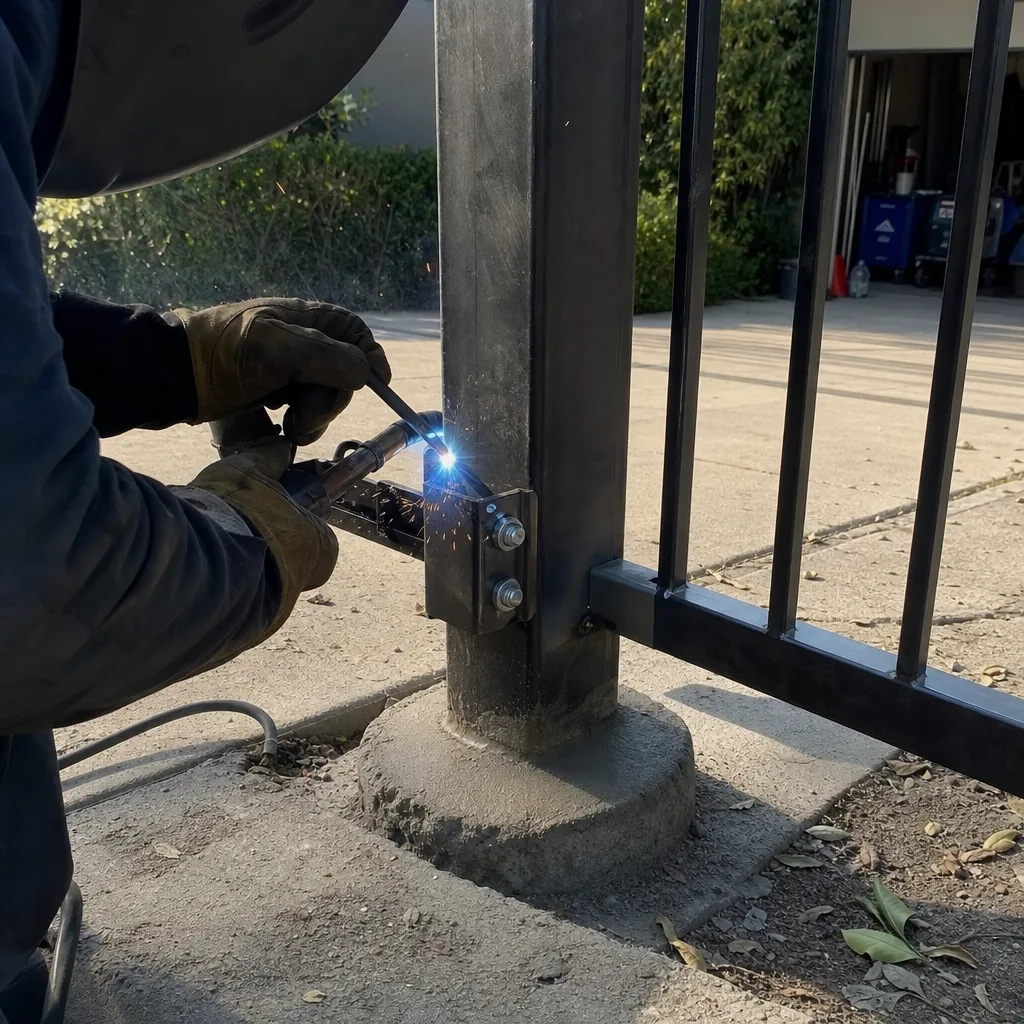
For a weld repair, the scope should state:
- Which components are being welded (hinge plate, gate frame, post bracket)
- The welding process (MIG vs. stick is irrelevant to most homeowners, but the scope should state that the work will be done by a certified welder)
- Whether the gate must be removed and the work done off-site, or whether welding is done in place
- What finish protection is included (paint, primer, or touch-up after grinding)
- A price that is flat, not hourly
For an electrical repair, the scope should state:
- Which component is being replaced (control board, transformer, receiver, photo-eye) with the brand and part number
- Whether the repair includes rewiring any portion of the circuit
- What the technician will test after installation (amp draw, limit settings, safety reversal)
- Whether the price includes programming the remotes and keypad
- A statement that the repair is covered by a written warranty, with the warranty period stated in months
For a mechanical repair, the scope should state:
- Which hardware is being replaced (hinges, brackets, rollers, wheels) and the material of the replacement
- Whether the post is being reset and how (concrete, epoxy, mechanical anchor)
- What the gate’s clearance and level should be when the work is done
- Whether the repair includes re-balancing the gate or adjusting the opener’s force settings
- A flat price
When all three categories are itemized this way, you can compare one company’s $900 quote against another’s $1,400 quote and see exactly what you’re paying for. If a quote just says “gate repair” and a number, it’s not a scope. It’s a guess. The Gate Repair in Arcadia page on our site details how these scopes work for common failure modes.
Why Photographic Documentation Matters
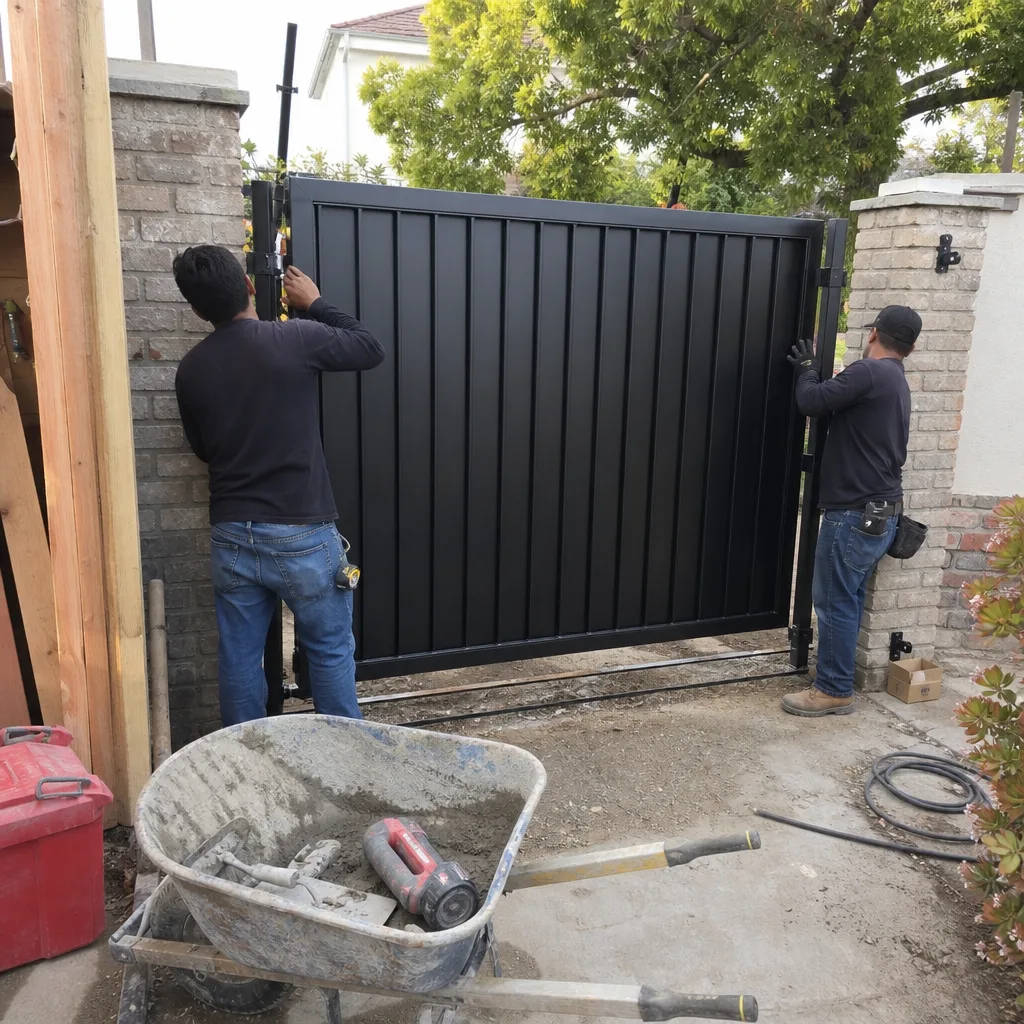
The difference between a gate company that charges you once and a gate company that charges you twice is often a camera. When a technician adjusts a limit switch, they’ve changed a setting from one position to another. If they write down the new position and photograph it, the next technician who touches that gate doesn’t start from zero; they start from the documented reference point.
This is the single most underrated part of gate repair in Arcadia, and it’s the reason we built the practice into every service call. A limit-switch reading is a number. A hinge plate position is a measurement. A ground connection is a resistance value. All three are reproducible, and all three can be photographed and logged. When they are, the next repair call on that gate starts with evidence instead of discovery, and the homeowner pays for the fix, not for the re-diagnosis.
Here’s an example of what that looks like in practice. A Misty Mountain resident calls us about a gate that reverses before fully closing. We find the limit switch has drifted past the closed position by about 12 degrees of travel. We reset it, cycle the gate, confirm it stops in the right place, and photograph the switch position and the limit cam. We hand the homeowner a written record with the part number, the before and after positions, and the photos. Six months later, if the same gate drifts again, the fix starts from a known position and takes twenty minutes instead of an hour of trial and error.
That’s the commercial access-control habit applied to residential gates. It’s the same documentation discipline Adrian Vance brought to gate motor and opener work in Arcadia when the company started in 2014, and it’s the reason our repeat customers pay less per repair over time.
What Gate Repair Costs in Arcadia
Gate repair pricing in Arcadia is more consistent than you might expect once you strip out the sales-driven quotes. Here’s what we’re seeing in this market for the most common repair categories as of this year:
- Limit-switch reset or replacement: $160 to $230
- Photo-eye realignment or replacement: $140 to $220
- Hinge replacement (set of two): $200 to $350, depending on whether post adjustment is needed
- Post re-setting in concrete: $300 to $550, depending on access and post size
- Control board replacement: $350 to $650, including programming
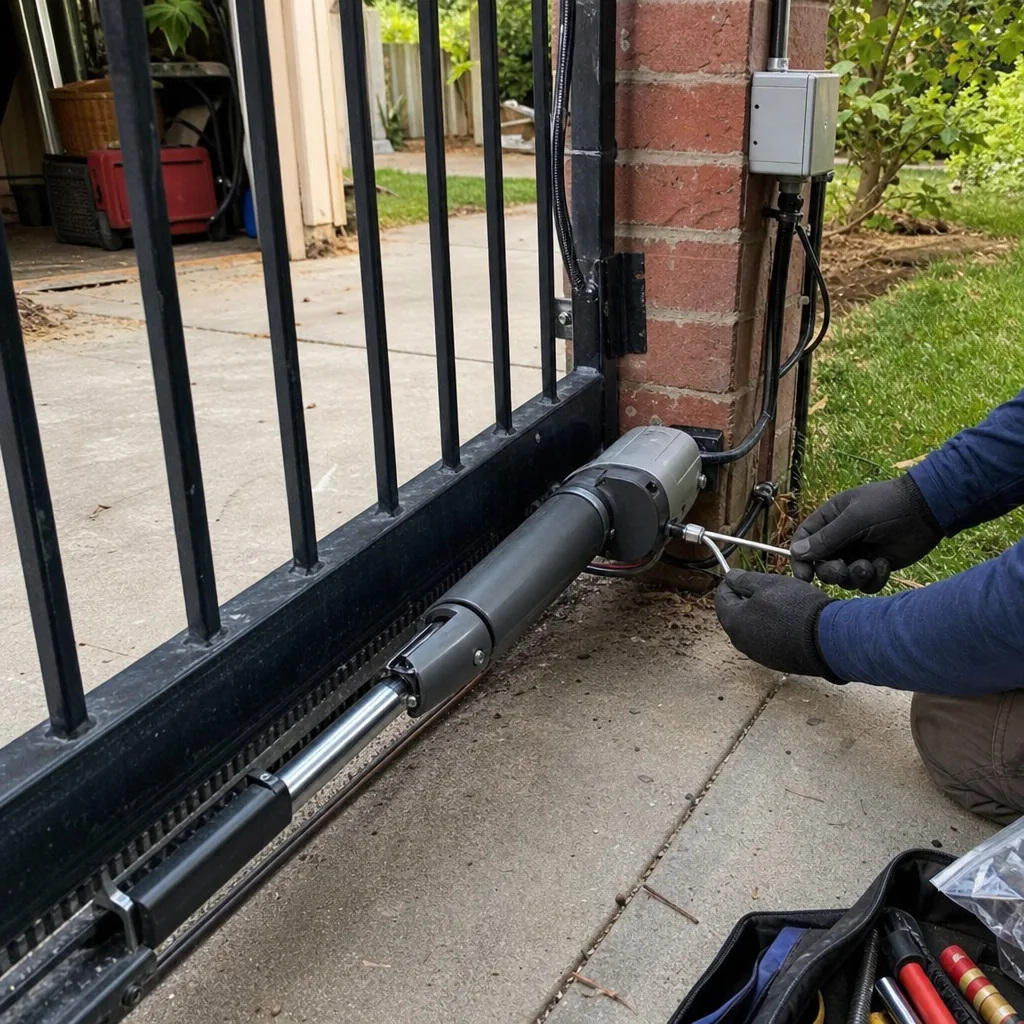
- Motor replacement (swing or slide arm operator): $500 to $1,100, depending on brand and whether the arm bracket is reusable
- Full ground-wire repair with new rod: $250 to $450
- Gate frame welding repair: $280 to $600, depending on the extent of the weld and finish work
These are flat ranges for standard residential gates. If your gate is oversized, ornamental, or on a hillside lot in the Arcadia foothills, the numbers can move. The important rule is that whatever price you’re quoted should be written and itemized before work begins. A company that won’t state a price on the page or in writing is likely to change the number after the gate is apart on the ground. Adrian Vance made written pricing the first rule of the company’s operation over a decade ago, and it’s the reason every gate installation in Arcadia and every repair starts with the same document.
Common Mistakes to Avoid
- Replacing the motor before checking the limit switches. Most gate failures in Arcadia are limit-switch or ground issues, not motor failures. A motor replacement quote without a limit-switch inspection is a red flag.
- Ignoring the gate’s mechanical condition. A sagging hinge or a leaning post will destroy a new motor within a couple of years. Fix the mechanical before the electrical.
- Accepting a verbal quote. If the scope isn’t written and itemized, the number can change after the gate is disassembled. Always insist on a written price before work starts.
- Skipping the photo-eye check. A misaligned photo-eye is the most common cause of a gate that reverses before closing. It’s a two-minute fix that shouldn’t cost more than a service call minimum.
- Not documenting the repair. If the technician doesn’t leave you a record of what was changed and what the new settings are, the next repair call starts from scratch. You’re paying for rediscovery.
- Sharing a ground circuit with a pool pump or landscape lighting. On older Arcadia homes, this is common and it creates intermittent behavior that no board replacement will fix.
- Waiting until the gate is fully dead. A slow, noisy, or binding gate is telling you something. Catching hinge wear or a drifting limit switch early costs a fraction of a full motor replacement.
When to Call a Professional
Some gate problems are worth investigating yourself, like checking that the breaker is on or noting the blink code before you call. But the actual repair of a gate operator, its electrical connections, or its hinge hardware is not a weekend project. Gate operators store electrical charge in their capacitors even after the power is off, and a discharge across the wrong path can be lethal. Welding a broken gate frame requires equipment, training, and a controlled work area. Resetting a leaning post means digging, forming, and pouring concrete in a location where the gate must remain off its hinges for a full cure cycle. Vance Gate Repair Arcadia offers Gate Repair services with free estimates in Arcadia, and we always put the written scope in your hand before any work starts. Call (562) 267-0589.
Frequently Asked Questions
Most gate repairs in Arcadia run between $180 and $340 for mechanical and limit-switch work, and $450 to $1,100 when a control board or motor replacement is truly required. The exact number depends on what has failed, which is why a proper diagnostic should come before any quote. Call (562) 267-0589 for a written estimate on your specific gate.
Yes, for most limit-switch, photo-eye, and hinge repairs, we can typically dispatch a technician to Arcadia the same day the call comes in. Board and motor replacements depend on part availability, but the diagnostic visit can usually happen within twenty-four hours. A live person answers the phone at any hour at (562) 267-0589.
We service nine major gate-automation brands including Ghost Controls, DoorKing, Elite, Mighty Mule, and several others. We do not steer customers toward a single brand or push replacement when a repair is what the system needs. The brand label on the operator tells us the wiring diagram; it doesn’t change the diagnostic process.
A gate that reverses before closing is usually reporting a misaligned photo-eye or a limit switch that has drifted past the closed position. Both are repairable in under an hour by a technician who knows how to read the board’s diagnostics. It’s rarely a motor problem.
Yes. Every job receives a written scope and a written price before any work begins, with no exceptions. If the repair requires additional work that wasn’t visible during the estimate, we stop, document the new finding, and get written approval before proceeding.
Bring us the written estimate and we’ll review it at no cost as a second opinion. We’ll tell you whether the quote matches the described failure, whether anything is missing from the scope, and whether the price is competitive for Arcadia. The review is free and carries no obligation.
The Bottom Line
Gate repair in Arcadia is a diagnostic discipline before it’s a mechanical trade. The motor you’re afraid to hear about is usually not the motor that failed. Limit switches drift, ground connections corrode in this city’s specific soil and climate cycle, and hinge hardware carries loads it was never sized for. When you know what to look for, and you insist on written pricing and photographic documentation, you stop paying discovery fees and start paying for fixes. A good gate company should hand you evidence: a written scope, a measured reading, a photo of the new part installed. If they don’t, you’ve got the wrong company. The Vance Gate Repair Arcadia home page has more on our full service range, and we’re always at (562) 267-0589.
Written by Adrian Vance, Owner at Vance Gate Repair Arcadia, serving Arcadia since 2014. Explore more guides & resources on gate repair and maintenance.