
Last updated September 20, 2026
Free on-site gate assessment - hinges, posts, and your LiftMaster or Nice gate operator checked before anything is quoted
The assessment is free and the quote is the invoice.

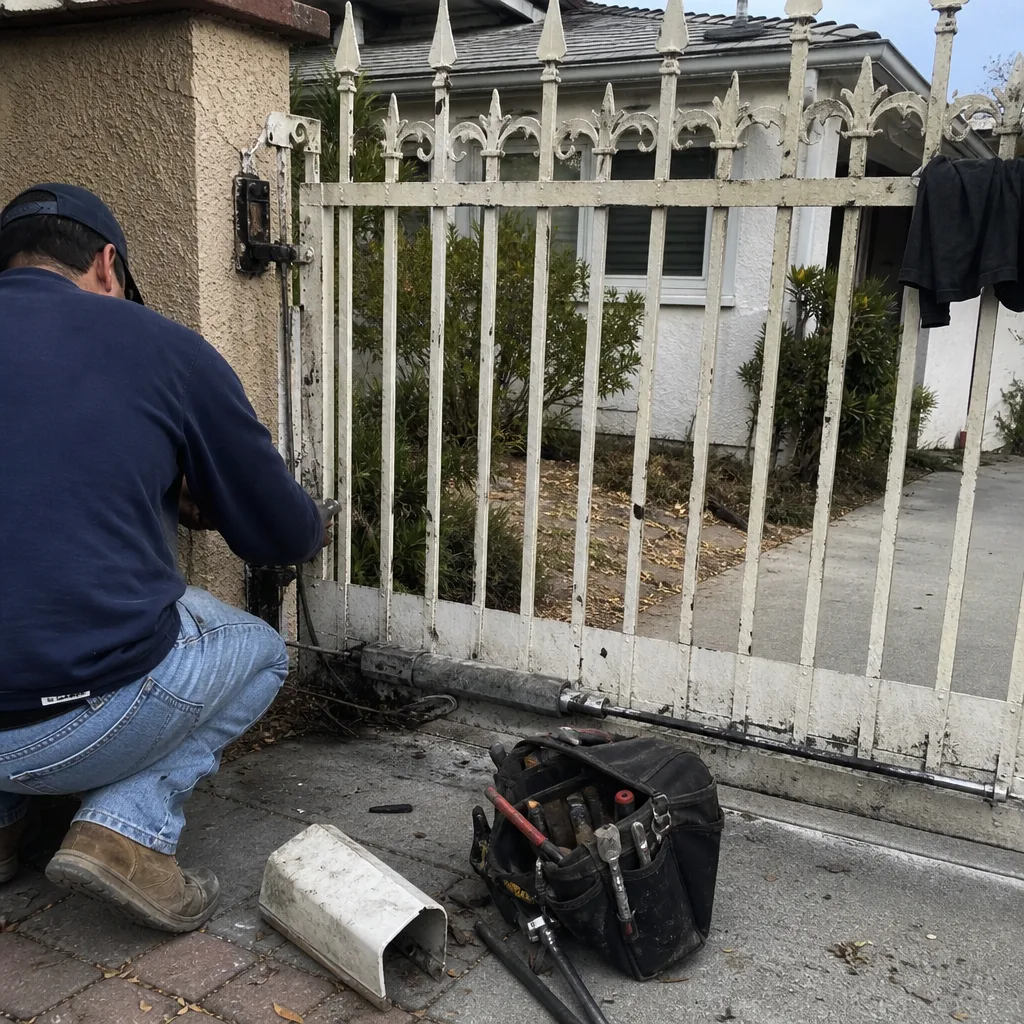 Before
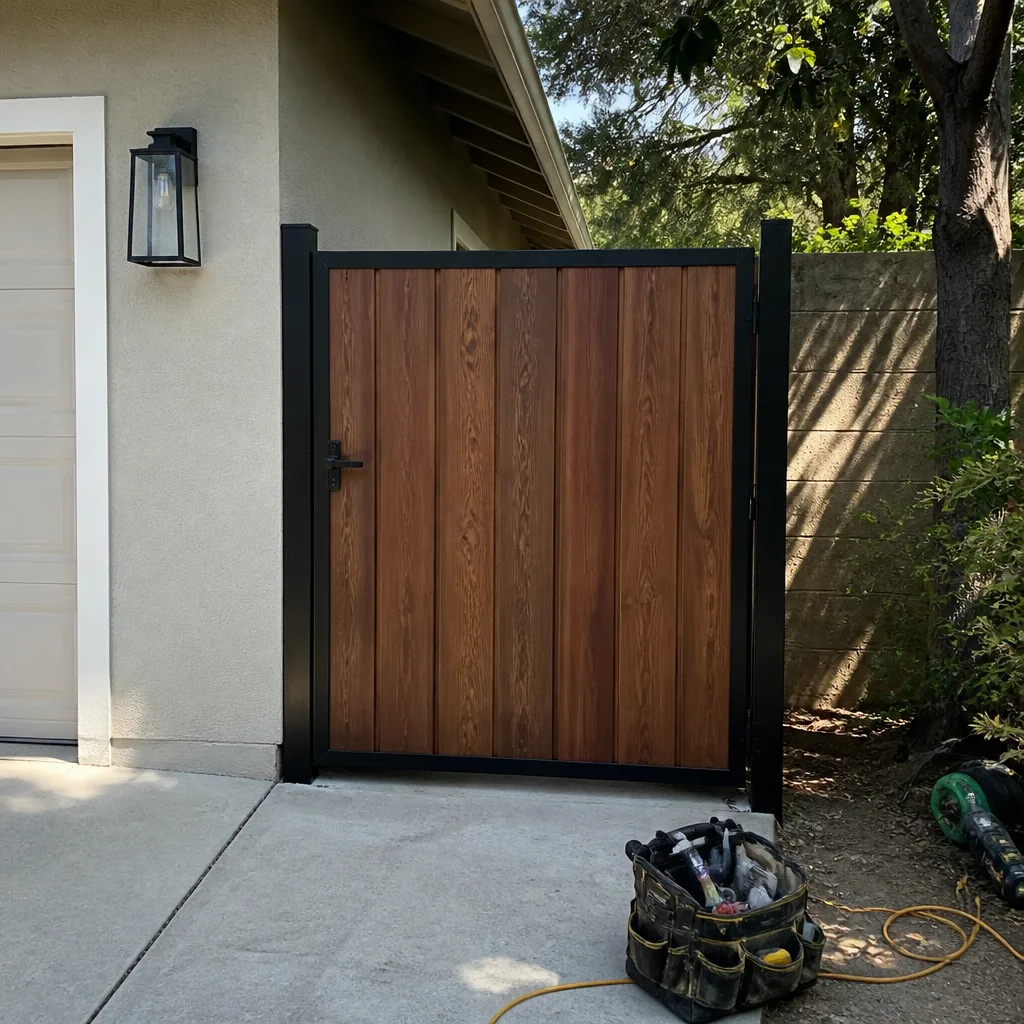 After
After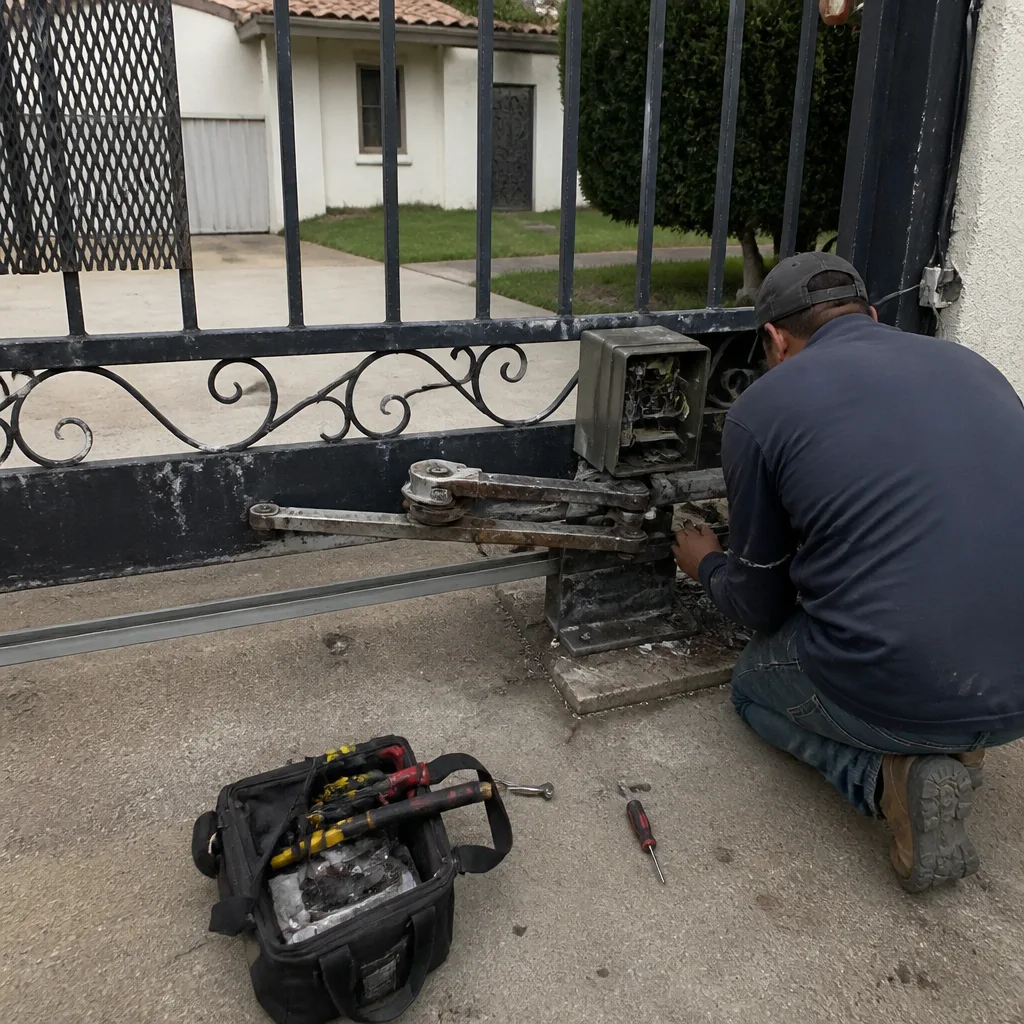 Before
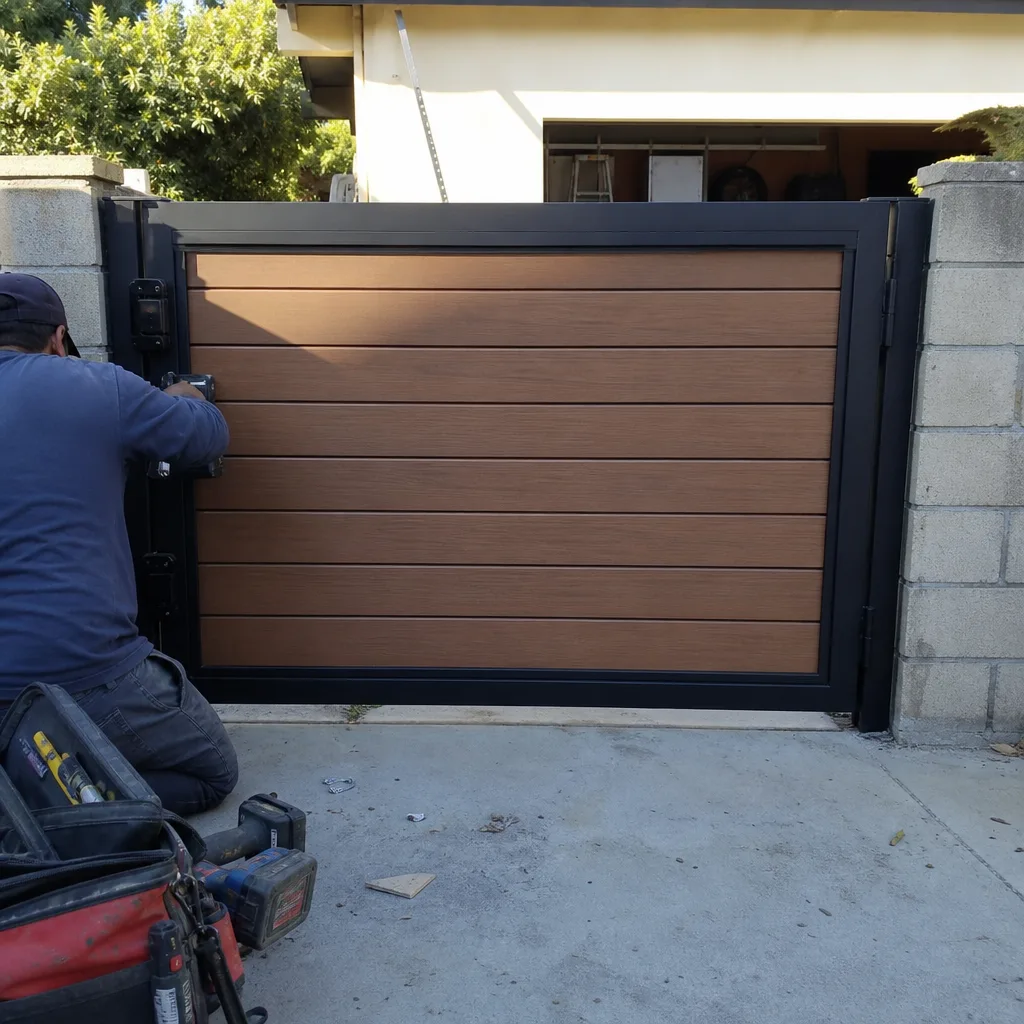 After
After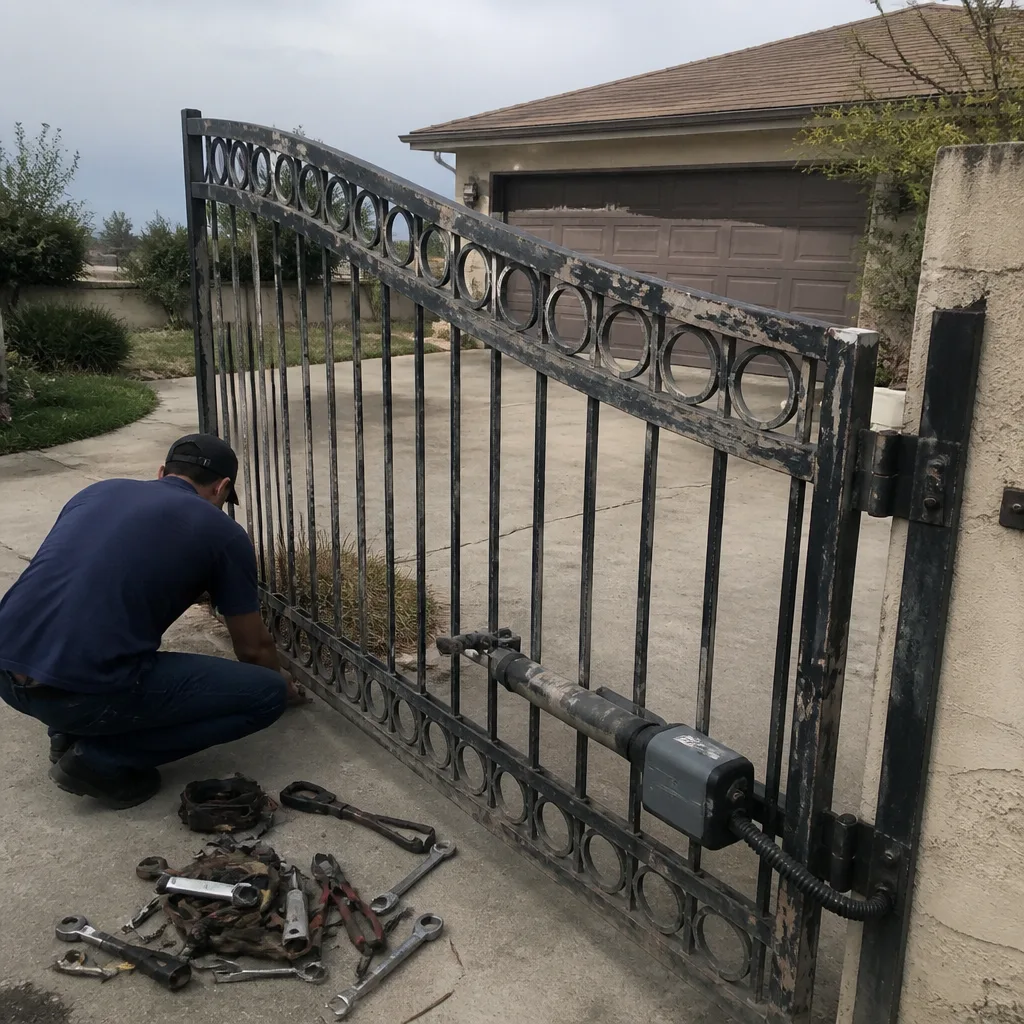 Before
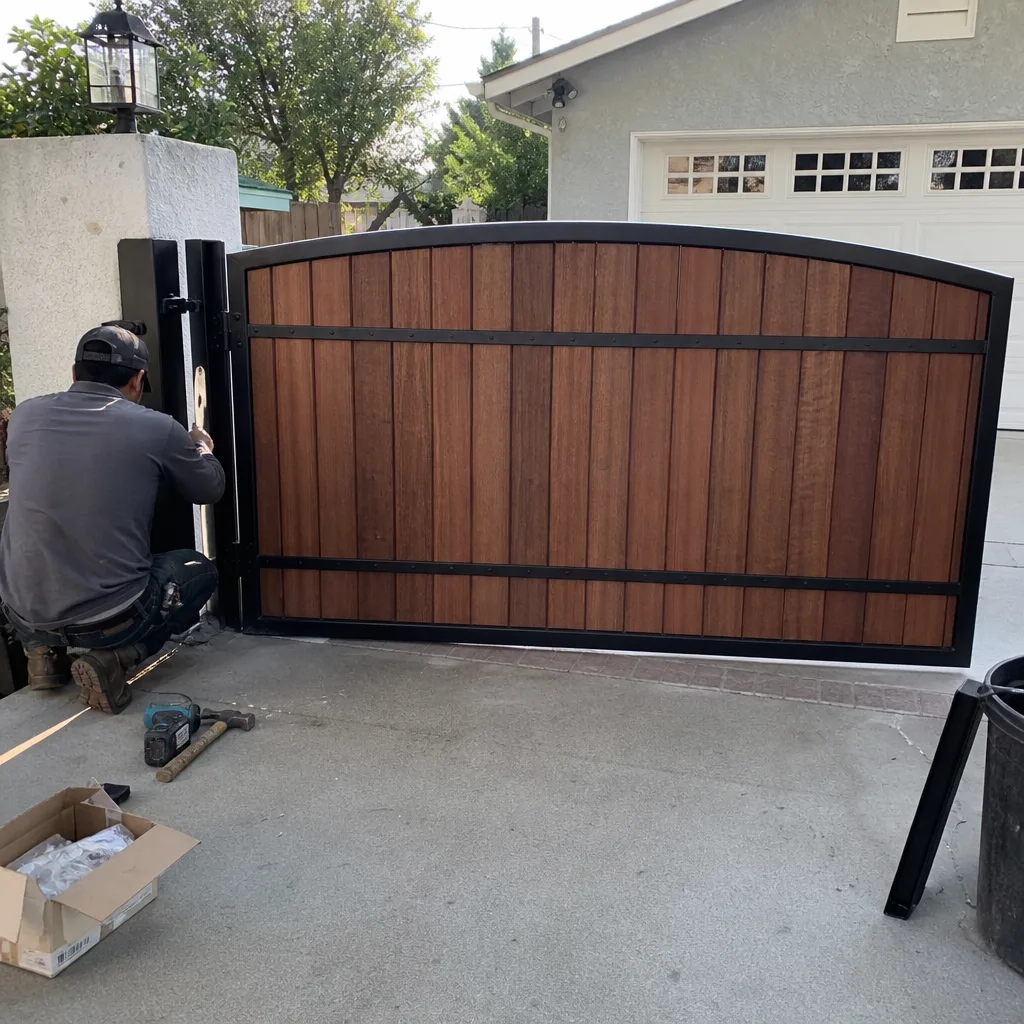 After
AfterDIY vs Professional Gate Repair: The Arcadia Homeowner’s Decision Guide
Lubricating a chain is owner-serviceable. Adjusting a limit switch is owner-serviceable. Wiring a new operator to a 120V circuit without a permit is an insurance exclusion waiting to be triggered. The line between DIY and professional Gate Repair services in Arcadia isn’t drawn by skill level or tool count. It’s drawn by three things that most guides never mention: California electrical code, the UL 325 entrapment-protection standard, and the warranty language buried in your operator’s manual. This guide lays out exactly which tasks you can do this weekend, which ones carry legal and insurance risk, and what professional documentation should look like when you do hire someone.
Quick Answer
Most mechanical gate maintenance in Arcadia - lubricating hinges, tightening bolts, cleaning photo-eyes, adjusting limit switches - is safe and legal for homeowners to perform. Most electrical and structural work - wiring a new operator, replacing a gate leaf, repairing a failing weld on a cantilever gate - requires a California licensed contractor, a permit in some Arcadia jurisdictions, and calibration documentation that DIY work cannot produce. Before you touch anything, check two things: whether the repair involves 120V wiring or gate weight, and whether your operator is still under warranty.
Table of Contents
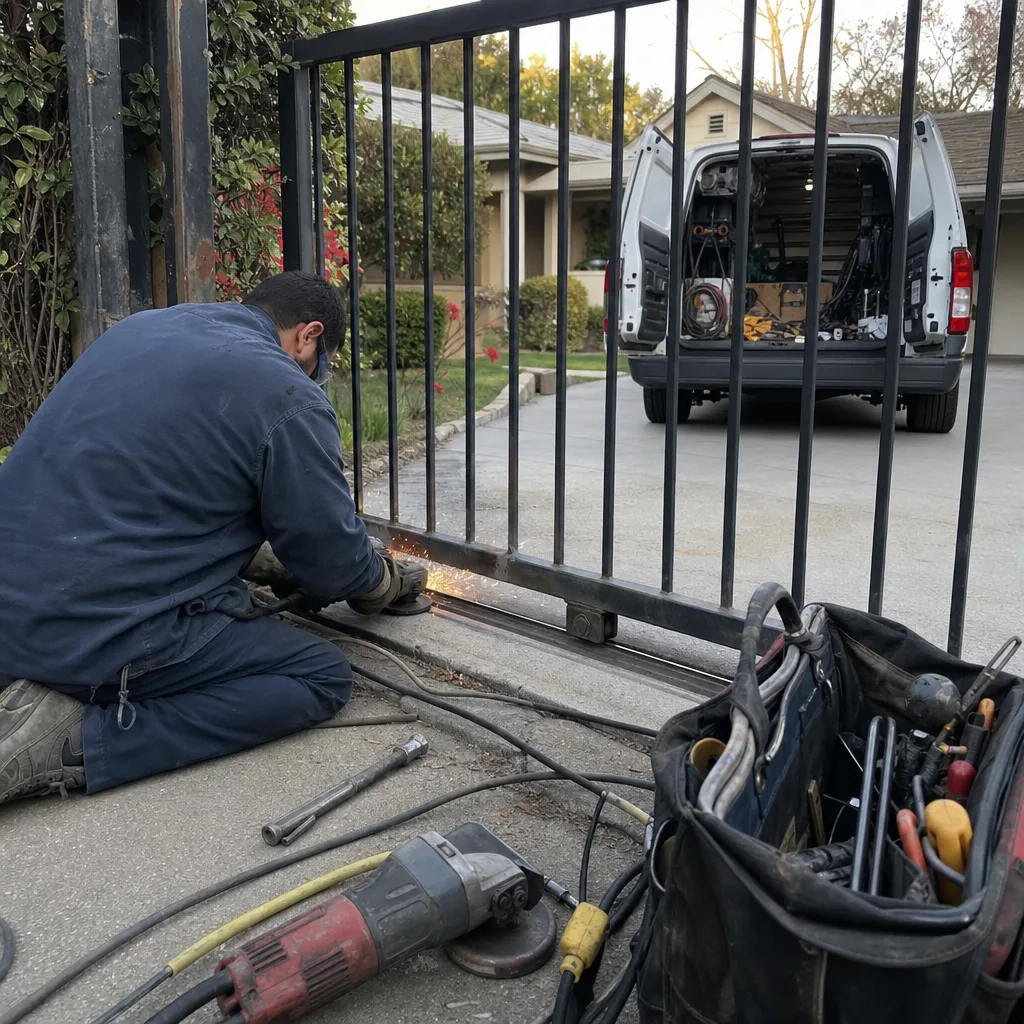
- What California Law and Arcadia Code Actually Say About DIY Gate Work
- The Task-by-Task Matrix: DIY, Professional, or Depends
- The Three DIY Repairs That Most Commonly Void Gate Operator Warranties
- The UL 325 Standard: Why Force-Setting Calibration Is a Liability Issue, Not a Preference
- The Real Cost Comparison: DIY Operator Swap vs. Professional Installation in Arcadia
- How Professional Documentation Gives You a DIY Baseline for the Future
- Safety First: What to Check Before Touching Anything
- Common Mistakes to Avoid
- When to Call a Professional
- Frequently Asked Questions
- The Bottom Line
BeforeAfterWhat California Law and Arcadia Code Actually Say About DIY Gate Work
California’s Contractor State License Board (CSLB) draws a clear line: any construction or repair work valued at $500 or more in labor and materials requires a licensed contractor. A gate operator swap, a gate leaf replacement, or a structural weld repair on a driveway gate in Arcadia almost always crosses that threshold. The penalty for unlicensed contracting in California starts at a $200 fine for the first offense, but the real exposure isn’t the fine - it’s what happens to your homeowners insurance claim if the work fails.
Arcadia is a city that enforces its building code actively. Gate installations that involve new electrical circuits, concrete footings, or changes to driveway access typically require a permit through the city’s Building & Safety division. Homeowners are legally allowed to pull their own permits for work on their primary residence, but the permit application requires you to state that you are performing the work yourself and that you understand the code requirements. When a gate fails and the insurance adjuster finds that permitted work wasn’t done or was done by an unlicensed party, the denial is nearly automatic.
Here’s what California law explicitly allows a homeowner to do without a license or permit in Arcadia:
- Lubrication and cleaning of hinges, rollers, chains, and tracks - no permit, no license, no restriction.
- Tightening loose bolts and hardware on an existing gate, as long as no structural member is being altered or replaced.
- Cleaning and realigning photo-eyes (the infrared safety beams) - this is maintenance, not modification.
- Adjusting limit switches that control where the gate stops - you’re adjusting an existing setting, not altering the circuit.
- Replacing batteries in wireless keypads and remotes.
Here’s what requires a licensed contractor and, in most cases, an Arcadia permit:
- New electrical wiring to a gate operator - any 120V or 240V circuit work falls under California Electrical Code and requires a permit.
- Replacing a gate leaf when the new leaf is a different weight, size, or material than the original - the operator’s force settings, mounting points, and hinge load all change, and those changes require recalibration documentation.
- Welding repairs on any gate that carries load - a cracked weld on a cantilever gate is a structural failure risk, and repairs must meet Arcadia’s adopted building standards.
- Installing a new operator where none existed before - this is new construction, not repair, and it requires both a permit and compliance with UL 325 entrapment-protection requirements.
One more thing that gets overlooked in Arcadia: many homes here are in historic districts or have HOA covenants that govern driveway gate appearance and height. Before you do any work that changes what the gate looks like, check your CC&Rs. A vinyl gate swapped for a wrought-iron gate might trigger a design-review requirement even if the structural work is technically legal.
The Task-by-Task Matrix: DIY, Professional, or Depends
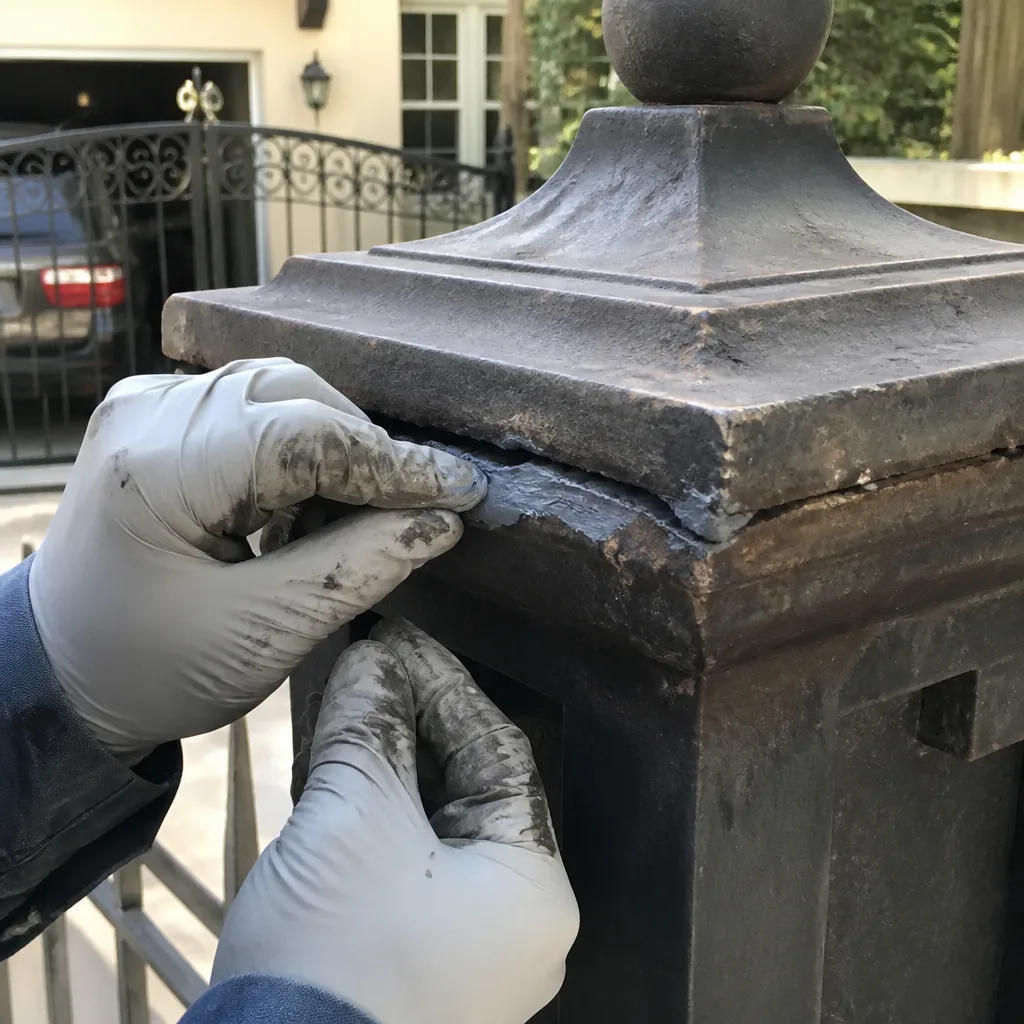
We’ve repaired and installed more than 22,000 gates since 2014, and we’ve seen the full range of DIY outcomes in Arcadia - some of them impressive, some of them wire-nut disasters. Here’s the honest breakdown of which tasks belong in which column.
Definitively Owner-Serviceable (No Permit, No License)
- Lubricating hinges, chains, and rollers - use a silicone-based lubricant, not WD-40. WD-40 is a solvent, not a lubricant, and it’ll strip the grease out of sealed bearings over time.
- Tightening loose hardware - check the hinge bolts, the operator mounting bolts, the chain tension, and any bracket bolts. A 10-minute walk-around with a socket wrench prevents half the service calls we get in Arcadia.
- Cleaning photo-eyes - a photo-eye (the infrared beam that stops the gate if something crosses the path) that’s fogged with Arcadia dust or spider webs will cause the gate to refuse to close or reverse mid-cycle. Wipe the lens with a dry microfiber cloth.
- Adjusting a limit switch - if the gate opens or closes past the point it should, the limit switch needs a small adjustment. On most LiftMaster, FAAC, and BFT operators, this is a screw or dial on the control board, and the manual diagrams are generally clear.
- Replacing remote-control batteries - if the gate works from the keypad but not the remote, it’s the battery in 90% of cases.
- Checking chain tension - a chain that’s visibly sagging below the rail needs tightening. The manual for your operator will show the correct deflection measurement, usually around 1/4 to 1/2 inch of play at the midpoint.
Depends on the Situation (Call a Professional If…)
- Replacing a gate operator with the same model and same mounting pattern - if you’re swapping a LiftMaster for an identical LiftMaster, the brackets line up, the wiring is the same, and the force settings transfer. This is still electrical work, but many homeowners do it correctly. If the model is different, the mounting pattern won’t match and the job becomes a custom install.
- Replacing a damaged gate wheel or roller - if the gate must be lifted off the track to access the roller, the weight involved is serious. A 16-foot steel gate can weigh 800 pounds. If you have a mechanical jack and proper blocking, it’s doable. If you don’t, call someone.
- Fixing a sagging gate leaf - if the sag is caused by loose hinge bolts, tighten them. If the sag is caused by a bent hinge or a failed weld, that’s structural repair work.
Always Professional (Licensed Contractor Required in Arcadia)
- New 120V or 240V electrical wiring - this is permit territory, full stop.
- Any welding repair - a welded joint carries the full weight of the gate. A bad weld fails suddenly, not gradually.
- Replacing a gate leaf with a different material or weight - the operator was sized for the original gate. Change the gate, and you’ve changed the load calculation.
- Installing a new operator where none existed - new construction, new circuit, new permit.
- Any repair involving a broken torsion spring (on certain gate designs) - torsion springs store a tremendous amount of energy. A spring that releases under tension can cause serious injury. This is not a DIY job, ever.
- Access control system wiring - keypads, card readers, intercom systems, and vehicle-loop detectors require low-voltage wiring that has to integrate with the operator’s control board. A miswired connection can burn out the board, and a new board costs $400 to $900 on most brands.
If you’re in Arcadia and you’re not sure which column your repair falls into, call us at (562) 267-0589. We’ll tell you over the phone whether it’s something you can handle yourself, and we won’t charge you for the advice.
The Three DIY Repairs That Most Commonly Void Gate Operator Warranties
Manufacturer warranties are not philosophical documents. They are contracts with specific exclusions, and the warranty department at LiftMaster, FAAC, BFT, and Linear has seen every DIY workaround. Here are the three repairs that most commonly void a gate operator warranty in Arcadia, and how manufacturers document the evidence.
- Adjusting the force settings without calibration documentation. Every operator manual states that force settings must be adjusted using a specific procedure, usually involving a force gauge or the operator’s built-in calibration sequence. When a warranty claim is filed and the circuit board shows signs of an over-force condition, the manufacturer’s first question is: “Who adjusted the force settings, and where is the calibration record?” If the answer is “I did it myself with a screwdriver,” the warranty is denied. We’ve seen this with FAAC and LiftMaster operators specifically.
- Wiring a replacement operator without a permit or licensed electrical inspection. Manufacturers don’t require a copy of the permit, but their warranty terms exclude “improper installation” and “installation not in accordance with local codes.” If the operator fails and the manufacturer’s field tech finds wiring that doesn’t meet National Electrical Code, the claim is denied. The absence of a permit is the easiest evidence to produce.
- Replacing the control board with a non-OEM or used part. Control boards are the brain of the operator, and the board is where most warranty failures happen. If a board from a different operator model or a salvaged unit is installed, the manufacturer will typically deny all warranty coverage on that unit, including unrelated failures. The board’s serial number is matched to the operator’s serial number in the manufacturer’s database, and the mismatch is detected during the claim review process.
Here’s the thing about warranties that most Arcadia homeowners don’t realize: the warranty doesn’t just cover parts. It covers the liability protection that comes with knowing the manufacturer stands behind the product. A gate operator that fails because of a DIY wiring error is not just a repair bill - it’s a potential insurance claim if the gate fails in a way that damages a vehicle or injures someone. The warranty is your first line of defense in a situation like that.
The UL 325 Standard: Why Force-Setting Calibration Is a Liability Issue, Not a Preference
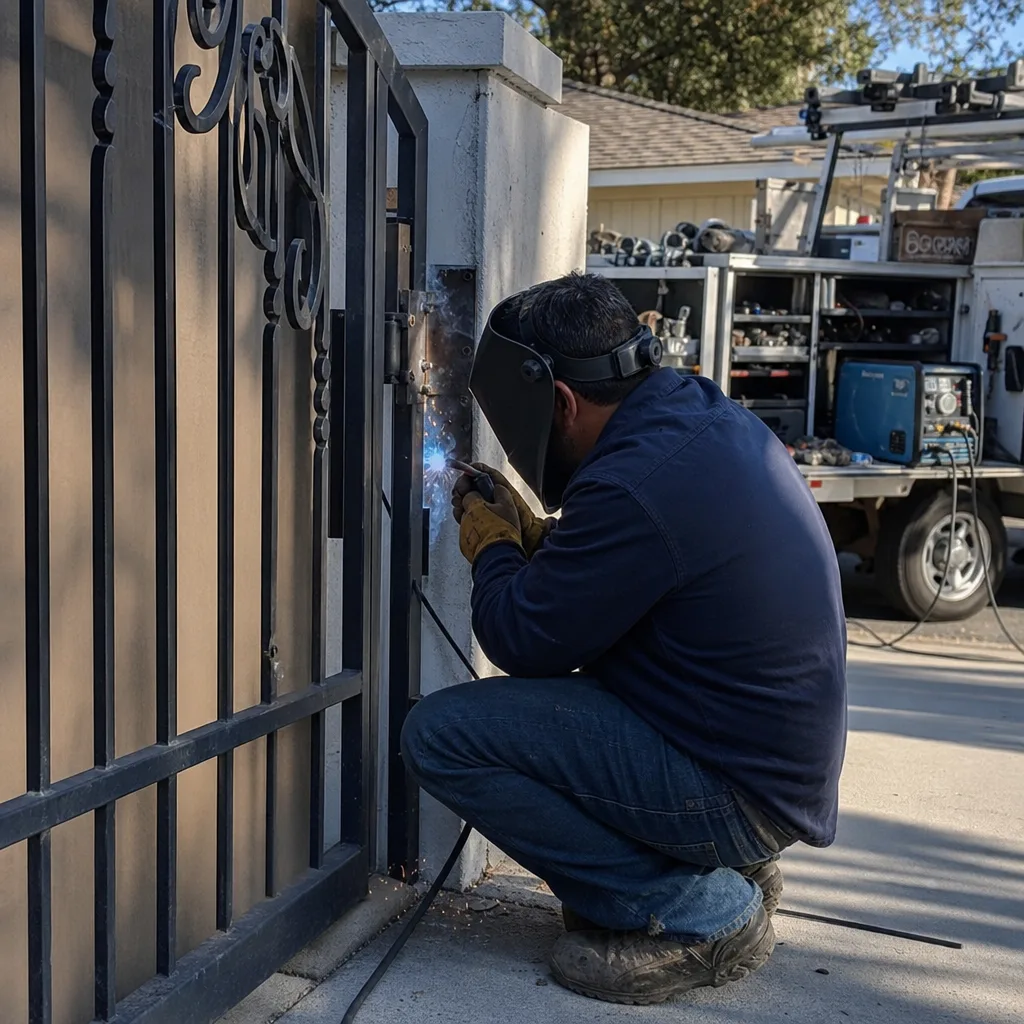
UL 325 is the entrapment-protection standard that governs automatic gate operators in the United States. It’s not a law, but it’s incorporated into California’s Electrical Code by reference, which means compliance is mandatory for any gate operator installation or significant modification. Here’s what UL 325 requires of anyone who adjusts a gate’s force settings.
The standard requires two independent entrapment-protection systems on most gates: a primary system (the force-sensing technology in the operator that reverses the gate when it encounters resistance) and a secondary system (photo-eyes, edge sensors, or another monitored device). The force-sensing system must be calibrated so that the gate reverses when it encounters a specific amount of resistance - not too sensitive (the gate would never close against Arcadia’s afternoon wind) and not too heavy (the gate would keep pushing against an obstruction).
The calibration procedure produces a documented result. The operator’s control board records the force threshold, and professional installations include that reading in the service record. When a homeowner adjusts the force settings by feel - “I twisted the dial until the gate closed reliably” - there is no documentation. If that gate later fails to reverse and a child or pet is injured, the homeowner is in a genuinely difficult liability position. The plaintiff’s attorney will ask for the calibration record, and there won’t be one.
In Arcadia specifically, where many homes have pedestrian gates adjacent to driveway gates, UL 325 compliance is not a technicality. The proximity of school walk zones, the speed of delivery vehicles on residential streets, and the frequency with which pedestrians cut through front yards all increase the likelihood that a gate’s entrapment-protection system will be tested in a real-world scenario.
What should you do if you want to adjust force settings yourself? On most modern operators - LiftMaster, FAAC, BFT, Linear - there is an on-board calibration sequence that walks you through the process and displays a confirmation when the setting is within range. If you follow that sequence exactly as written in the manual, and you photograph the result, you have at least some documentation. If you’re not willing to do that, leave the force settings alone and call a professional.
The Real Cost Comparison: DIY Operator Swap vs. Professional Installation in Arcadia
Let’s look at actual 2026 numbers for a gate operator replacement in Arcadia. The typical job: a single swing gate, 14 to 16 feet, currently running a LiftMaster LA500 or similar, being replaced with a new operator because the old one has a failed control board and the repair cost exceeds the replacement value.
DIY Operator Swap - Real Costs
- New operator (LiftMaster LA500 or equivalent): $1,200 to $1,800, depending on the vendor and whether you need a battery backup.
- Permit (if required by Arcadia for the electrical work): $200 to $500, depending on the scope.
- Tools you don’t already have: crimpers, wire strippers, a multimeter, concrete anchors, drill bits. Budget $150 to $300 if starting from scratch.
- Mounting hardware and electrical supplies: $75 to $150.
- Time: 6 to 10 hours for a homeowner who has never done it before, including the permit application, the wiring, the mounting, the calibration, the troubleshooting.
- Total out-of-pocket: $1,625 to $2,750.
Professional Installation - Real Costs in Arcadia
- New operator (same model): $1,200 to $1,800, at the same price you’d pay retail. We don’t mark up parts.
- Installation labor: $600 to $1,200, depending on whether the existing mounting pad is reusable and whether the electrical is already compliant.
- Permit and inspection: Included in the installation cost, handled by the contractor.
- Calibration and testing: Included, with documented force-setting readings and photo records.
- Total: $1,800 to $3,000.
Here’s the honest comparison: on a like-for-like operator swap, the DIY savings are real - maybe $200 to $700. But that’s before you account for three things. First, the warranty: a professional installation keeps the manufacturer warranty intact, and the install is covered by our 365-Day Done Right Promise. Second, the permit: if the work requires a permit and you don’t pull one, you’ve saved $300 and created a disclosure problem when you sell the house. Third, the documentation: a professional installation leaves you with a written scope, a written price, and a photo log of every adjustment - the same documentation we provide on every visit under The Haven Standard.
For a full gate installation in Arcadia, the math changes completely. A new gate leaf, new posts, new operator, new electrical, and new access control is a $5,000 to $15,000 project, and the permit, engineering, and code-compliance requirements make DIY essentially non-viable.
How Professional Documentation Gives You a DIY Baseline for the Future
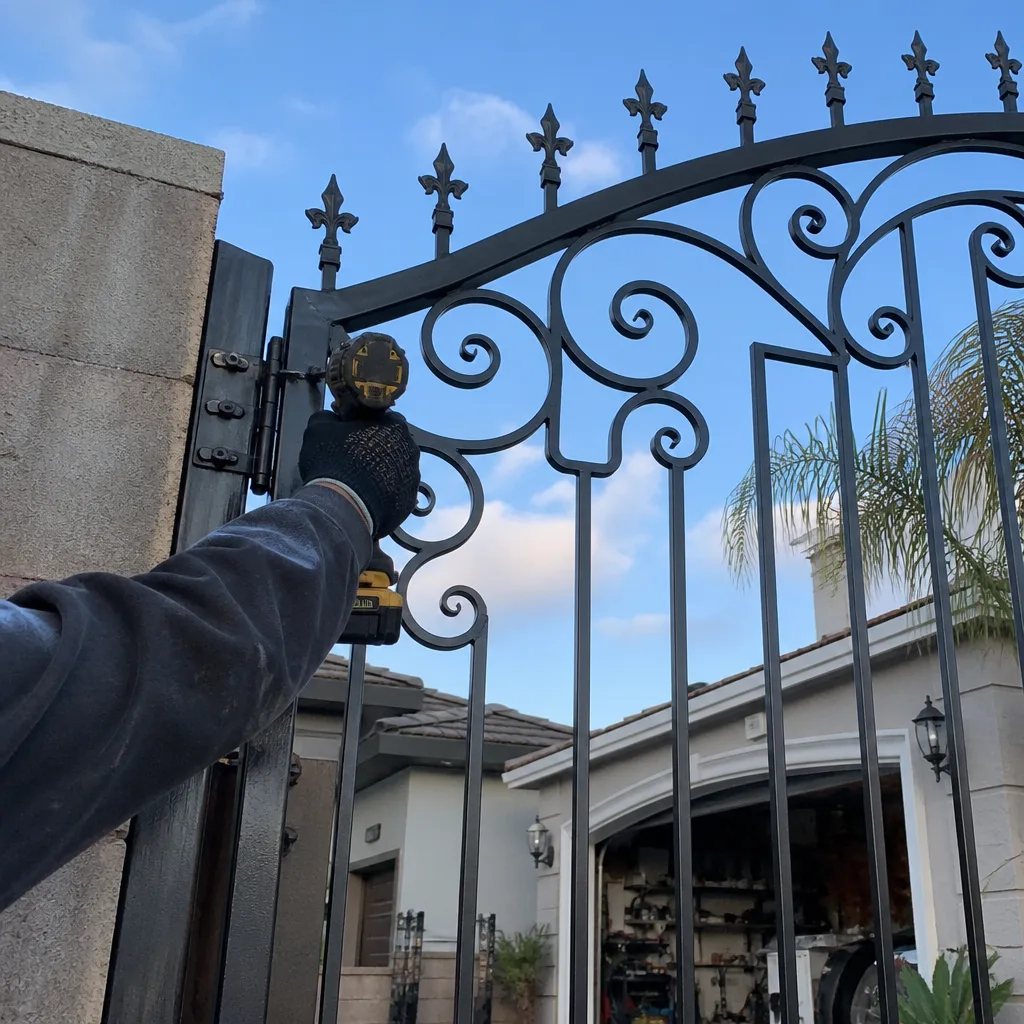
Here’s the real argument for hiring a professional at least once: the documentation you receive becomes your baseline for every future DIY task. This is the difference between guessing and knowing.
When we complete a gate repair in Arcadia, the homeowner receives a written record that includes: the model and serial number of the operator, the force-setting readings after calibration, the limit-switch positions before and after adjustment, photos of the wiring connections, the part numbers for anything replaced, and the exact measurements of any mounting hardware. That’s not paperwork for paperwork’s sake - it’s the same wiring-diagram habit that Adrian Vance developed on commercial access-control sites starting in 2014, and it means that six months from now, when you want to adjust a limit switch, you know exactly where it was set and why.
That baseline matters for three reasons in Arcadia specifically. First, the city’s climate - hot summers, cool winters, occasional heavy rain - means gate components move over time. Wood gates in particular swell and contract with humidity, and the limit-switch settings that worked in July may need adjustment in January. A documented baseline makes those seasonal adjustments predictable.
Second, the operator market is fragmented. Nine major gate-automation brands are in active use in Arcadia - LiftMaster, FAAC, BFT, Linear, Viking, Ghost Controls, DoorKing, Elite, and Mighty Mule - and each brand has different calibration procedures. If your previous repair left you with the exact force-setting readings and the adjustment sequence, you can maintain any of them without having to reverse-engineer the manual.
Third, and most importantly: when you sell your Arcadia home, the documentation proves that the gate was maintained and repaired by a licensed contractor. That’s a disclosure item that buyers in this market increasingly ask about, especially on homes with automatic gates on the driveway or pedestrian access.
If you already have a gate that’s been repaired by someone else, and you don’t have documentation, call us for a free second opinion. Bring the paperwork from the previous work - even if it’s just an invoice - and we’ll review it at no cost and tell you what should be documented going forward.
Safety First: What to Check Before Touching Anything
Before you lubricate, tighten, or adjust anything on an automatic gate in Arcadia, follow our Gate Repair Maintenance Checklist for Arcadia Homeowners and do these three things in order:
- Disconnect the power. Find the circuit breaker that feeds the operator and switch it off. If there’s a battery backup, disconnect it. A gate operator that activates while your hand is inside the mechanism is a serious injury. This is the single most important step, and it’s the one most DIYers skip.
- Verify the gate is locked in a safe position. If it’s a slide gate, block it so it can’t move. If it’s a swing gate, make sure the leaf is supported and can’t drift. A 400-pound gate that starts moving on its own is not something you can stop with your body.
- Check for stored energy. Chain-drive operators have chain tension. Torsion springs, where present, store energy even when the gate is stationary. Hydraulic operators have pressure in the lines. Know where the stored energy is before you start loosening anything.
If any of these steps makes you uncertain, stop. Call a professional. The cost of a service call in Arcadia - typically $95 to $150 for a diagnostic visit, credited toward the repair - is less than the cost of an emergency room visit.
Common Mistakes to Avoid
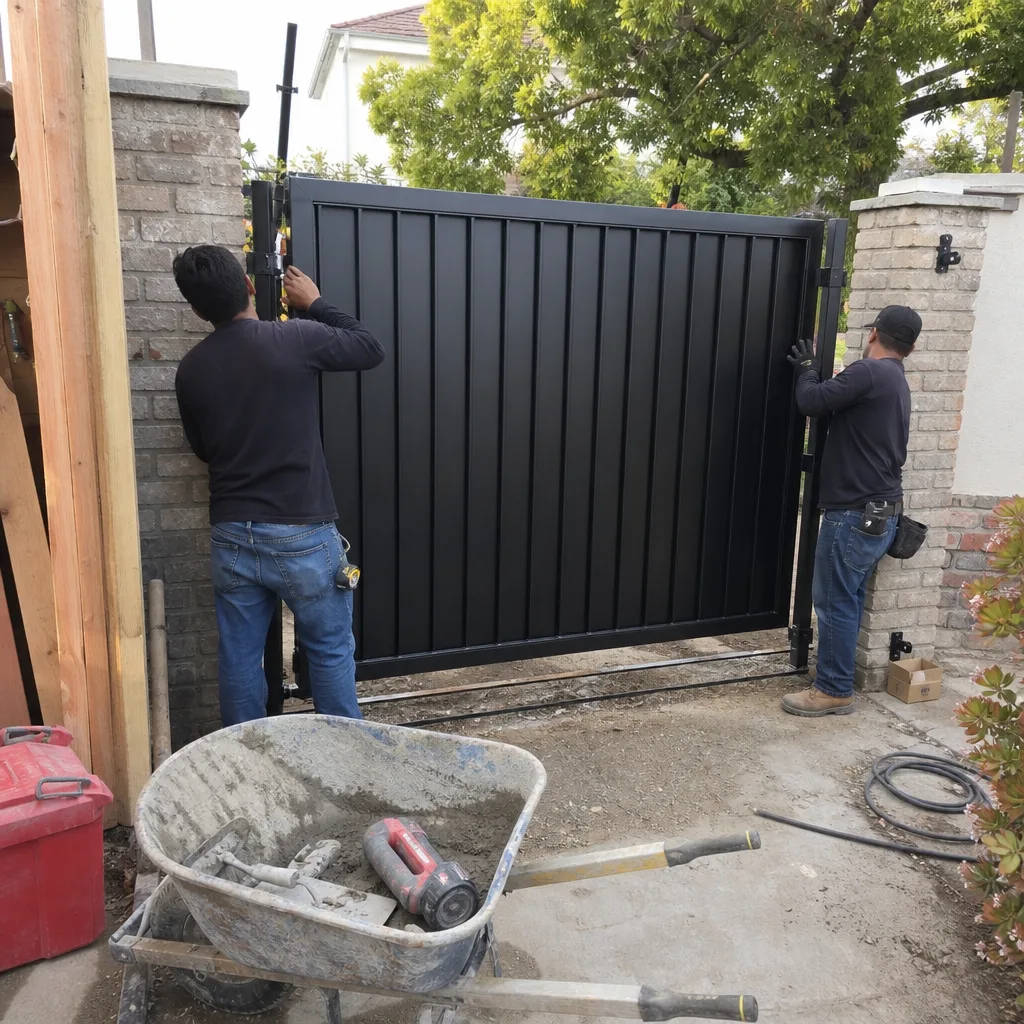
- Using WD-40 on gate hinges and chains. WD-40 is a water-displacement formula, not a long-term lubricant. It strips grease from sealed bearings and attracts dust. Use a silicone-based or lithium-based lubricant instead, and reapply every 3 to 4 months in Arcadia’s dry, dusty climate.
- Adjusting the force settings without writing down the original position. If you don’t know where the dial was before you touched it, you can’t return to baseline. Photograph every setting before you change it.
- Skipping the permit on new electrical work. The $200 to $500 you save becomes a much larger problem at resale, in an insurance claim, or if a buyer’s inspection flags the unpermitted work. Arcadia’s building department is thorough, and unpermitted gate operator work is easy to spot.
- Replacing an operator with a different model that doesn’t match the mounting pattern. A new LiftMaster will not bolt onto the pad where a BFT used to be. The mounting holes, the arm geometry, and the wiring connections are all different. Match the model or plan for modification.
- Ignoring photo-eye misalignment as a temporary problem. A photo-eye that’s misaligned by two inches may work fine for weeks, then fail when the gate tries to close against a strong Santa Ana wind. If the gate intermittently refuses to close, the photo-eyes are the first thing to check.
- Welding a gate while the operator is still connected. Welding current can travel through the gate frame and into the operator’s control board, destroying it. Always disconnect the operator before any welding work, and ideally remove the control board from the circuit entirely.
- Assuming all gate repairs are the same because “it’s just a gate.” A swing gate, a slide gate, a cantilever gate, and a lift gate are four completely different mechanisms with different failure modes, different safety requirements, and different repair procedures. The task-by-task matrix above exists for a reason.
When to Call a Professional
Call a professional when the repair involves 120V or 240V wiring, when the gate leaf must be lifted or removed, when welding is required, when the operator is under warranty and the warranty terms require licensed installation, or when the gate is showing signs of entrapment-protection failure (reversing without cause, failing to reverse on contact, or photo-eyes that won’t stay aligned). A live person answers our phone 24/7 at Vance Gate Repair Arcadia - no voicemail, no callback queue. For more guides & resources, visit our blog. If you’re in Arcadia and you’re not sure whether your repair is DIY-safe, call (562) 267-0589 and describe the problem. We’ll tell you straight whether you can handle it yourself, and if professional work is needed, we’ll give you a written price before anyone picks up a tool.
Frequently Asked Questions
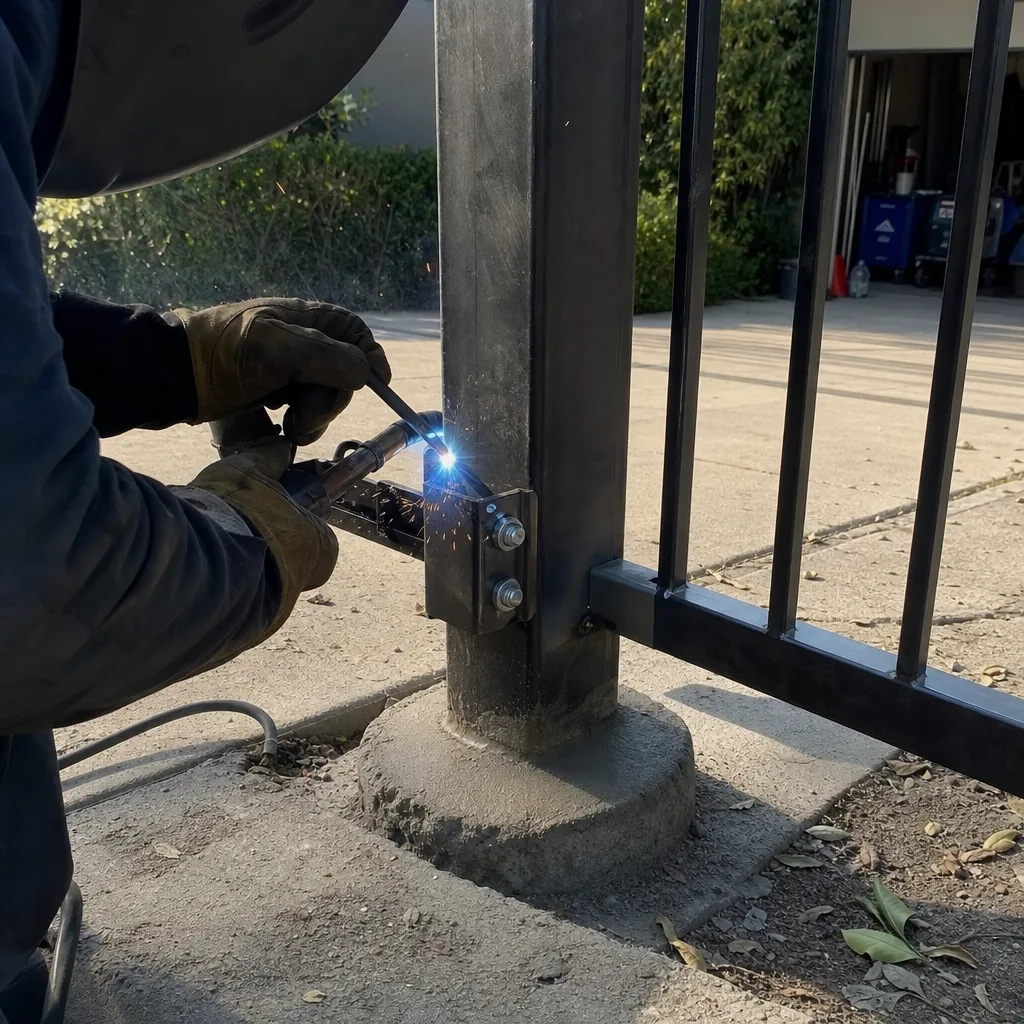
Yes, for maintenance tasks like lubrication, cleaning photo-eyes, tightening bolts, and adjusting limit switches. No, for work that crosses the $500 threshold, involves electrical wiring, requires welding, or changes the structural load on the gate. California’s CSLB regulations and Arcadia’s permit requirements apply regardless of whether you’re being paid for the work.
Most residential gate repairs in Arcadia run between $150 and $600, with operator replacements typically landing between $1,800 and $3,000 installed. The exact price depends on the failure mode, the brand of operator, and whether any structural work is needed. We quote a written price before work starts, so you’ll never face a surprise invoice.
It can, specifically if the repair involves force-setting adjustments without documentation, wiring changes not done to code, or installation of non-OEM parts. Manufacturers document these exclusions carefully, and the evidence is usually discoverable on the control board itself. If your operator is under warranty, check the warranty terms before doing anything beyond basic maintenance.
UL 325 is the entrapment-protection standard for automatic gate operators, incorporated into California’s electrical code. It requires two independent safety systems and documented force-setting calibration on any gate operator that is installed or modified. Adjusting force settings without following the documented calibration procedure puts you outside UL 325 compliance and exposes you to liability if the gate fails to reverse.
Most repairs are completed in one visit, usually 1 to 3 hours on site. Operator replacements take 3 to 6 hours depending on the mounting conditions and electrical work required. For gate motor and opener service in Arcadia, we diagnose the problem, give you a written price, and complete the repair in the same visit when parts are available.
Yes, in most cases. A new gate motor installation involves new electrical wiring and a new or modified circuit, which requires a permit through Arcadia’s Building & Safety division. The permit is included in our installation scope, and we handle the inspection scheduling. Skipping the permit saves money in the short term and creates a disclosure and insurance problem in the long term.
The Bottom Line
The DIY-versus-professional decision for gate repair in Arcadia comes down to three questions. Does the work involve electricity or structural load? Is the operator still under warranty? And can you document what you did? If the answer to the first question is yes, or the answer to the second is yes, the repair belongs with a licensed professional. If the work is mechanical maintenance - lubrication, tightening, cleaning, basic limit-switch adjustment - then do it yourself, document it with photos, and save the service call. When you do need professional help, choose a company that gives you a written price before work begins and a written record when the work is done. That documentation is what turns a one-time repair into a baseline you can maintain yourself for years. Call (562) 267-0589 for a free estimate in Arcadia, or visit our Vance Gate Repair Arcadia home page to learn more about how we work.
Written by Adrian Vance, Owner at Vance Gate Repair Arcadia, serving Arcadia since 2014.