
Last updated September 20, 2026
Free on-site gate assessment - hinges, posts, and your LiftMaster or Nice gate operator checked before anything is quoted
The assessment is free and the quote is the invoice.

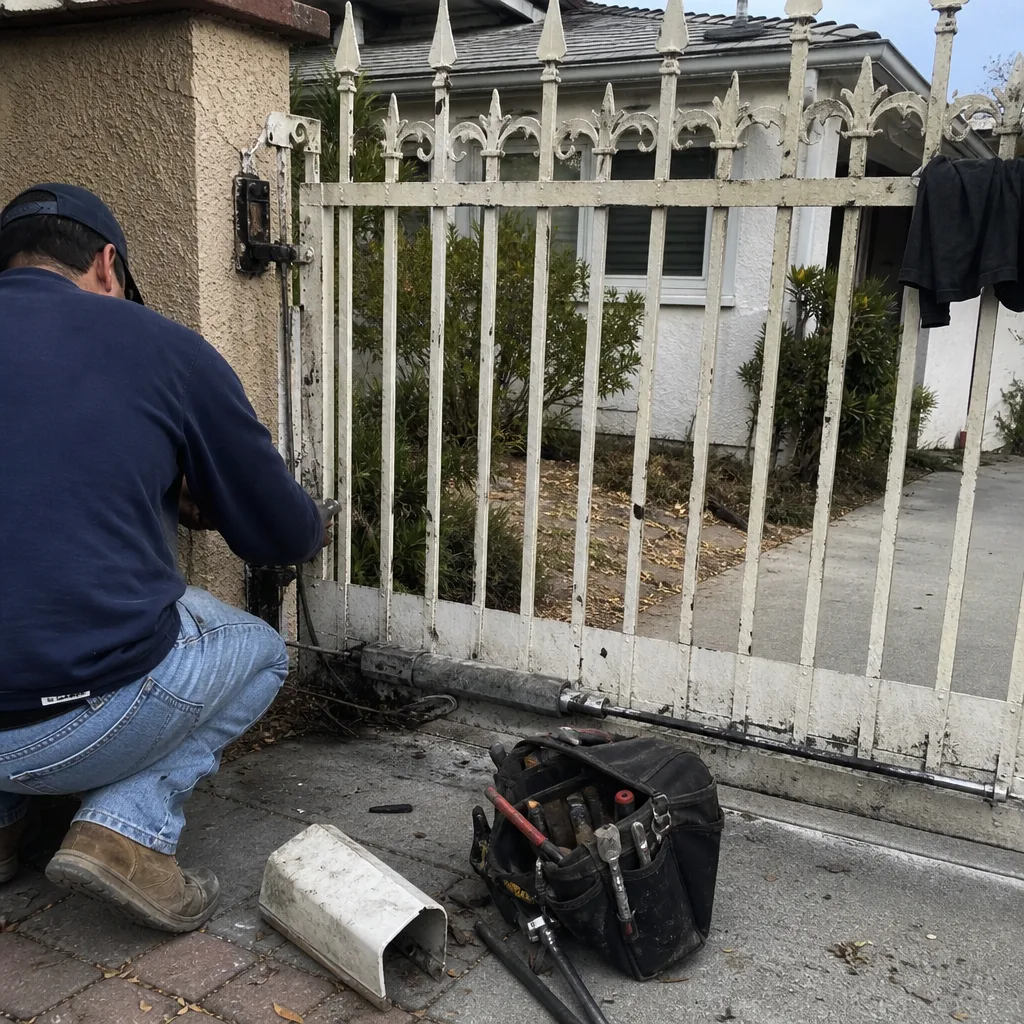 Before
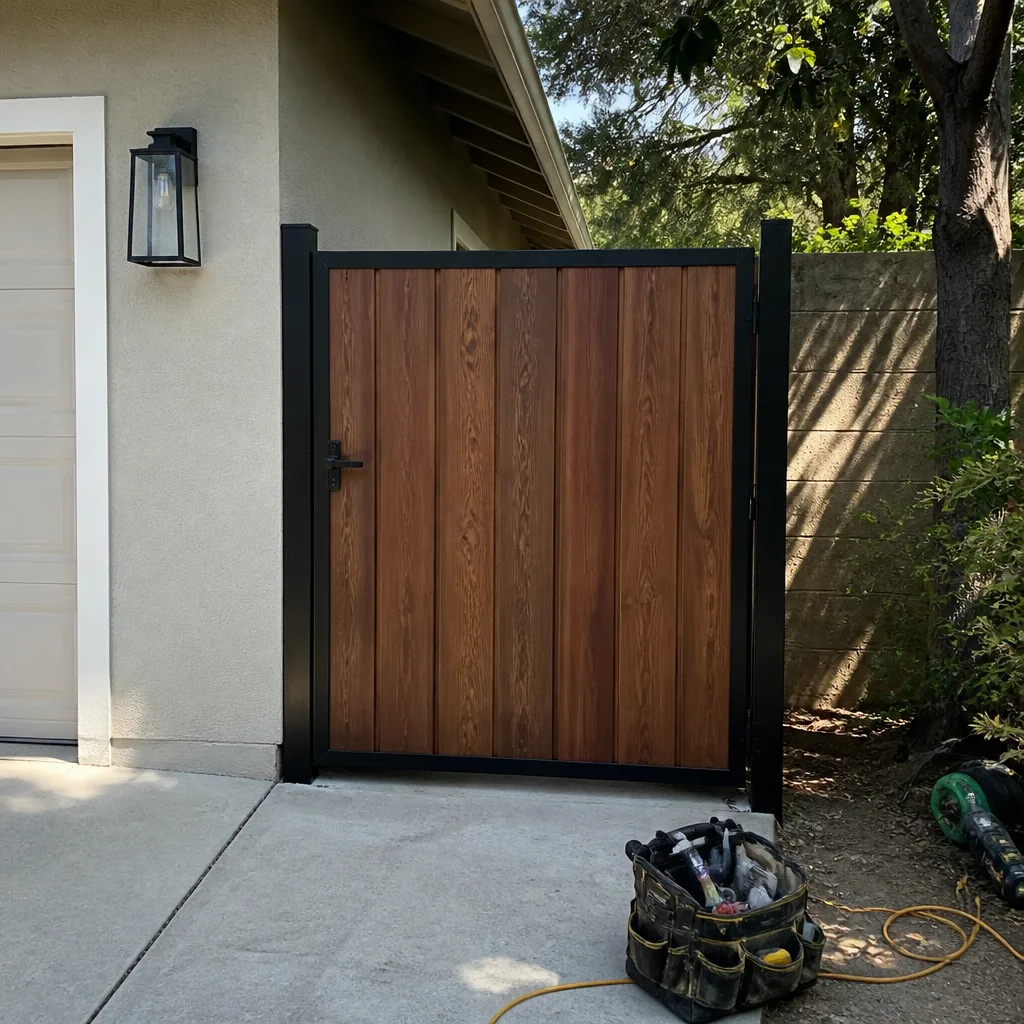 After
After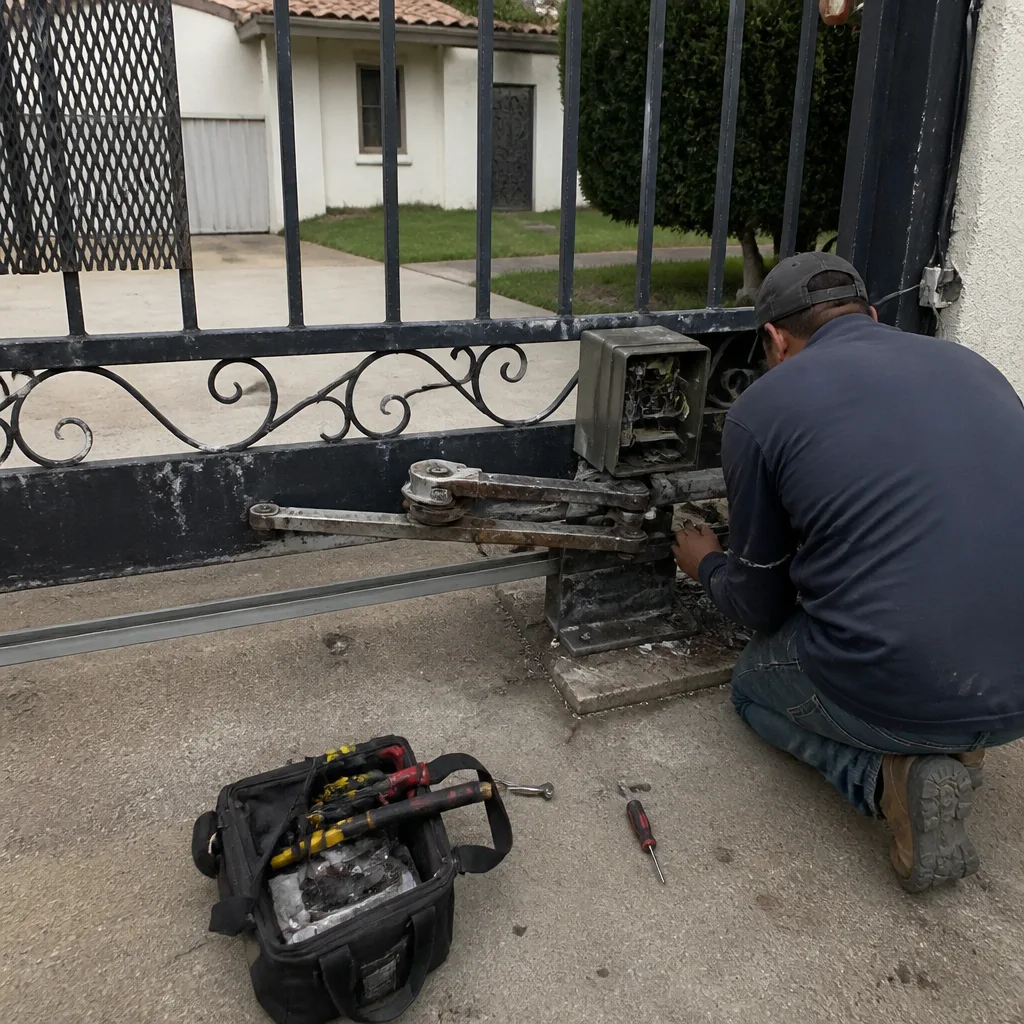 Before
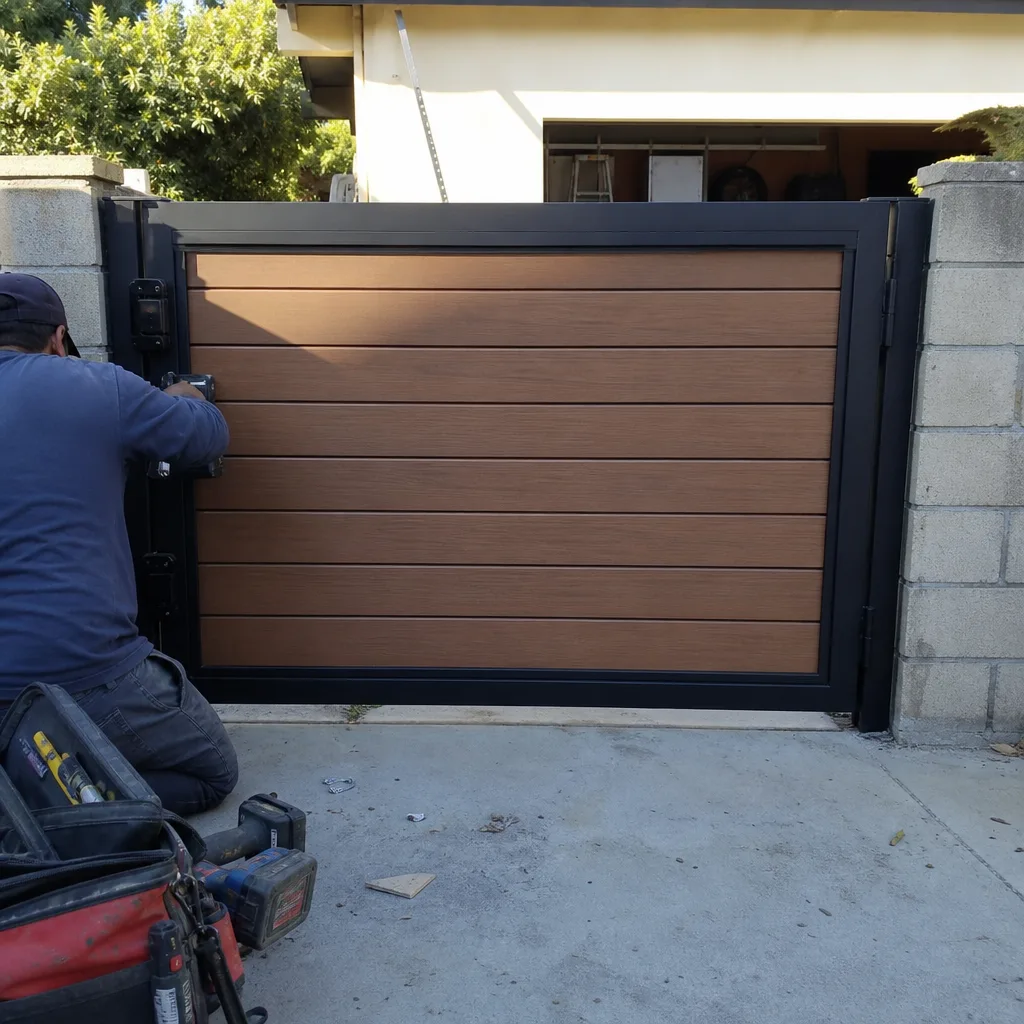 After
After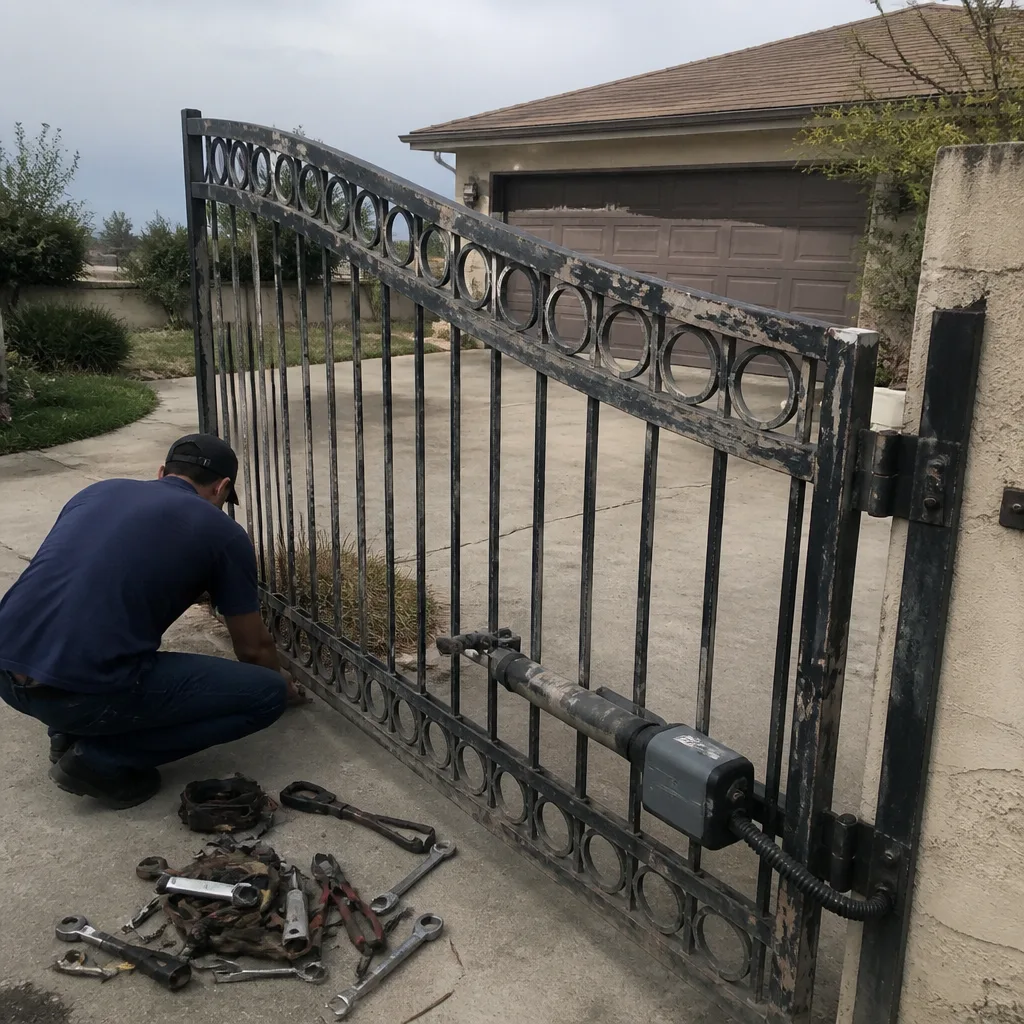 Before
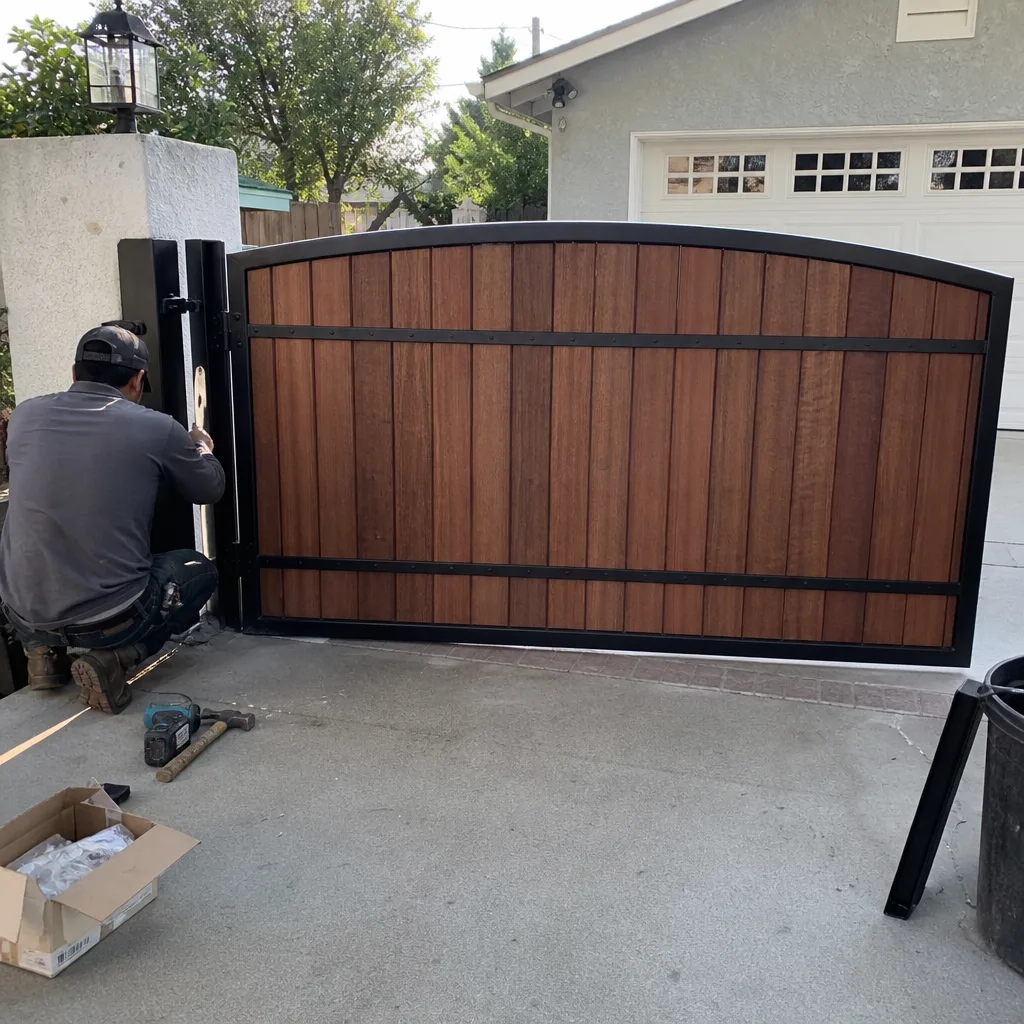 After
AfterGate Repair Permits, Codes & Inspections in CA: What You Need to Know
Replacing a gate operator in California is an electrical alteration. Most contractors call it maintenance to avoid the permit conversation, and your insurance adjuster won’t. The state’s trigger threshold for when a gate repair crosses into permit-required territory sits far lower than the industry generally admits out loud, and Arcadia’s building department applies that threshold with less flexibility than neighboring jurisdictions. This guide maps exactly which gate repairs in Arcadia trigger a permit, which don’t, and what happens to your homeowner’s insurance when unpermitted electrical work is later discovered at the worst possible moment: after a fire, after an injury, or during escrow. For related reading, see our Gate Repair Warning Signs: A Arcadia Homeowner’s Reference Guide.
Quick Answer
Most mechanical gate repairs in Arcadia, like hinge replacement or wheel swaps, require no permit. The line moves the moment you touch electrical equipment: a new operator, a replacement operator of a different type, or any wiring change beyond a direct like-for-like swap generally triggers a building permit under the current California Electrical Code. If a contractor waves off the permit, ask them to put that waiver in writing and date it, because the liability for unpermitted work outlives the handshake.
Table of Contents
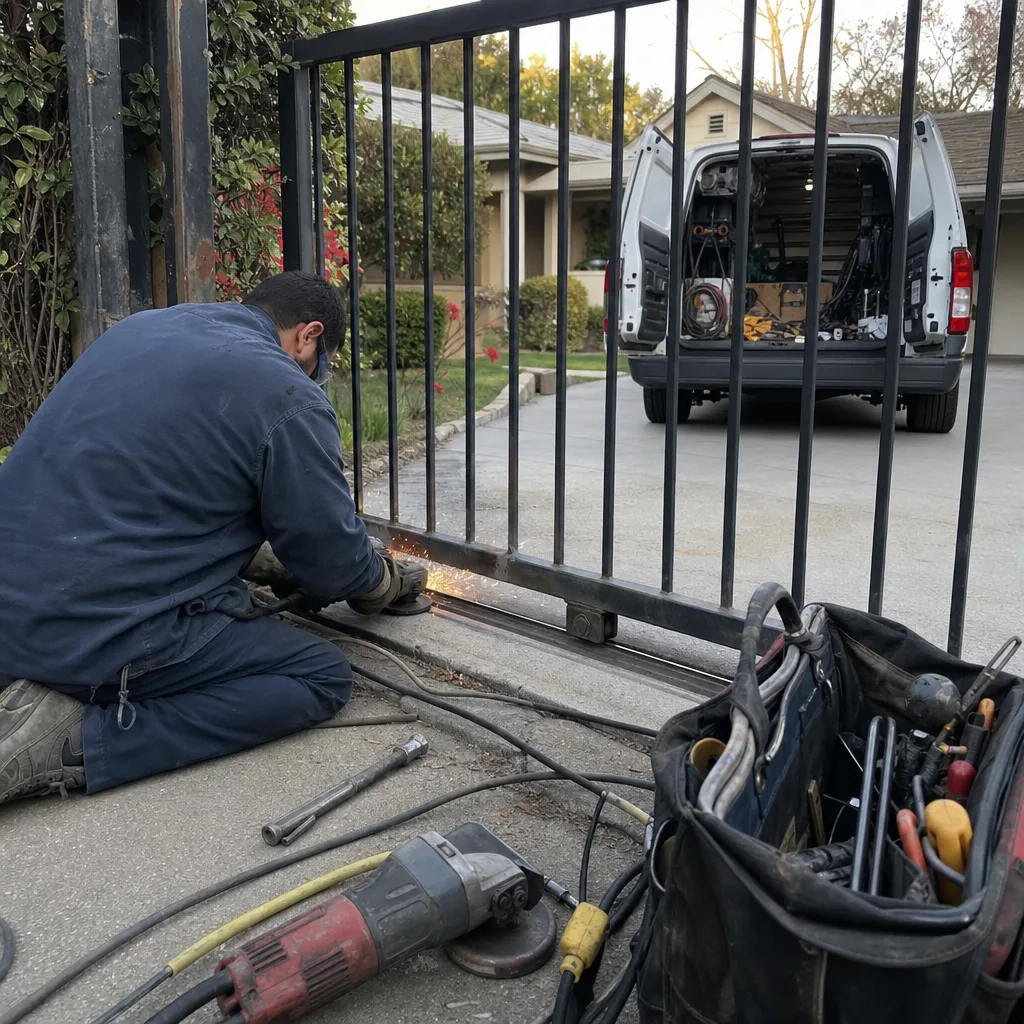
- The Real Permit Line: What Arcadia Requires vs. What Contractors Claim
- California Residential Code Sections That Govern Gate Operators
- Repair-in-Kind vs. New Installation: Where Contractors Blur the Line
- UL 325 and the Entrapment Devices Arcadia Inspectors Look For
- How to Pull Your Gate’s Permit History in Arcadia Before Hiring Anyone
- How Documented Code-Compliant Work Protects You in a Sale or Claim
- What Your Homeowner’s Insurance Does With Unpermitted Gate Work
- Common Mistakes to Avoid
BeforeAfterThe Real Permit Line: What Arcadia Requires vs. What Contractors Claim
Arcadia operates under the California Building Standards Code with city-level amendments. For gate work, the relevant sections sit in the California Electrical Code (CEC) and the California Building Code (CBC). Here’s the line that matters: any project that alters, adds to, or replaces electrical wiring, a circuit, or a connected utilization device requires an electrical permit. The California Electrical Code says that plainly in Section 89.101.1, and Arcadia’s building department enforces it through the Building & Safety Division at City Hall on Huntington Drive.
An automatic gate operator is a utilization device. It draws power, it contains motor windings, and it connects to branch circuit wiring. When you install a new operator on a gate that never had one, you are adding a device to an electrical system, which is a permit event. When you replace an existing operator on a gate that had one before, the picture changes only if the replacement is a true like-for-like swap: same voltage, same amperage rating, same mounting footprint, no wiring modifications. Change any one of those variables, and Arcadia’s inspectors will treat it as an alteration, not maintenance.
There is a second trigger that has nothing to do with electricity. Arcadia enforces zoning and setback requirements for new gate structures. If you replace a gate or add a pedestrian gate next to a driveway gate, you may need a building permit for the structure itself, not just the electrical work. The structural permit check applies to gates over 7 feet in height, gates with masonry pillars, and any gate attached to a wall or column that carries weight. A replacement gate hung on existing posts with the same dimensions generally stays exempt, but changing the gate’s height, width, or material composition can pull a structural review.
Concrete work for gate posts and the pad under the operator gets treated separately. A new post footer or a concrete equipment pad is a building element that Arcadia checks for depth, reinforcement, and proximity to property lines. The city’s setback requirements for driveway gates matter here: the gate itself must allow a vehicle to park on the property without blocking the sidewalk or public right-of-way. Arcadia’s setback enforcement on this point is tighter than many homeowners expect, particularly in the northern neighborhoods where lots are deeper.
If you live on Arcadia’s border streets near El Monte or Temple City, the same rules apply. Your property’s jurisdiction is the City of Arcadia, not the neighbor city, even if your mailbox faces a different municipality. That distinction causes more permit confusion on gate projects than any other single factor we see.
California Residential Code Sections That Govern Gate Operators
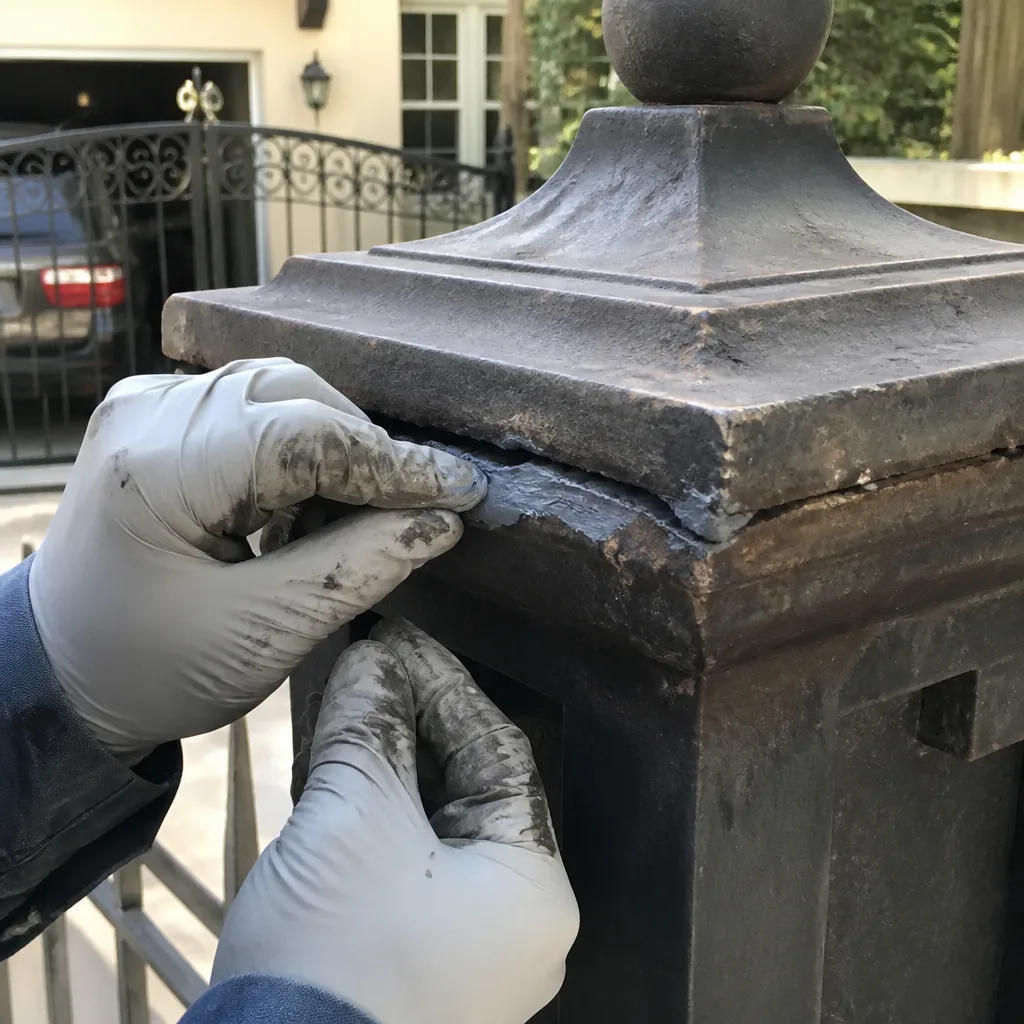
The California Residential Code (CRC) is not a loose advisory document. It is law, adopted statewide with force of code, and Arcadia’s building department applies the 2022 edition with local ordinances layered on top. Specific sections govern automatic gates in a residential setting, and contractors who ignore them are not just sloppy; they are performing work outside the legal framework that protects you as the property owner.
CRC Section R311 addresses means of egress, and gates on a required exit path fall under its scope. If your driveway gate is the only route from the primary entrance to the public sidewalk, the gate’s opening width, direction of swing, and hardware must meet egress standards. An automatic gate that fails and traps residents inside a property is an egress violation, not just an inconvenience. Arcadia inspectors check this on any permitted gate project, including operator installations.
The California Electrical Code Article 430 covers motors, motor circuits, and controllers. Your gate operator is a motor with a controller, and that controller’s overload protection, disconnecting means, and short-circuit protection all fall under Article 430. A permit inspection verifies that the branch circuit feeding the operator has proper overcurrent protection at the panel, a disconnecting means within sight of the motor, and a grounding path sized to code.
CEC Article 411 applies to low-voltage lighting systems, which matters when a gate project includes low-voltage landscape wiring or transformer-fed accessories. The moment a contractor taps into a 120-volt circuit to power a transformer for gate-operated lighting, the work enters the permit-required zone. A low-voltage wire buried in conduit is one thing; the line-voltage side of the equation is another.
The California Energy Code, Title 24, Part 6, may require that certain occupied spaces meet minimum lighting and electrical standards, but gate operators themselves are not typically an energy-code item. The important Title 24 interaction is with the building permit process: if your gate project includes a new exterior light fixture or a new electrical circuit, the permitted drawings must show the energy compliance notes, even for small residential jobs.
Arcadia’s municipal code adds a noise and operational hours angle that the state codes do not cover. Some neighborhoods in Arcadia have restrictions on gate operation between certain hours, particularly for heavy wrought-iron gates with audible slide tracks or rolling wheels. A properly permitted installation records the operator type, which helps if a noise complaint ever lands on your property.
Repair-in-Kind vs. New Installation: Where Contractors Blur the Line
The most common permit evasion in our Gate Repair services industry is labeling a new installation as a repair-in-kind. The game works like this: a homeowner’s 15-year-old operator dies, the contractor installs a new one from a different brand, rewires the control board, adds a new photo-eye set, and calls it a “replacement” on the invoice. Under Arcadia’s building code, that is not a repair. It is an alteration, and it required an electrical permit before work began.
Here is the specific test that separates a repair from an alteration, in plain language:
- Same motor, same board, same wiring: you replace a failed capacitor or a worn drive belt. No permit. This is maintenance.
- Same brand, same model, same voltage, new unit installed on existing wiring: the boundary case. Arcadia generally treats this as a repair if no wiring is modified and the mounting is unchanged.
- Different brand, different voltage, or new wiring: permit required. No gray area.
- Gate never had an operator before, and you are adding one: permit required. This is an electrical installation from scratch.
- Operator is installed, and you are adding a new circuit from the panel: permit required. A new circuit is a new circuit, no matter what load it serves.
Contractors blur the second bullet point most often. A technician may swap a Viking operator for a Ghost Controls operator and claim it is a “drop-in replacement.” It is not a drop-in replacement unless the mounting plate, the wire routing, and the electrical specifications match the original installation without modification. Different brands use different control logic, different wire termination points, and different safety input configurations. That work is an alteration by code definition.
We have watched this play out at the Arcadia permit counter. Homeowners come in months after a gate contractor finished a “replacement,” only to discover during a property sale that the work was never permitted. The disclosure form asks, and the answer is yes, you must disclose unpermitted work on the property. That disclosure either kills the deal, delays it, or costs money in escrow credits. The contractor who saved you $800 in permit fees is long gone when that happens.
Permits in Arcadia for this work are not expensive. An electrical permit for a residential gate operator typically runs in the low hundreds of dollars depending on project valuation. The inspection happens once the work is complete. A code-compliant installation passes on the first visit more often than not. The cost of the permit is nearly always less than the cost of retroactive trouble.
UL 325 and the Entrapment Devices Arcadia Inspectors Look For
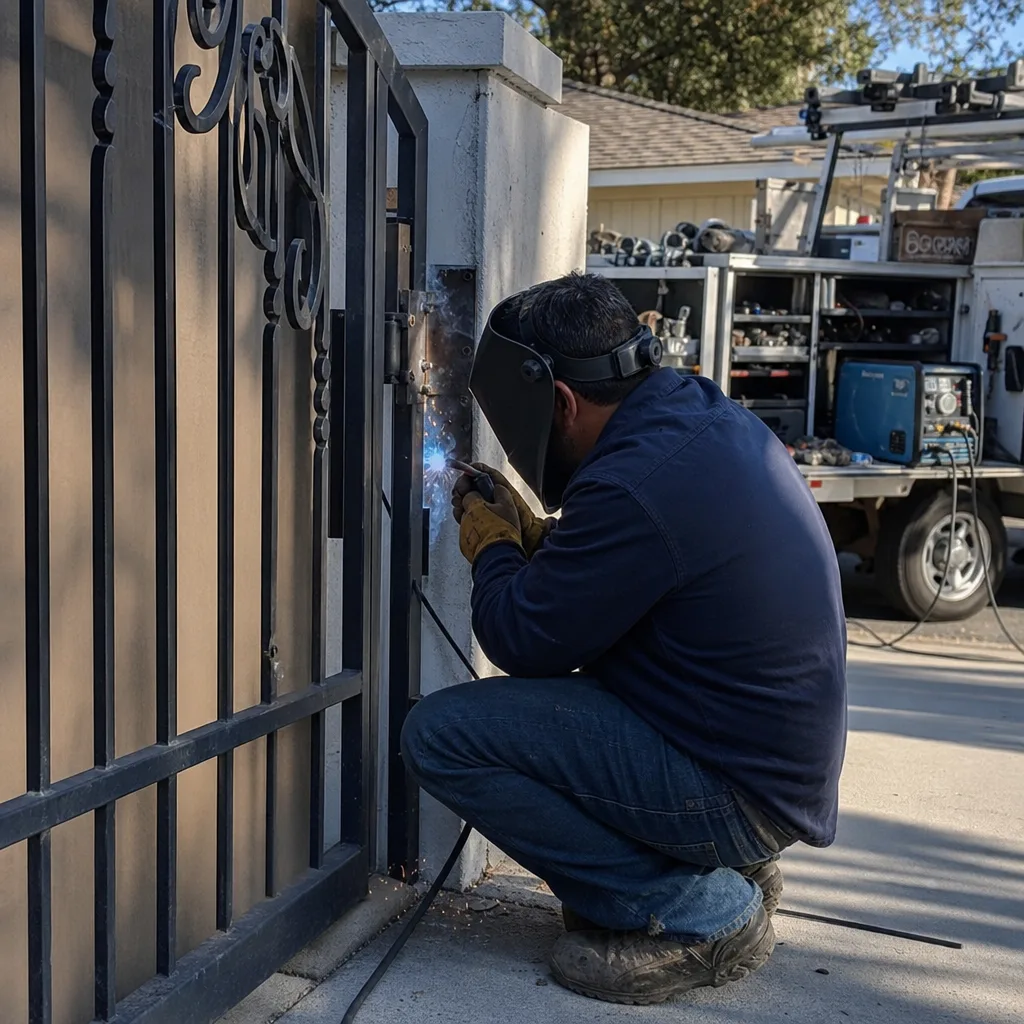
UL 325 is the safety standard that governs automatic gate operators in the United States, and California adopts it by reference into the California Electrical Code. Any gate operator installed in Arcadia must be listed for UL 325 compliance, which means the manufacturer certified the operator’s entrapment protection system through a nationally recognized testing laboratory. The listing requirement is not optional, and Arcadia inspectors verify it on every permitted operator installation.
There are two entrapment protection categories under UL 325, and both are required on any gate that moves automatically:
- Primary entrapment protection: the operator’s built-in sensing system, usually a motor current monitor or an encoder that measures speed and force. The operator must detect an obstruction and reverse or stop within the standard’s specified time and force limits before the gate can injure someone.
- Secondary entrapment protection: an external device, typically a photo-eye or a contact edge. A photo-eye is the infrared beam that stops the gate if something crosses the path. On a swing gate, the photo-eye must cover the pinch point where the gate meets the post. On a slide gate, it must protect the trailing edge and the leading edge.
Arcadia inspectors look specifically for the entrapment protection zones that the manufacturer’s installation manual identifies. The manual is not just a set of suggestions; it is part of the listing. If the manual says a photo-eye must be mounted within a certain height range, and the installer puts it 2 inches outside that range, the inspection fails. If the manual requires a contact edge on a specific hinge-side pinch point, and it is not there, the inspection fails.
Residential gates in Arcadia have seen their share of entrapment incidents over the years, and the city’s inspectors know what failed installations look like. A gate that reverses consistently during testing may still violate UL 325 if the reverse time is too slow or if the force setting is too high. Inspectors sometimes carry force gauges. A smart contractor tests entrapment protection before the inspector arrives, using the same checklist the inspector will use.
We have seen Arcadia properties with older operators that predate the current UL 325 revisions. An operator built in 1995 may not meet today’s entrapment protection requirements. If a repair keeps that operator in service, the permit question is secondary to the safety question: an operator without adequate entrapment protection is a legal liability the moment someone gets hurt. The repair conversation then becomes a replacement conversation, and a replacement of a non-compliant operator is an alteration, which means a permit.
How to Pull Your Gate’s Permit History in Arcadia Before Hiring Anyone
Most Arcadia homeowners do not know what has been permitted on their property until they try to sell it or file an insurance claim. That is the wrong time to learn. Pulling your permit history before hiring a gate contractor tells you three things: what work the city has on record, what work was done without record, and what you need to disclose when the property changes hands.
The City of Arcadia’s Building & Safety Division maintains permit records by street address. You can request the records in person at City Hall, or you can order the file through the city’s online portal. The records show the permit number, the project description, the valuation declared, the inspection dates, and the final sign-off status. If the file shows a finaled electrical permit from a 2012 gate operator installation, you have a documented baseline. If the file shows nothing but the gate clearly has an operator installed, that work was unpermitted, and you now know it before a contractor touches the property.
Follow these steps to pull your gate permit history in Arcadia:
- Gather your address details: exact street address, the assessor’s parcel number if you have it, and the year you purchased the property. The parcel number speeds the search.
- Visit the Arcadia Building & Safety Division online page: the city offers an electronic records request. There may be a small fee depending on the request type.
- Request specifically for electrical permits and building permits: do not ask for “gate permits.” The records are filed by permit type, not trade language. Ask for all permits at the address, then filter yourself.
- Note the finaled status: a permit that was issued but never finaled is worse than no permit at all in some ways, because the city will expect you to close it. An open permit is a red flag during escrow.
- Keep the records: file them with your closing documents. The next buyer’s agent will ask, and the ability to say “yes, here is the permit history” is a sale advantage.
If the records show unpermitted gate work, you are not automatically in trouble. The city’s interest is that the work be brought into compliance and inspected. The process for retroactive permitting exists, and it is not as hostile as homeowners fear. But the work must match current code, which may mean an operator replacement if the installed unit cannot pass UL 325 inspection. In our experience, homeowners who discover unpermitted gate work before a contractor touches the property are in a far better position than homeowners who discover it during a claim. See How to Hire a Gate Repair Contractor in Arcadia: A Step-by-Step Guide to vet your contractor properly. The contractor you hire can help assess what is salvable and what needs to come out.
For a deeper read on how repairs unfold on the property itself, you can start with our guide to gate repair in Arcadia.
How Documented Code-Compliant Work Protects You in a Sale or Claim
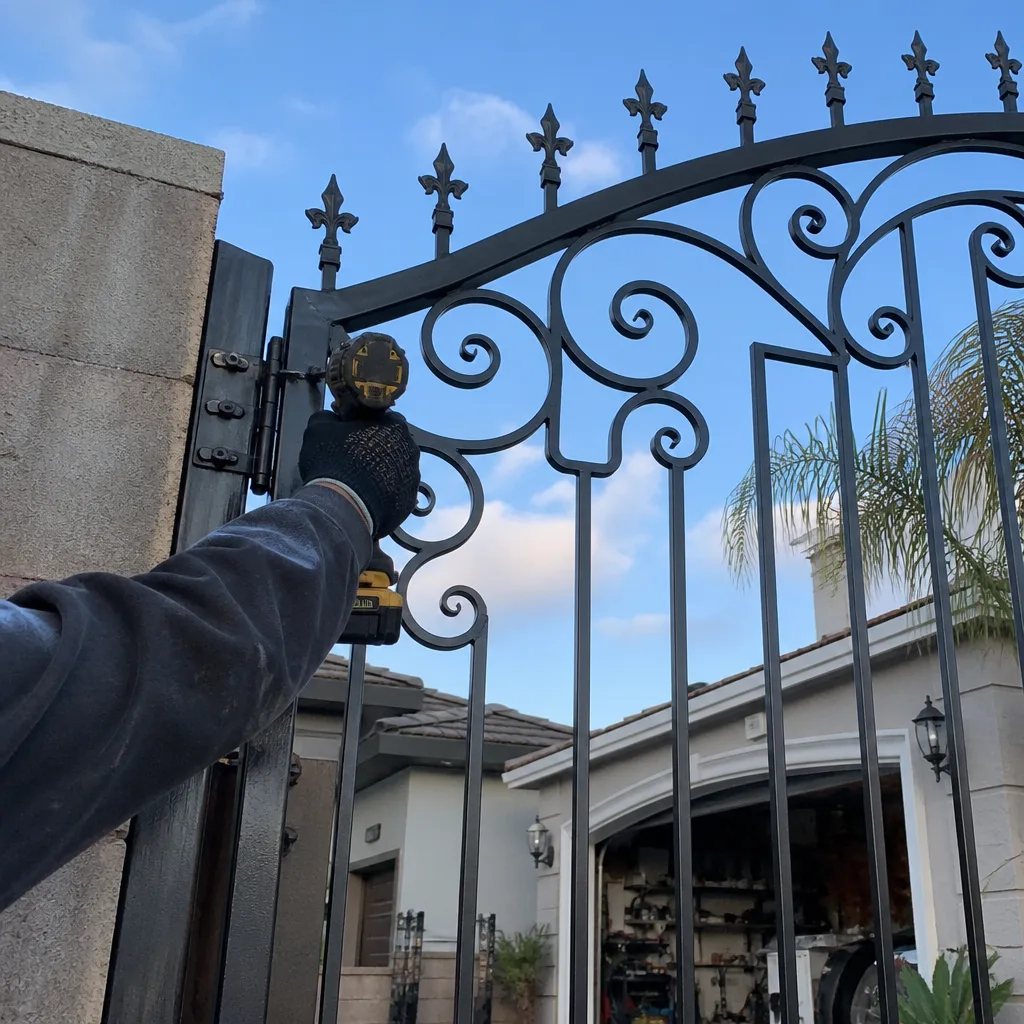
California is a disclosure state. When you sell a home in Arcadia, the real estate transfer disclosure statement asks about unpermitted work, and the standard CAR form already includes the most common red-flag questions. The buyer’s agent will order the city’s building record, and if that record does not match what stands on the property, the deal slows down or falls apart. A documented, permitted gate installation is the difference between a clean escrow and a seller credit.
The insurance side works on a different timeline. You are not in a hurry that day. You are standing in a garage looking at a gate that caught the bumper of a car, or an operator that shorted and sparked, and you are calling your insurer. The adjuster’s first question is almost always: when was the work done, by whom, and does the city have a permit on record? If the answer to the permit question is no, the insurer’s position shifts from coverage to exclusion. Unpermitted electrical work is a standard coverage defense, and it works because the policy language says the home must comply with code. If the work was not inspected, the insurer has grounds to argue it was not code-compliant.
We document every job in Arcadia under the Haven Standard: written price before work starts, a photo log of every adjustment, and a written record of the part numbers installed. That documentation does not replace a permit. It complements one. When a permitted job is documented, the homeowner has three layers of proof: the city’s record, the contractor’s photo log, and the written scope that defined the work. We have seen that paper trail save a homeowner thousands of dollars in a negotiation, because the buyer’s inspector could not poke holes in a record that matched the city’s file. If you need help navigating a current gate issue, our Arcadia home page is the starting point.
What Your Homeowner’s Insurance Does With Unpermitted Gate Work
The short answer is that your insurer uses the permit record as a proxy for code compliance, and when the permit is missing, the insurer uses that absence to defend a claim. This is not a subtlety of policy language. It is standard operating procedure in California property claims.
Here is what happens when a claim relates to unpermitted gate work:
- The adjuster orders a permit check from the City of Arcadia. This takes one phone call and the address. The city tells them what is on file.
- If the permit is missing, the insurer asks whether the work was disclosed. If the work predates your ownership and you did not know, the insurer may investigate the prior owner, but the claim still slow-walks while they sort out who knew what and when.
- If the work was done during your ownership without a permit, the insurer categorizes it as an unauthorized electrical modification. Many standard HO-3 policies exclude coverage for loss caused by non-code-compliant work, and the insurer will point to the exclusion if the gate work caused the damage.
- If the gate injured someone, the picture gets more serious. A personal injury claim against a non-code-compliant gate operator becomes a liability exclusion question. You are defending a claim without an insurer behind you if the exclusion holds.
The correction path exists. You can engage an Arcadia-licensed electrical contractor to inspect the work, file the permit retroactively, and bring the installation into compliance. The city will inspect and either pass the work or require changes. A failed inspection means more repair cost. A passed inspection means your insurer’s code-compliance argument largely evaporates. The money spent on retroactive permitting is almost always less than the money lost in a denied claim or a conceded seller credit. When the time comes to replace a gate or operators, we handle the permit path as part of gate installation work in Arcadia.
The Common Thread: Documentation Beats Conversation
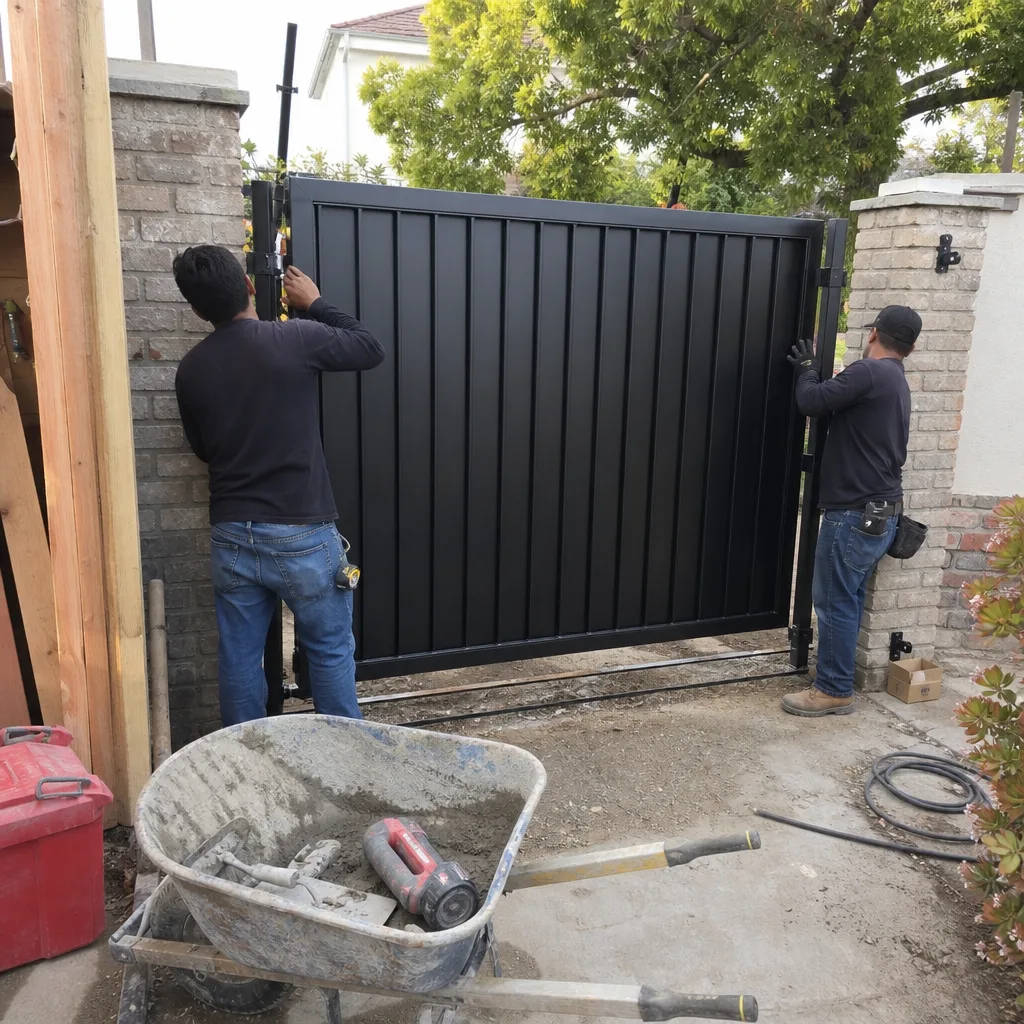
Every permit story in Arcadia comes back to the same thread: what is written and filed versus what was said on the driveway. The contractor who tells you “we don’t need a permit for this” is making a claim they cannot back up with a city record. If their claim is wrong, you live with the consequence, not them. If their claim is right, they should be able to show you the code section that supports it, on the spot, in writing. Most cannot. That inability is the tell.
The Haven Standard exists on our job sites before any permit discussion happens. Clause 1 says have it in writing. Clause 4 says evidence on every job. A written price before the work starts is the first layer of protection. A photo log at the end is the second. The city’s permit file is the third. When all three exist, the homeowner has a defense against the three things that actually go wrong with gate work: a surprise invoice, a failed inspection, and a denied claim. None of those three are the gate’s fault. All of them are avoidable.
Arcadia’s building department is not an adversary in this. The inspectors want the same thing you want: a gate that works, does not entrap anyone, and does not send sparks into the garage. The permit process is the mechanism that proves that. A contractor who resists the mechanism is resisting documentation, and that is a contractor whose word should not be the only record on your property. If you are planning a gate motor or opener project in Arcadia, the permit path should be part of the written quote from the start.
Common Mistakes to Avoid
- Trusting a verbal “you don’t need a permit.” The contractor who says this is gambling with your disclosure statement, not theirs. Ask for the specific code section in writing. If they cannot produce it, the statement has no weight, and the work proceeds at your risk.
- Believing a different brand replacement is maintenance. A DoorKing swapped for an Elite is no more “maintenance” than a water heater swapped for a different model. Different control logic, different wiring, different mounting. It is an alteration, and Arcadia treats it as one.
- Letting an open permit stay open. A permit that was pulled but never finaled is a liability on your property record. Close it or fix it. Do not let it sit for a decade and discover it during escrow.
- Rolling the dice on entrapment protection. A gate operator without adequate UL 325 protection is a personal injury lawsuit waiting for a child or a pet. Arcadia inspectors do not hand out warnings for missing photo-eyes. They fail the inspection.
- Ignoring the egress angle. A driveway gate that traps residents inside during a fire is the egress scenario no one thinks about until it happens. Gates on required exits must swing correctly and release correctly under failure. The permit check verifies this.
- Assuming the prior owner’s work was permitted. Pull the permit history before you hire anyone. Assuming the work is documented is the most expensive assumption in this entire guide.
- Accepting a verbal price. A verbal quote is not a quote. It is a conversation. A written price before the work starts is the single strongest protection a homeowner has in this trade, and it costs nothing to demand.
When to Call a Professional
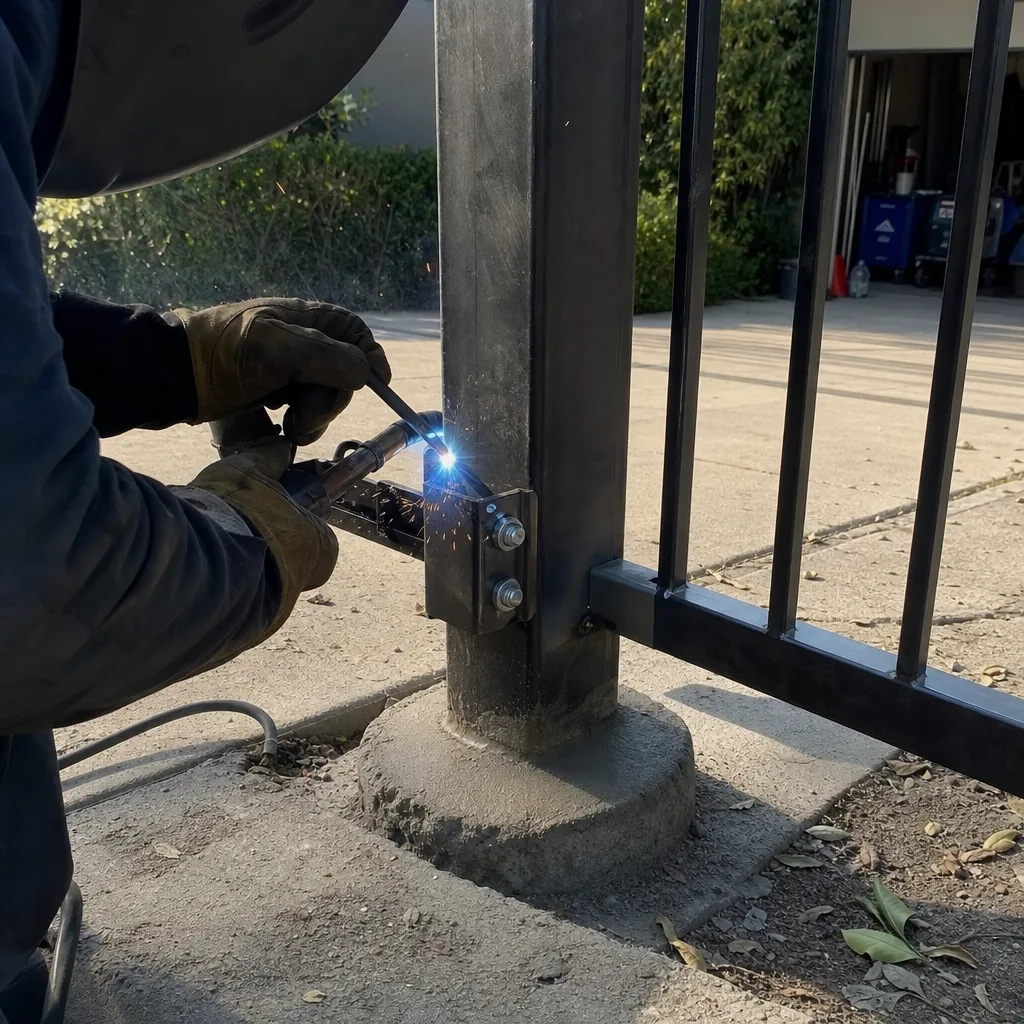
You should call a professional the moment the work touches an operator, a control board, a wire from the panel, or a gate structure that carries weight. These are not hobby repairs. The safety standard exists because gates have killed people, and the code exists because electrical work burns houses down. If your gate is making a grinding noise, a hinge replacement is a maintenance job. For more guides & resources on gate maintenance and repair, explore our blog. If your gate stops mid-travel and resets its own limits, the operator is failing, and the operator conversation in Arcadia includes the permit conversation. Vance Gate Repair Arcadia offers free estimates in Arcadia, call (562) 267-0589. We price in writing before any tool leaves the truck, and we leave a documented photo record on every visit.
Frequently Asked Questions
If the replacement is a true like-for-like swap of the same brand, same model, same voltage, with no wiring changes, Arcadia generally treats it as a repair and no permit is required. If the replacement is a different brand, a different voltage, a different mounting configuration, or adds new wiring, it is an electrical alteration and requires a permit. Call (562) 267-0589 and we can tell you which category your job falls into before any work starts.
An electrical permit for a residential gate operator in Arcadia typically runs in the low hundreds of dollars depending on the valuation of the project, with the inspection included in the permitting process. The permit fee is almost always less than the cost of retroactive corrective work if the unpermitted installation is later discovered. A written quote should include the permit line item as its own entry.
Yes. Request the permit history from Arcadia’s Building & Safety Division by street address. The record will show electrical and building permits by date, valuation, and finaled status. No record plus a working gate operator equals unpermitted work, and you now know before a contractor touches the property.
UL 325 is the entrapment protection standard that governs automatic gate operators in the United States, and California adopts it by reference into the California Electrical Code. Any operator installed in Arcadia must be listed for UL 325 compliance, with primary and secondary entrapment protection devices in place. Inspectors check the photo-eyes, the contact edges, and the force settings against the manufacturer’s manual.
You will be asked on the transfer disclosure statement, and the buyer’s agent will order a city record. If the record does not match the property, the deal either slows down for retroactive permitting or you concede money in escrow. The contract for the retroactive permit usually clears it, but it is always more expensive and more stressful than having permitted the work in the first place.
Yes. If a claim relates to unpermitted electrical work, the insurer will check the city permit record and may deny coverage under the code-compliance exclusion. The correction is to engage a licensed contractor, file retroactively, and bring the installation through inspection. Once signed off, the insurer’s exclusion argument largely disappears. Call (562) 267-0589 for an evaluation before you file a claim.
The Bottom Line
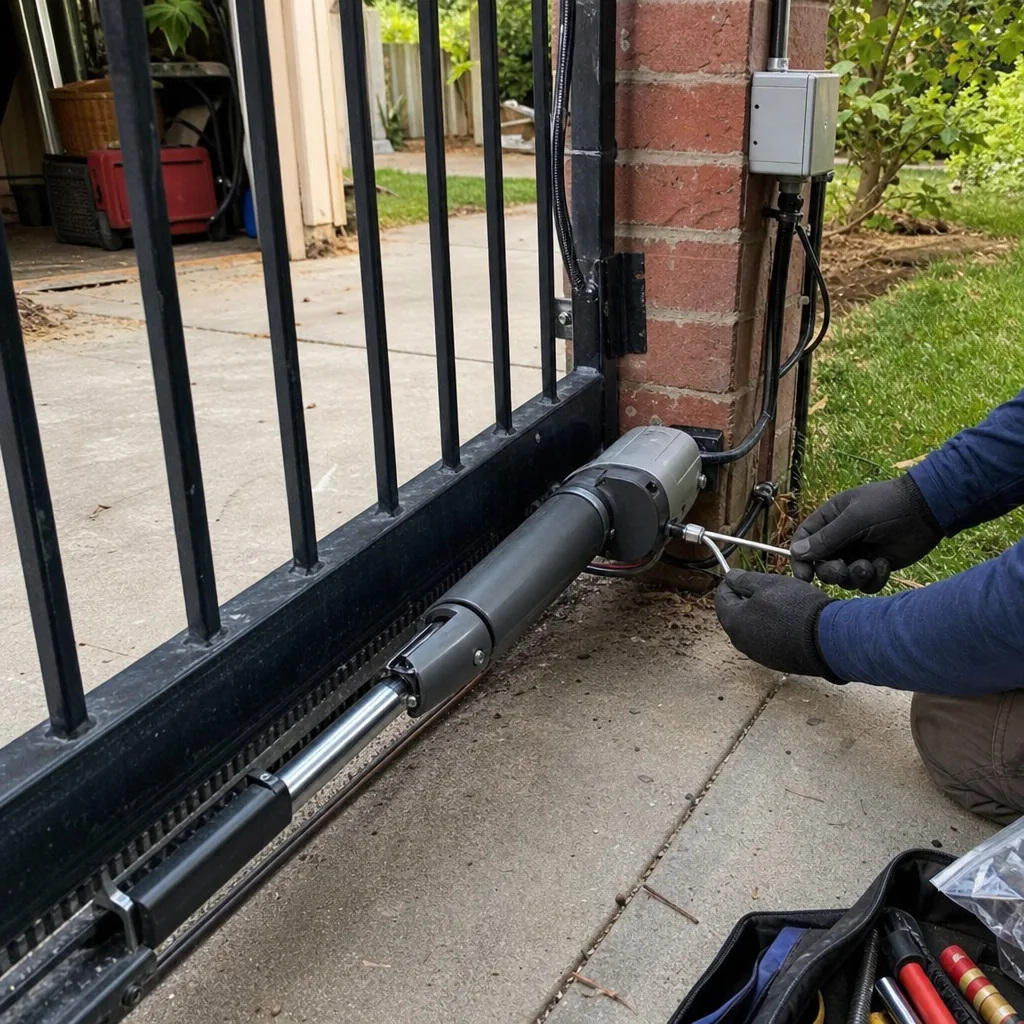
Gate repair in Arcadia splits along one bright line: mechanical work stays maintenance, electrical work enters permit territory. The contractors who blur that line are counting on you not discovering the difference until you are in escrow or in a claim, and by then the leverage has shifted. Pull your permit history before hiring anyone. Demand a written price that includes the permit line item when one applies. Insist on a documented record when the work is done. The gate that works is only half the job. The record that proves it works to code is the half you cannot see until you need it, and by then it is too late to create.
Written by Adrian Vance, Owner at Vance Gate Repair Arcadia, serving Arcadia since 2014.