
Last updated September 20, 2026
Free on-site gate assessment - hinges, posts, and your LiftMaster or Nice gate operator checked before anything is quoted
The assessment is free and the quote is the invoice.

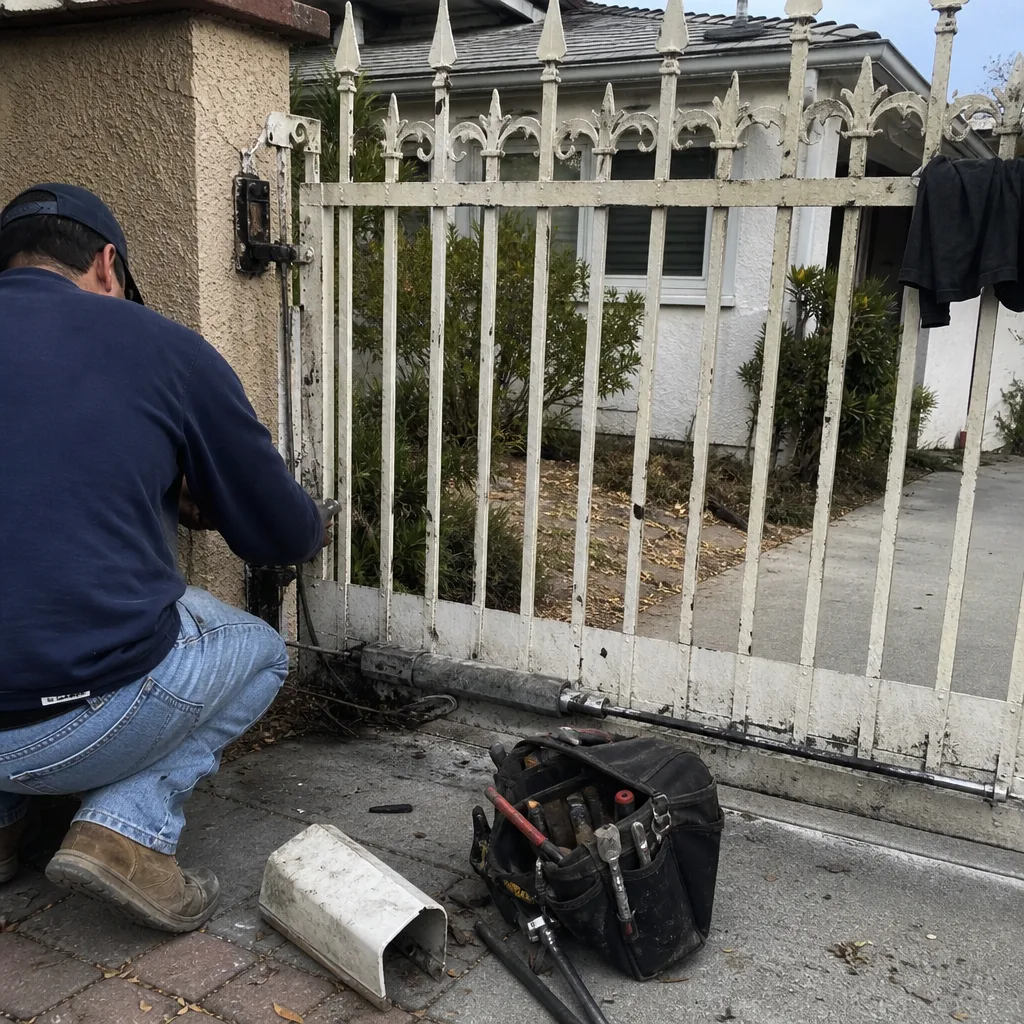 Before
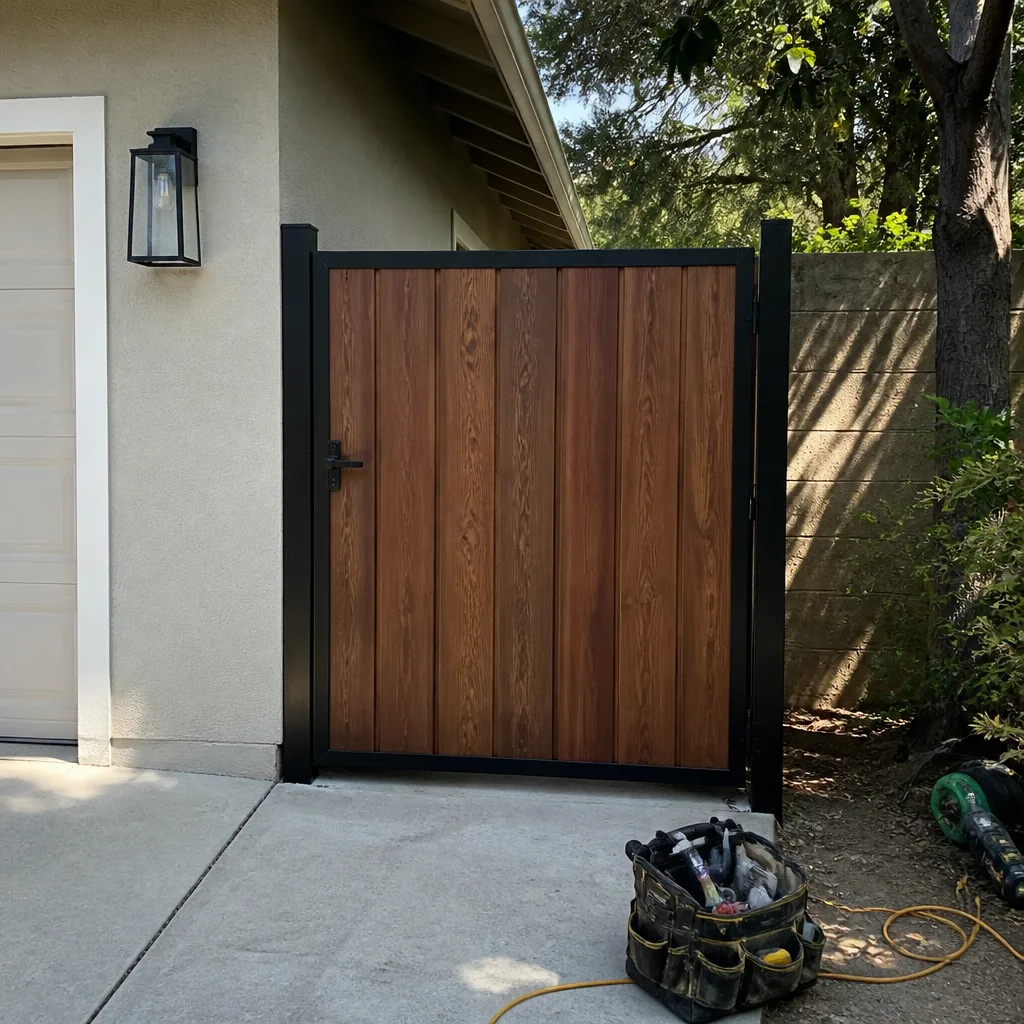 After
After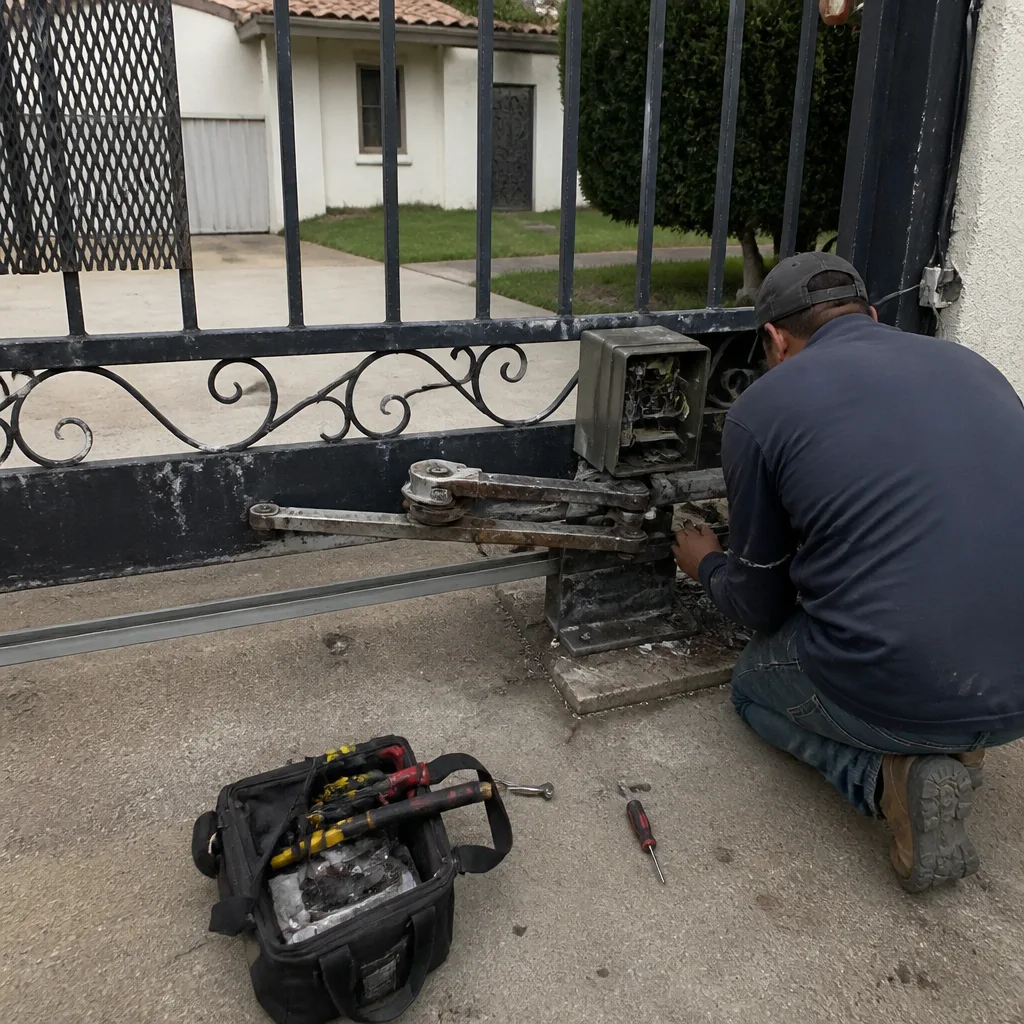 Before
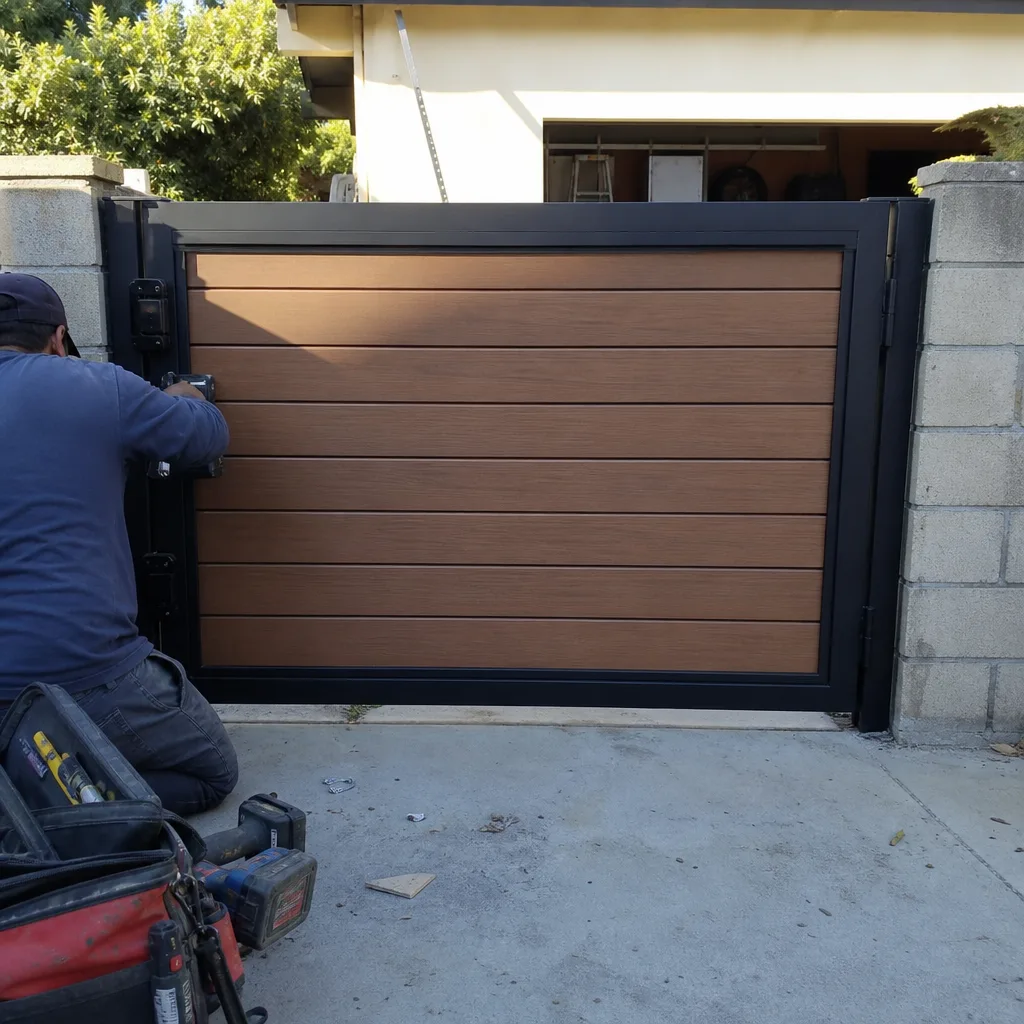 After
After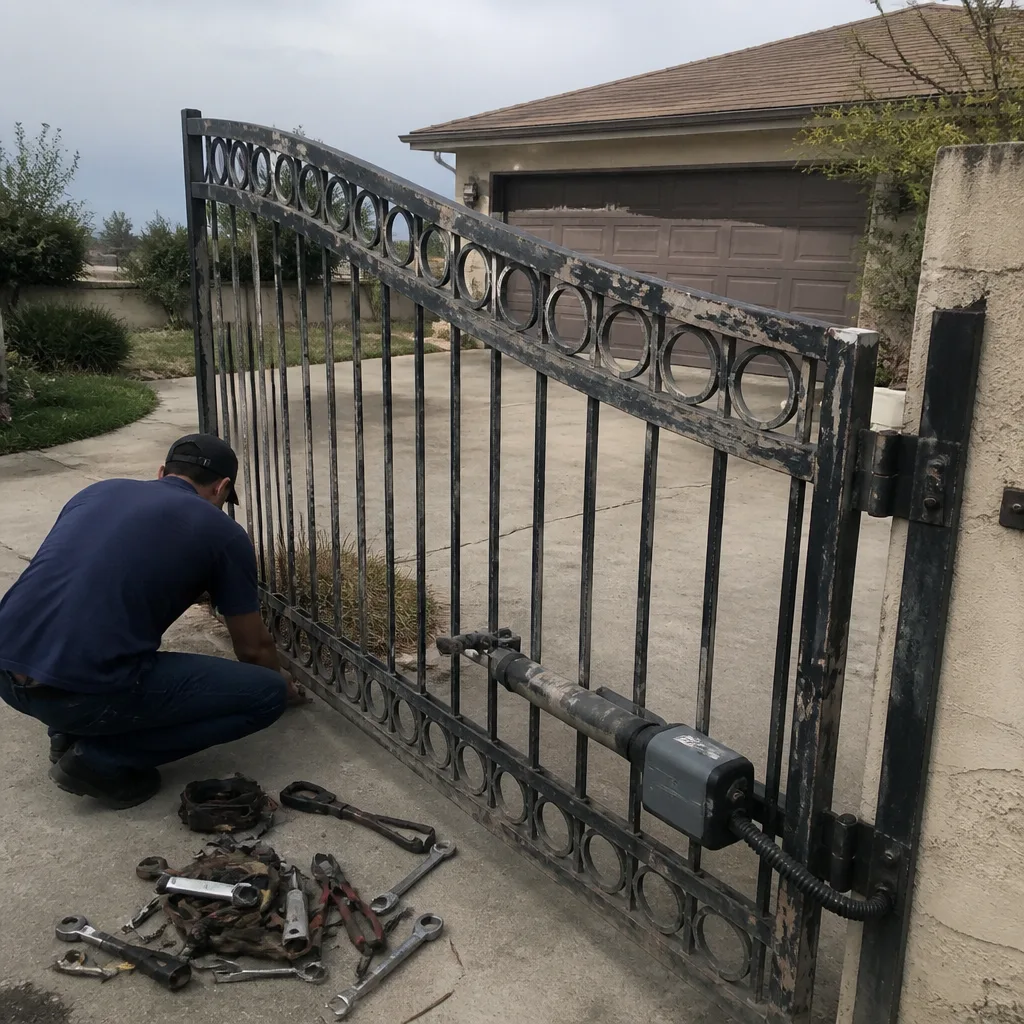 Before
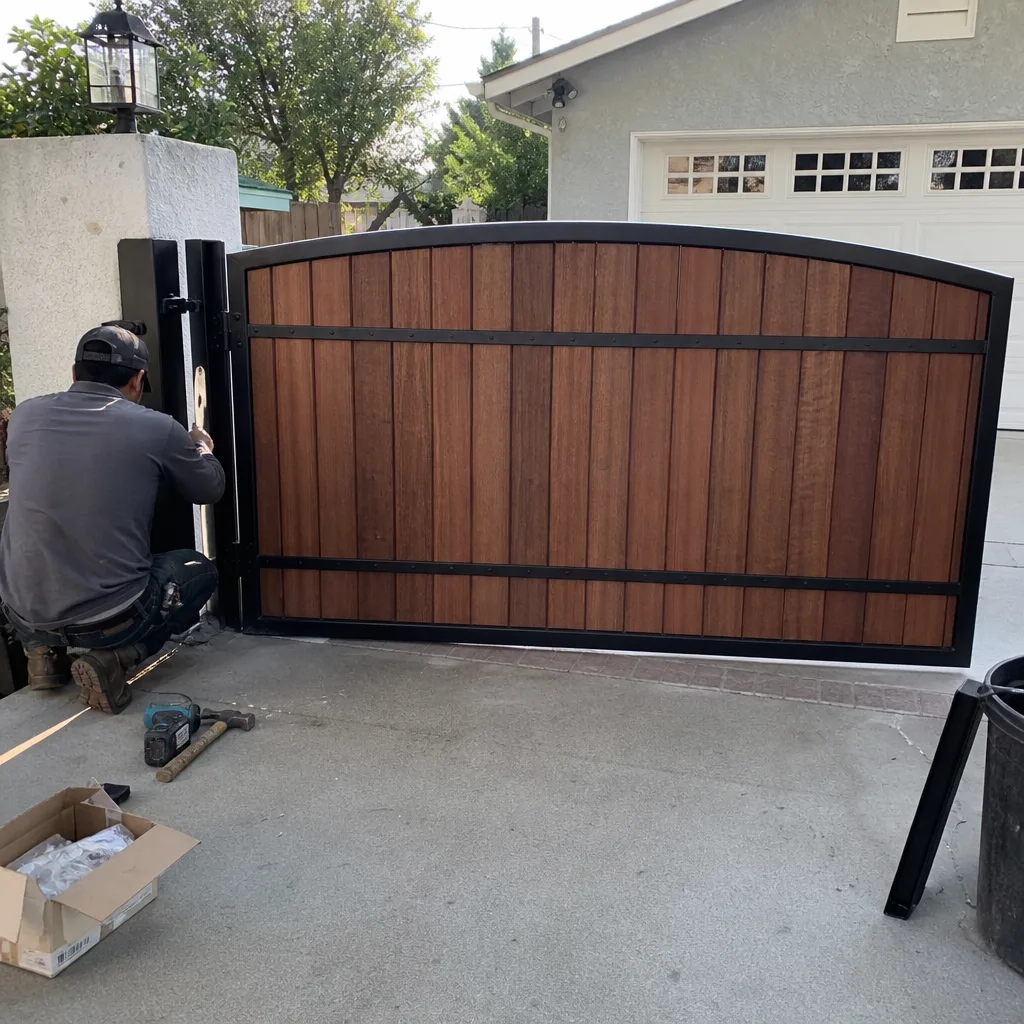 After
AfterSeasonal Gate Repair Care for Arcadia: Year-Round Homeowner’s Guide
The gate that fails in December didn’t break in December. It broke in October, when the Santa Ana winds drove fine grit into the limit-switch housing and nobody cleared it. Arcadia doesn’t get snow or ice, but it does get a specific environmental stress cycle that degrades gate hardware in a predictable sequence. Dry wind events, sudden downpours, and summer heat near 100°F each attack different components at different times of year. This guide maps that sequence to a calendar so you can catch wear before it becomes a breakdown. By the end, you’ll know what to inspect each season, what it costs to fix common issues in Arcadia, and how to document what you find so next year’s inspection takes twenty minutes instead of an hour.
Quick Answer
Seasonal gate care in Arcadia means inspecting different components at four specific times of year: after Santa Ana winds (October and November), before winter rain (December), after the rainy season ends (March), and during peak summer heat (July and August). The highest-value maintenance visit is the March post-rain inspection, which catches corrosion and conduit damage before they strand your gate closed in summer. Most seasonal inspections take under an hour and cost nothing beyond your time, while the repairs they prevent typically run $200 to $900 in the Arcadia market.
Table of Contents
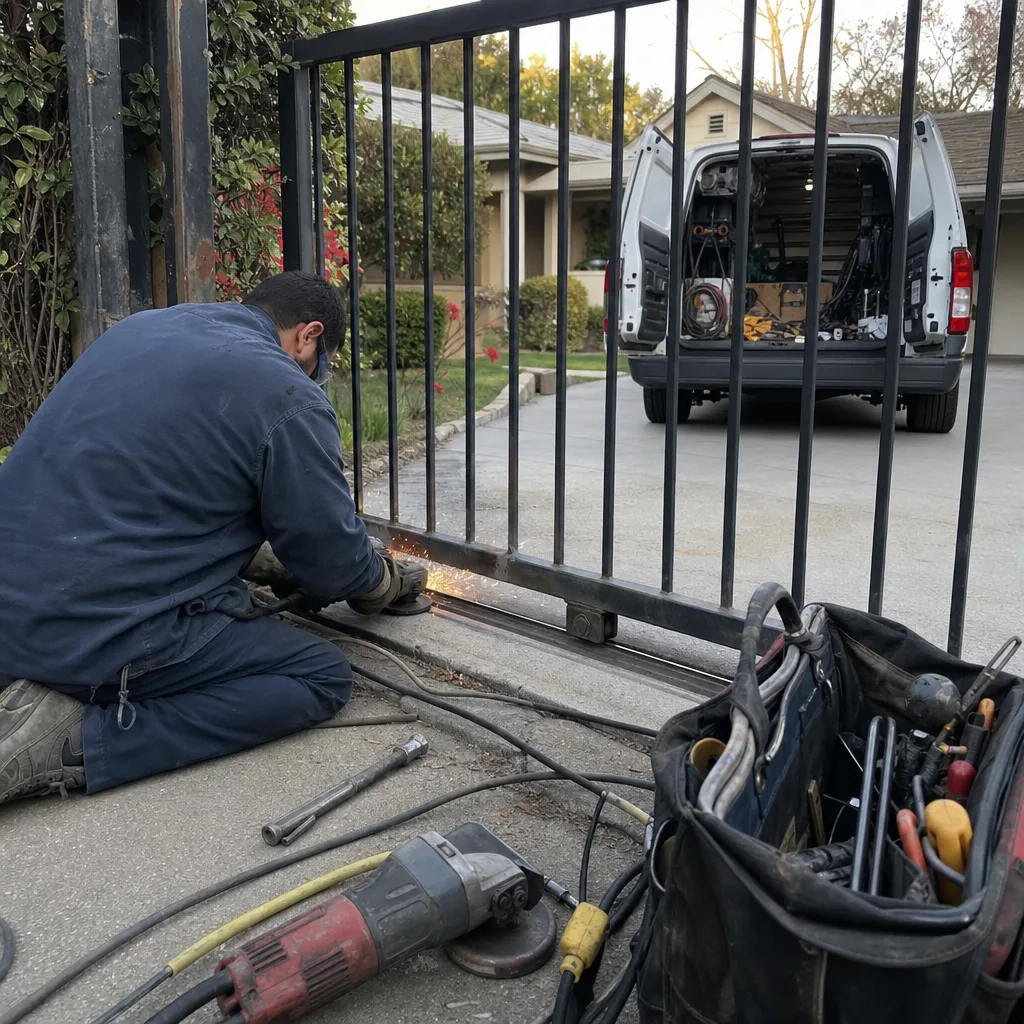
- What Arcadia’s Climate Actually Does to Gate Hardware
- Santa Ana Season: October to November
- Winter Rain Readiness: December to February
- The March Post-Rain Inspection: Highest-Value Visit of the Year
- Summer Heat and Battery Backup: June to September
- How to Document Seasonal Findings with Photos
- The 12-Month Arcadia Gate Maintenance Calendar
- Common Mistakes to Avoid
- When to Call a Professional
- Frequently Asked Questions
- The Bottom Line
BeforeAfterWhat Arcadia’s Climate Actually Does to Gate Hardware
Arcadia sits in a climate band that’s deceptive. The weather rarely looks extreme on any given day, but the cycling between conditions is what ages gate components. We’ve inspected gates in Arcadia where the original motor lasted nineteen years, and gates where a two-year-old unit was already failing. The difference is almost never the brand. It’s whether the owner understood what the local climate was doing to the hardware.
Three environmental stressors dominate in Arcadia:
- Santa Ana winds (typically October through November) carry fine dust and grit from the inland deserts. This material works into bearing races, chain links, limit-switch housings, and photo-eye lenses. The wear is abrasive, not dramatic. You won’t hear it happening. You’ll hear it later, as a grinding sound in the motor or a chain that hops.
- El Niño rain events (December through March in wet years) saturate the soil around gate posts and conduits. Below-grade wiring in 1980s and 1990s Arcadia installations was often run through rigid metal conduit that corrodes at the joints. When water sits in those joints for weeks, the insulation on low-voltage control wiring degrades. The symptom is intermittent: the gate works fine for three days, then refuses to open, then works again.
- Summer heat (July through September, often 95°F and above on the hottest days) reduces battery backup capacity and stresses electrolytic capacitors inside control boards. We’ll get into the battery math later in this guide, but the short version is that a battery rated for 7 amp-hours at 72°F delivers noticeably less at 95°F.
None of these stressors is unique to Arcadia, but the combination and timing are. A homeowner in Phoenix deals with heat but not El Niño rain. A homeowner in Seattle deals with rain but not Santa Ana grit. Arcadia gets both, on a predictable calendar. That’s the advantage: you can schedule maintenance around conditions you know are coming.
For a broader look at the services we provide in this area, visit our Gate Repair in Arcadia page.
Santa Ana Season: October to November
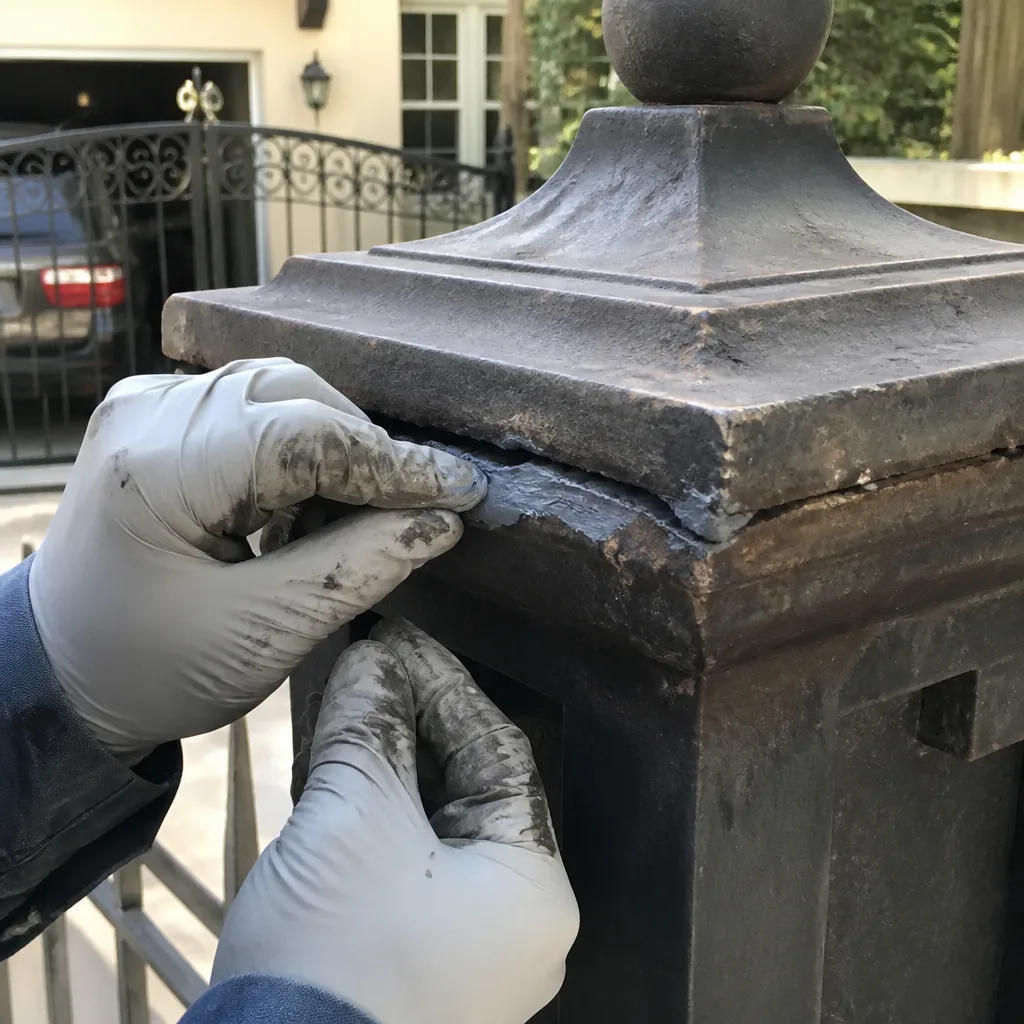
The Santa Ana wind season is the most underrated gate killer in Southern California. The winds themselves don’t damage gates directly in most cases. What they do is deliver abrasive particulate matter into every moving and sensing component, then leave it there to grind away through the winter.
Here’s the sequence we see repeatedly in Arcadia during and after Santa Ana events:
- The photo-eye gets dusty. The infrared beam that stops the gate if something crosses the path accumulates a film of fine dust on the lens. The beam weakens. The gate interprets this as an obstruction and refuses to close, or reverses mid-travel. The homeowner assumes the gate is broken. Often it just needs a lens wipe and a realignment check.
- The chain or belt picks up grit. On sliding gates, the drive chain sits close to the ground and catches airborne debris. Grit embeds in the chain lubricant. Over the next two or three months, that grit acts as a lapping compound on the sprocket teeth. The chain stretches, tension changes, and the gate starts running rough.
- The limit-switch housing fills with fine dust. Limit switches tell the motor when the gate has reached the fully open or fully closed position. When dust gets inside the housing, the switch mechanism can bind or read incorrectly. A limit switch that was set 12 degrees past travel means the motor keeps pushing after the gate has stopped, which strains the gearbox and can crack the drive arm on a swing gate.
- Bearing surfaces dry out. Santa Ana winds have extremely low humidity, often below 10%. Grease in unsealed bearing surfaces dries faster during these events than at any other time of year. Once the grease is gone, the bearing runs metal on metal.
What to do immediately after a Santa Ana event:
- Wipe the photo-eye lenses with a clean, dry cloth. Check that the beam alignment indicator (usually a small LED on the photo-eye housing) reads solid green or solid red depending on your model.
- Visually inspect the chain or belt for dark, gritty buildup. If it looks like it has sand mixed into the lubricant, that’s exactly what it is.
- Run the gate through two full open-close cycles and listen for any change in sound. A grinding noise that wasn’t there before is almost always grit in a bearing or chain.
- Check that the gate stops at the same position each time. If it creeps past where it used to stop, the limit switch may need attention.
One thing we do on every gate service visit in Arcadia is record limit-switch positions with photos before and after adjustment. That way, if the gate drifts again next season, we can compare against the baseline instead of guessing. It’s a habit Adrian Vance developed doing commercial access-control work starting in 2014, and it transfers directly to residential gates. A photo of a limit-switch setting costs nothing and saves a future service call.
Winter Rain Readiness: December to February
Arcadia’s winter rain pattern is inconsistent year to year. El Niño seasons can bring weeks of steady precipitation; La Niña seasons can be nearly dry. The problem for gate hardware is that the damage from wet years often doesn’t show up until months later, and in dry years, the previous wet cycle’s damage is still there, waiting.
The component most vulnerable to winter rain in Arcadia is the below-grade wiring conduit. Many homes in Arcadia were built in the 1980s and 1990s, and the gate installations from that era used rigid metal conduit run underground from the house or garage to the gate post. Over decades, the conduit joints corrode. When El Niño rains saturate the ground, water enters the conduit at the joints. Low-voltage control wiring (usually 24V for the photo-eyes, keypad, and other accessories) sits in damp conduit for weeks. The insulation breaks down, and intermittent shorts begin.
The classic symptom: the gate works fine in dry weather, but after two or three days of rain, it opens but won’t close, or the keypad stops responding. The homeowner calls us and says the gate is “acting weird.” What’s actually happening is that a low-voltage wire is leaking current into the damp conduit. The control board sees the voltage drop and shuts the system down to protect itself, then resets when things dry out.
Before winter rain arrives, do these three things:
- Inspect the conduit stub-ups. Where the conduit emerges from the ground at the house and at the gate, look for rust, cracks, or gaps. If the conduit is PVC, look for separation at the joints. These entry points are where most water gets in.
- Check the weep holes on the gate post. Many gate posts have small drain holes at the base. If they’re clogged with dirt or debris from the Santa Ana season, water pools inside the post and accelerates corrosion on the hinges and mounting bolts.
- Test the gate once during a heavy rain. If it behaves differently in the rain than it does in dry weather, that’s diagnostic information. Write down exactly what it did differently. That detail cuts the diagnostic time on a service call in half.
For gate operators specifically, rain affects the external keypads and the control board enclosure. The enclosure gaskets dry out and crack over time, and when water gets inside, the board can short. If you see condensation inside the control box after a rain, the gasket needs replacement. That’s a $15 to $40 part that protects a $300 to $700 board.
If your gate needs attention before the rains arrive, our Gate Motor & Opener in Arcadia service covers inspection, adjustment, and repair of all major brands including LiftMaster, FAAC, BFT, Linear, Viking, Ghost Controls, DoorKing, Elite, and Mighty Mule.
The March Post-Rain Inspection: Highest-Value Visit of the Year
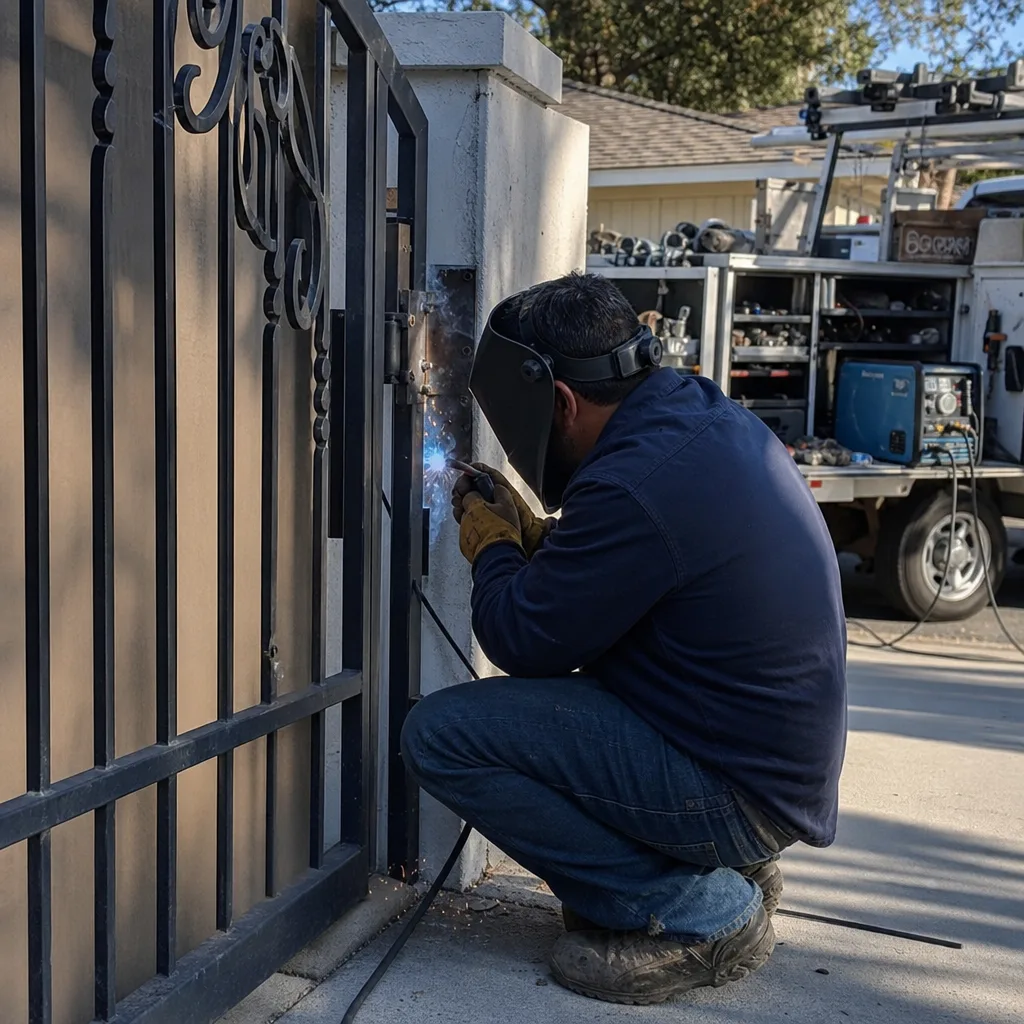
If you only do one gate maintenance activity per year, make it the March post-rain inspection. Here’s why: by March, the gate has just survived the two most damaging seasons back to back. Santa Ana grit has been working on the moving parts since October, and winter rain has been working on the electrical connections since December. Anything that got weakened is now visible, and the dry summer months ahead mean you have three or four months of good weather to fix it before the next rain cycle begins.
March is also when we find the problems that would otherwise strand a gate in July. The summer heat doesn’t create most gate failures; it finishes them. A capacitor that was weakened by moisture in February might limp along through spring, then fail completely in August when the board runs hot. If you catch it in March, it’s a $75 board-component replacement. If you wait until it fails in August, it’s a full control-board replacement at $400 to $900 depending on the brand.
The March inspection checklist:
- Run the gate through five full cycles. Watch for hesitation, reversal, or uneven speed. Any change from baseline is a finding. Note it.
- Check all hinge bolts and mounting brackets for rust. Wet winter weather accelerates corrosion on exposed steel. A hinge bolt that’s rusted but not yet seized can be treated with penetrating oil and tightened. One that’s seized needs replacement before it breaks.
- Inspect the chain or belt tension. Winter temperature swings cause metal to expand and contract. Chains that were properly tensioned in October can be loose by March. A chain that’s too loose jumps the sprocket; too tight wears the motor bearing. The adjustment is usually one lock nut and ten minutes.
- Test the battery backup. Unplug the gate motor from AC power and run the gate on battery. If it moves slowly or stops midway, the battery has lost capacity over the winter. More on battery math in the next section.
- Look at every wiring connection you can access. Green corrosion on a terminal means moisture got in. Tighten the connection, clean the terminal, and seal the enclosure. Document what you found.
- Lubricate all pivot points. Use a light machine oil or a spray lubricant designed for gate hardware. Do not use WD-40 as a lubricant; it’s a solvent and will strip existing grease. Use it only for cleaning, then apply proper lubricant.
The March inspection is also the ideal time to repair any damage found, because the mild spring weather in Arcadia means the gate isn’t under thermal stress while the work is happening. In our experience, the March visit catches two-thirds of the repairs we’d otherwise be doing as emergency calls in July and August.
If you’re not sure what you’re looking at during an inspection, our Vance Gate Repair Arcadia home page explains what a documented gate service visit includes. Every visit ends with a photo log of what was found and what was adjusted, so you’re not relying on memory next year.
Summer Heat and Battery Backup: June to September
Summer in Arcadia regularly pushes past 95°F, and the heat affects gate systems in ways that are measurable rather than anecdotal. The component most affected is the battery backup, and the math is straightforward.
A sealed lead-acid battery rated at 7 amp-hours (Ah) delivers that full capacity when the battery temperature is around 72°F. At 95°F, the same battery’s effective capacity drops by roughly 15 to 20 percent, and its internal chemistry degrades faster. What does that mean in practice? A 7Ah battery that held enough charge to run a gate through thirty open-close cycles in March might hold enough for twenty-five by August. That’s not a problem for most homeowners. The problem is when the battery was already marginal: a battery at 60 percent of its rated capacity in March might be at 45 percent by August, and that’s below the threshold where the gate motor draws enough current to move the gate. The motor hums, the gate doesn’t move, and the homeowner is stranded with a gate stuck closed.
For gate systems on Arcadia properties where the control board is mounted inside an enclosure exposed to direct afternoon sun, the heat also ages electrolytic capacitors faster. Capacitors have a rated lifetime in hours at a specified temperature; every 10°C increase above that temperature roughly halves the capacitor’s expected life. A control board that sits at 105°F inside its enclosure on a 95°F day is aging its capacitors at two to four times the rate of the same board in a shaded installation.
What to do before summer heat peaks:
- If your gate has a battery backup, test it during a cool morning. Unplug the AC supply and run the gate on battery alone. If the gate moves at half speed or stops before completing the cycle, replace the battery before the first heat wave. A replacement battery typically runs $40 to $120 for residential gate systems, depending on capacity and brand, and the swap takes under 30 minutes on most units.
- Shade the control enclosure if possible. A simple awning or even strategic planting that blocks direct afternoon sun from hitting the enclosure reduces internal temperatures significantly. We’ve measured 20-degree differences between shaded and unshaded enclosures on the same street in Arcadia.
- Check the cooling vents on the motor housing. Dust from Santa Ana season plus dry summer conditions can clog ventilation openings. A motor that can’t shed heat runs hot, and heat shortens winding insulation life.
- Listen for a motor that sounds different at 3 p.m. than it did at 8 a.m. Thermal expansion changes clearances inside the motor and gearbox. A gate that’s smooth in the morning and grinds in the afternoon is telling you something about bearing condition.
Summer is also when we get the most calls about gates that won’t close fully during the hottest part of the day. The cause is usually thermal expansion of the gate itself. A 16-foot steel gate can grow by 1/8 to 1/4 inch between a 60°F morning and a 100°F afternoon. If the gate was installed with tight clearance to the latch post, that expansion is enough to make the latch bind. The fix isn’t a new gate; it’s a clearance adjustment, and it takes less than an hour on most installations.
How to Document Seasonal Findings with Photos
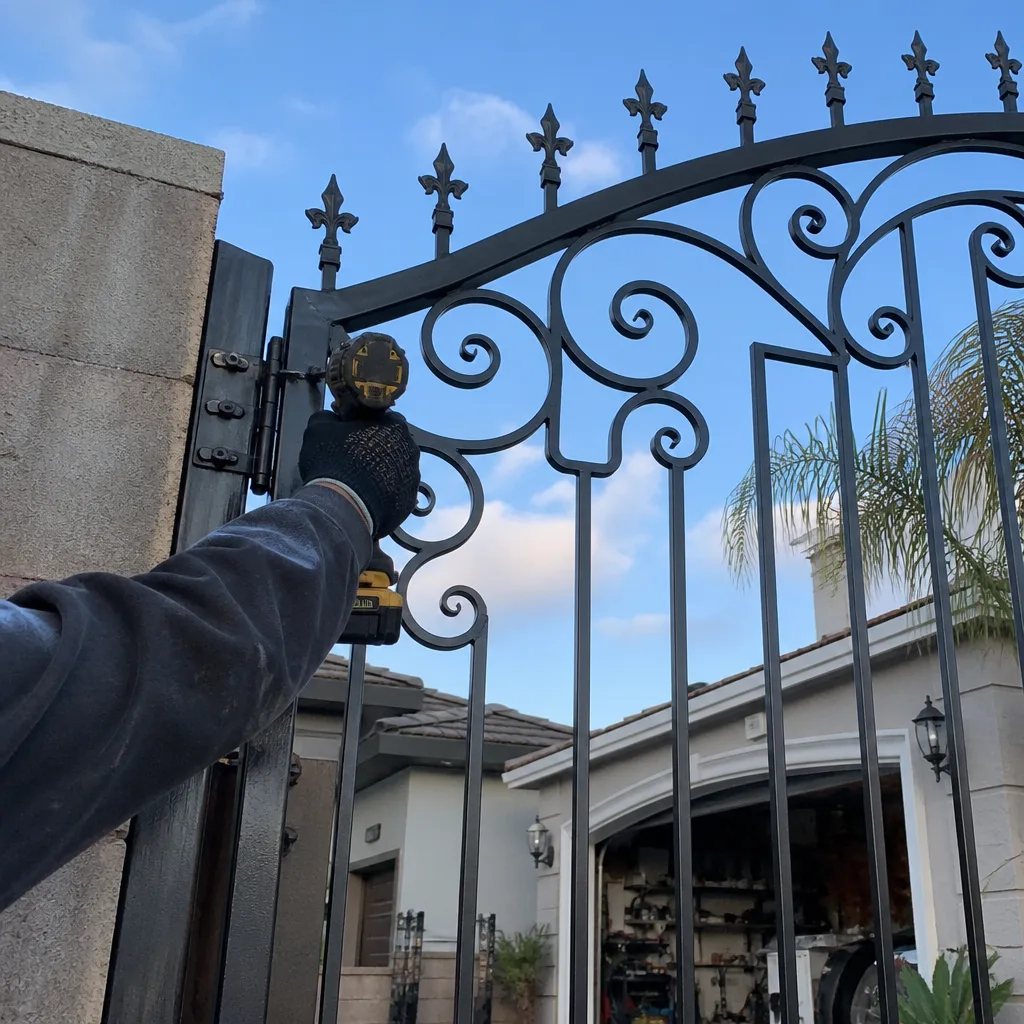
The single most useful habit any Arcadia homeowner can develop for gate maintenance is photographic documentation. It sounds obvious, but most people take photos of their gate only when it’s broken. The photos you take when the gate is working are the ones that make the next problem diagnosable.
Here’s why: wear patterns develop gradually. A hinge that’s slightly loose in March and a little looser in June and looser still in September might never trigger a failure on its own. But when that hinge finally gives way in November during a Santa Ana event, the question is whether it was a sudden failure or the endpoint of a trend. If you have photos from March showing the hinge just beginning to develop play, and a service record from March noting the same, the diagnosis is clear: replacement. No photos, no record, and the technician has to guess whether it was abuse, accident, or age.
The documentation we leave on every Vance Gate Repair visit follows the same logic. A photographed record of what was found, what was set, and what was installed means the next technician, whether it’s us or someone else, starts from evidence instead of assumption. Under Haven Standard Clause 4 (Evidence on every job), every visit includes that documented photo record at no additional charge.
How to photograph your gate for seasonal records:
- Stand in the same position each time. Pick three spots: full gate from 15 feet back, close-up of the hinge or roller assembly, close-up of the control board and wiring. Use the same spots every season.
- Get close enough to see the detail. A photo of the whole gate is useful for alignment reference. But the hinge photo needs to show the bolt heads, the rust pattern, and the gap between moving parts. Use the macro setting on your phone if you have one.
- Include a scale reference. When measuring a gap or a frayed cable, hold a coin or a key next to it in the photo. A quarter next to a gap tells you more than any written description.
- Label and file. Create a folder on your phone or computer: Gate_March_2026, Gate_June_2026, and so on. The folder name is the label. You don’t need anything more elaborate.
- Note the weather conditions. If you took the photos on a 95-degree day or right after a Santa Ana event, that matters. Write it in the filename or a note alongside.
Year over year, the photo record reveals trends you can’t see in a single inspection. A rust spot that’s stable for two years and then doubles in size over six months tells you something material is changing. A limit switch that stays put through two seasons and then drifts tells you the retention mechanism is failing, not just loose. This is the same documentation habit we bring to every Gate Installation in Arcadia project: evidence over memory, every time.
The 12-Month Arcadia Gate Maintenance Calendar
Putting everything together, here’s the full year mapped to Arcadia’s specific climate cycle. Print this, tape it inside your garage or gate control box, and it becomes a five-minute task each season instead of an hour of remembered checks.
January to February: Monitor During Wet Weather
- Run the gate twice during any week with significant rain. Note any difference in behavior.
- Check for water pooling around the gate post or conduit entry points.
- If the gate acts differently in the rain, write down the exact symptom now. That note saves a diagnostic fee later.
- Keep the photo-eye lenses clean; winter mud splashes onto them during rain.
March: Post-Rain Deep Inspection
- Complete the full March inspection checklist from above.
- Document everything with photos.
- Schedule any repairs found. Spring is the cheapest time to fix gate problems in Arcadia because demand is low and conditions are mild.
- Test the battery backup and replace if marginal.
April to May: Repair and Prepare
- Complete any repairs identified in March.
- Lubricate all pivot points with proper gate lubricant.
- Check chain tension and adjust if loose.
- Verify the gate stops at the correct open and close limits after winter wear.
June to August: Heat Management
- Shade the control enclosure if it receives direct afternoon sun.
- Test the battery backup monthly during peak heat.
- Listen for changes in motor sound between morning and afternoon.
- If the gate binds in the afternoon heat, have the clearance checked.
September: Pre-Santa Ana Prep
- Inspect and clean the photo-eye lenses before the wind season begins.
- Check the gate for any loose hardware; the winds will find anything that’s not tight.
- Verify the limit switches are clean and properly seated.
- If your gate has a chain, inspect for grit buildup and clean or lubricate as needed.
October to November: Santa Ana Response
- After each significant wind event, run the gate through two full cycles.
- Wipe the photo-eye lenses and check alignment.
- Listen for new grinding noises and check the chain or belt for grit.
- Check the limit-switch housings for dust intrusion.
December: Rain Readiness Review
- Inspect conduit stub-ups for rust, cracks, or gaps.
- Clear the weep holes at the base of the gate post.
- Test the gate once during the first significant rain.
- Check the control enclosure gasket for dryness or cracks.
Common Mistakes to Avoid
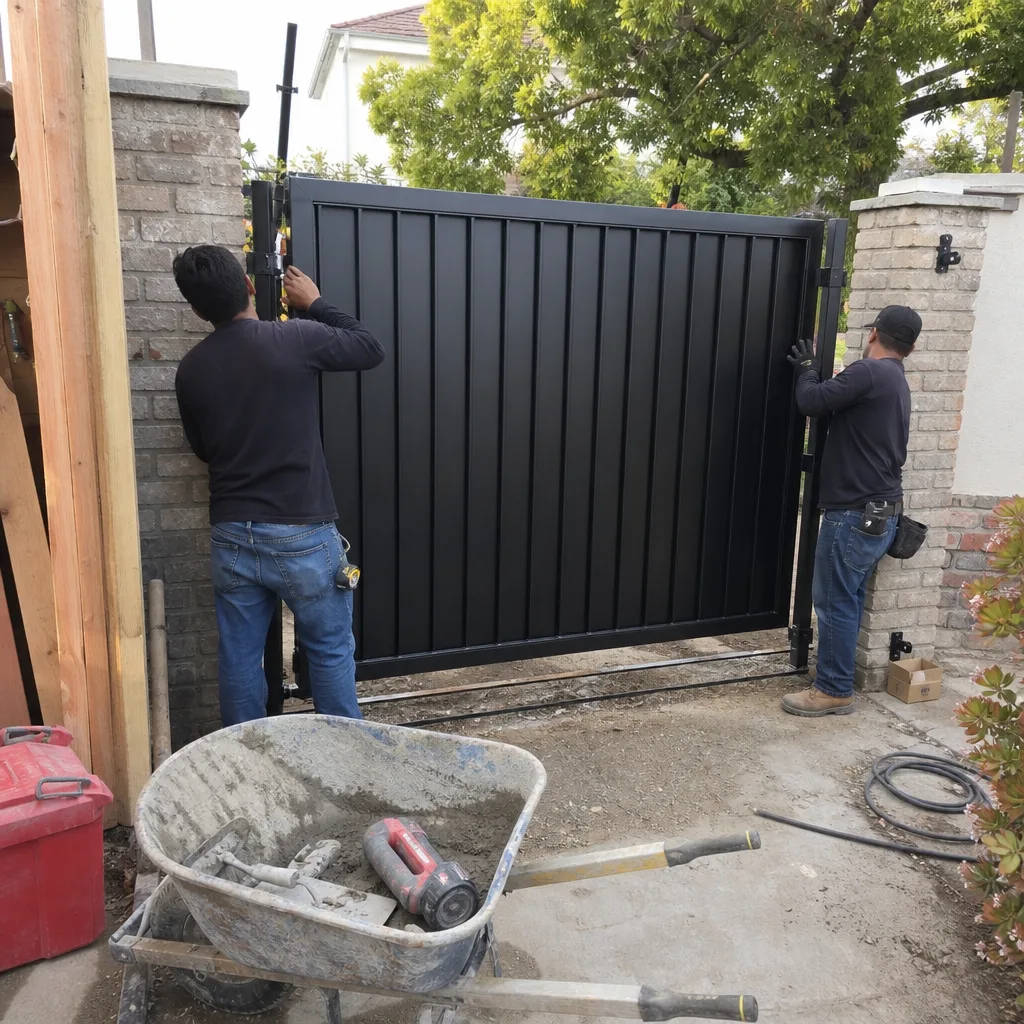
- Waiting until the gate stops working to call for service. By the time a gate fails completely, the root cause has usually been developing for weeks or months. The gate in December that suddenly won’t open probably started showing signs in October. Catching those signs early turns a $700 replacement into a $150 adjustment.
- Using the wrong lubricant. WD-40 is a solvent and rust inhibitor, not a lubricant. It strips the grease from chains and bearings, then evaporates, leaving the part drier than before. Use a lubricant designed for gate or garage door hardware, typically a lithium or silicone-based product.
- Ignoring a gate that runs slightly differently. A speed change, a new sound, a hesitation, a reversal that didn’t happen before. These are all data points, not quirks. Each one has a specific cause, and identifying the cause early is cheaper than waiting for the failure.
- Testing the battery backup incorrectly. Many homeowners check the battery by seeing if the gate opens when they press the button, not realizing the AC power is still connected. The gate always works in that test because it’s not using the battery. The correct test is unplugging the AC supply and then running the gate.
- Not documenting inspections. Memory is unreliable across seasons. A photo from March that shows a hinge just starting to rust is worth more in September than any recollection of “it looked fine.”
- Replacing a gate when the problem is one component. A gate that’s binding, grinding, or reversing usually has a fixable issue in the motor, the hinges, the chain, or the control board. Replacing the entire gate because the motor is failing is like replacing a car because the starter died. In the Arcadia market, a full gate replacement typically runs $2,500 to $8,000, while the component repair usually runs $200 to $900.
- Letting the gate sit unused for weeks then expecting it to work perfectly. Gates are mechanical systems that benefit from regular movement. A gate that sits unopened for months develops flat spots on bearings and stiffness in the joints. Run the gate at least once a week, even if you’re not using it for access.
When to Call a Professional
Some seasonal maintenance tasks are genuinely DIY-friendly: wiping photo-eye lenses, clearing weep holes, and listening for changes in motor sound all fall into that category. Others are not. If you encounter any of the following during a seasonal inspection, call a professional rather than attempting the repair yourself:
- Any spring-related work. Swing gates use torsion or extension springs under high tension. A spring under load can release catastrophically, causing serious injury. Do not attempt to adjust, replace, or remove a gate spring without proper training and tools.
- Electrical work inside the control enclosure. Gate systems run on both line voltage (120V AC) and low voltage (24V). If you find corrosion on terminals, a burnt smell, or visible arcing, do not touch the wiring. Turn the system off at the breaker and call a technician.
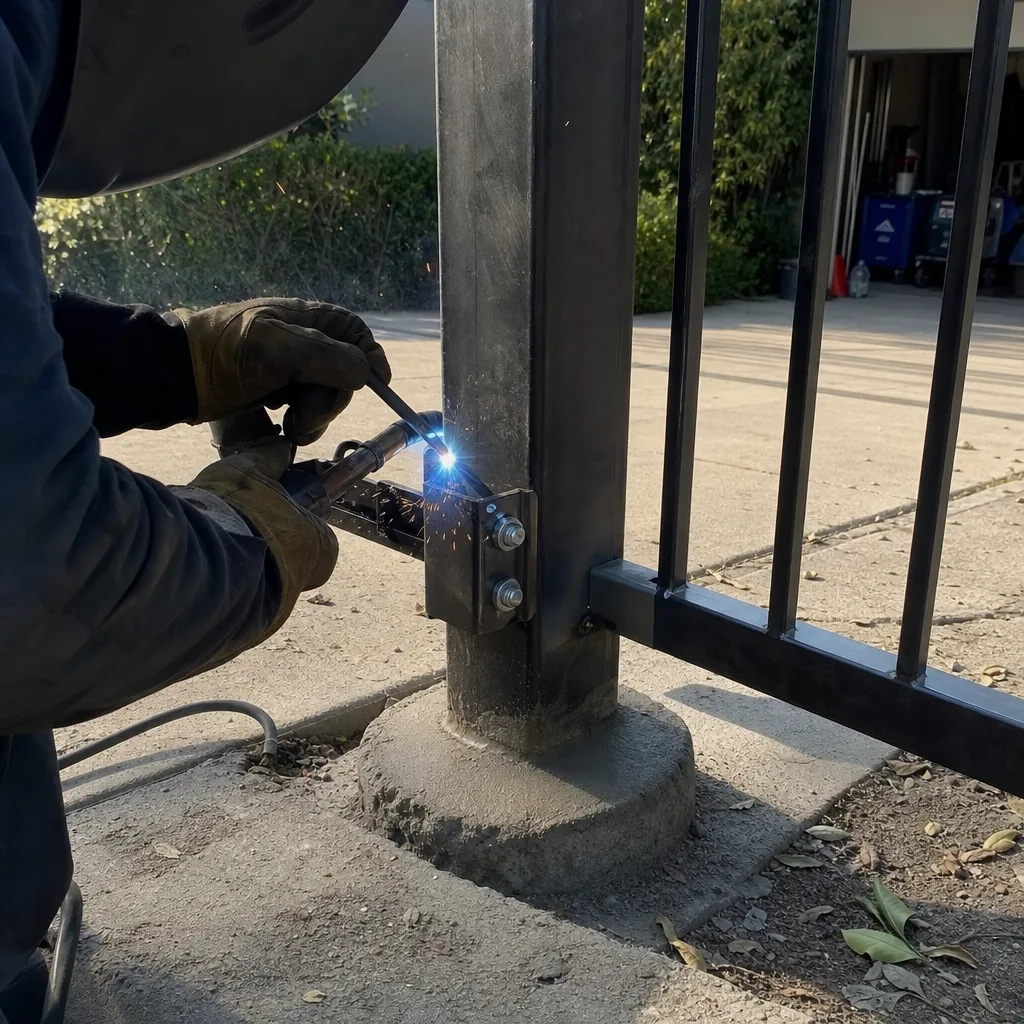
- Gate post or foundation movement. If the gate post is leaning, the conduit is cracked, or the gate doesn’t align with the latch, the repair may require excavation, re-anchoring, or welding. These are structural issues, not adjustments.
- Any limit-switch, photo-eye, or control-board replacement. While the parts themselves are often inexpensive, installing them correctly requires understanding how the system’s safety logic works. A miswired photo-eye can defeat the auto-reverse safety function, which is what prevents the gate from closing on a person, pet, or vehicle.
Vance Gate Repair Arcadia offers free estimates in Arcadia. Call (562) 267-0589 and a live person answers, 24 hours a day, every day. We’ll give you a written price before any work starts, and you get a documented photo record of everything found and adjusted on every visit. If you have a written estimate from another company, we’ll review it as a free second opinion.
For a full overview of the services we provide in Arcadia, see our Gate Repair in Arcadia page or our Gate Installation in Arcadia services if you’re considering a new gate rather than a repair.
Frequently Asked Questions
Four times a year: after the first significant Santa Ana wind event (usually October or November), before winter rain (December), after the rainy season ends (March), and during peak summer heat (July or August). Each inspection takes 15 to 30 minutes and focuses on different components. The March inspection is the most important; it catches problems from both the wind season and the rain season before summer heat amplifies them.
If you do the basic inspections yourself, the cost is mostly your time plus consumables like lubricant ($10 to $20 per year) and lens wipes. For professional seasonal maintenance, most Arcadia gate companies charge between $150 and $350 for a comprehensive inspection and adjustment visit. Vance Gate Repair Arcadia provides a written price before any work starts, so you’ll know the cost before we begin. For a free estimate, call (562) 267-0589.
Santa Ana winds carry fine dust and grit that works into photo-eye lenses, limit-switch housings, chain links, and bearing surfaces. A gate that reverses mid-cycle or refuses to close during wind season often has a photo-eye beam weakened by a dusty lens or a limit switch contaminated with fine debris. Clean the photo-eye lenses first; if the problem persists, the limit switch or chain may need professional attention in Arcadia.
Sealed lead-acid gate batteries typically last two to four years in Arcadia’s climate, but summer heat shortens service life. At 95°F, a 7Ah battery delivers roughly 15 to 20 percent less capacity than at 72°F, and heat accelerates internal chemical degradation. Test the battery every March and monthly during July and August by unplugging the AC supply and running the gate on battery alone. If the gate moves slowly or stops, the battery needs replacement. Expect to pay $40 to $120 for a replacement battery plus labor. Call (562) 267-0589 for an exact quote; estimates are free.
Most common gate repairs in Arcadia, including photo-eye realignment, limit-switch adjustment, chain tensioning, and hinge lubrication, can be completed same-day or next-day. Component replacements like control boards or motors may require ordering parts, which typically takes one to three business days depending on the brand. For urgent repairs, a live person answers at (562) 267-0589 at any hour, and we’ll tell you honestly whether same-day service in Arcadia is possible for your specific problem.
We service nine major gate-automation brands, including Linear, Viking, Ghost Controls, and DoorKing, plus LiftMaster, FAAC, BFT, Elite, and Mighty Mule. Most residential gates in Arcadia use LiftMaster, Linear, DoorKing, or Ghost Controls operators, but we work on whatever motor is already on your property rather than steering you toward a replacement. For brand-specific questions or to schedule a service in Arcadia, call (562) 267-0589 and a live person will answer.
Simple maintenance tasks like cleaning photo-eyes, clearing weep holes, and visual inspections are safe for a homeowner to handle. Anything involving springs, high-tension cables, or electrical wiring inside the control enclosure should be left to a trained technician. Gate springs are under enough tension to cause severe injury if they release unexpectedly, and miswired low-voltage components can defeat safety systems like auto-reverse. If you’re unsure whether a task is safe, call a professional in Arcadia and ask; a quick phone conversation costs nothing.
The Bottom Line
Arcadia’s climate doesn’t beat gate hardware to death in a single dramatic event. It wears it down in a predictable sequence: Santa Ana grit in fall, rain-driven corrosion in winter, and heat-driven battery and capacitor stress in summer. The gate that fails in December was set up for failure in October. The gate that strands you in August was weakened in February. Knowing the sequence means you can interrupt it. Four inspections a year, each focused on the right components at the right time, catches most problems while they’re still cheap to fix. Document what you find with photos, and the next inspection writes itself. If you’d rather have a professional handle it, Vance Gate Repair Arcadia provides a written price before any work starts and a documented photo record when the job is done. Call (562) 267-0589 for a free estimate, any time, any day.
Written by Adrian Vance, Owner at Vance Gate Repair Arcadia, serving Arcadia since 2014.