
Last updated September 20, 2026
Free on-site gate assessment - hinges, posts, and your LiftMaster or Nice gate operator checked before anything is quoted
The assessment is free and the quote is the invoice.
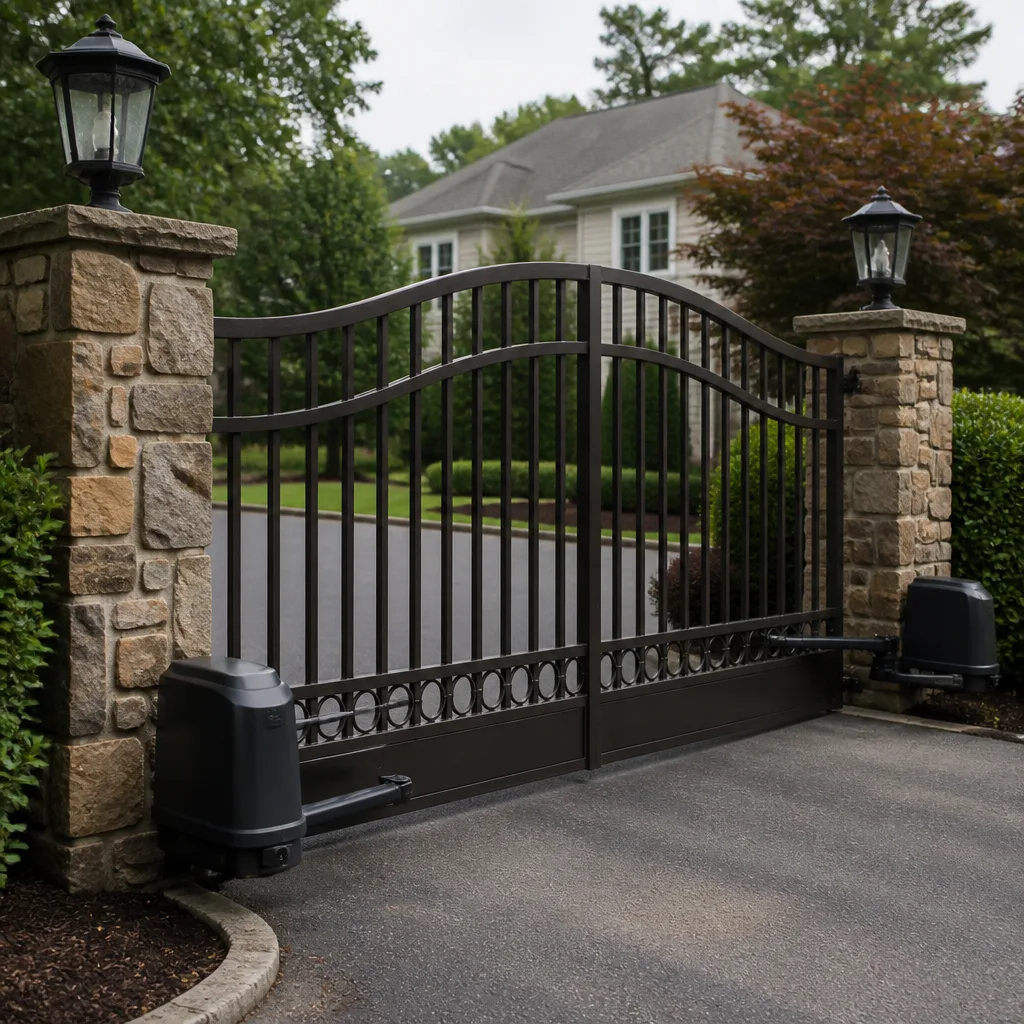
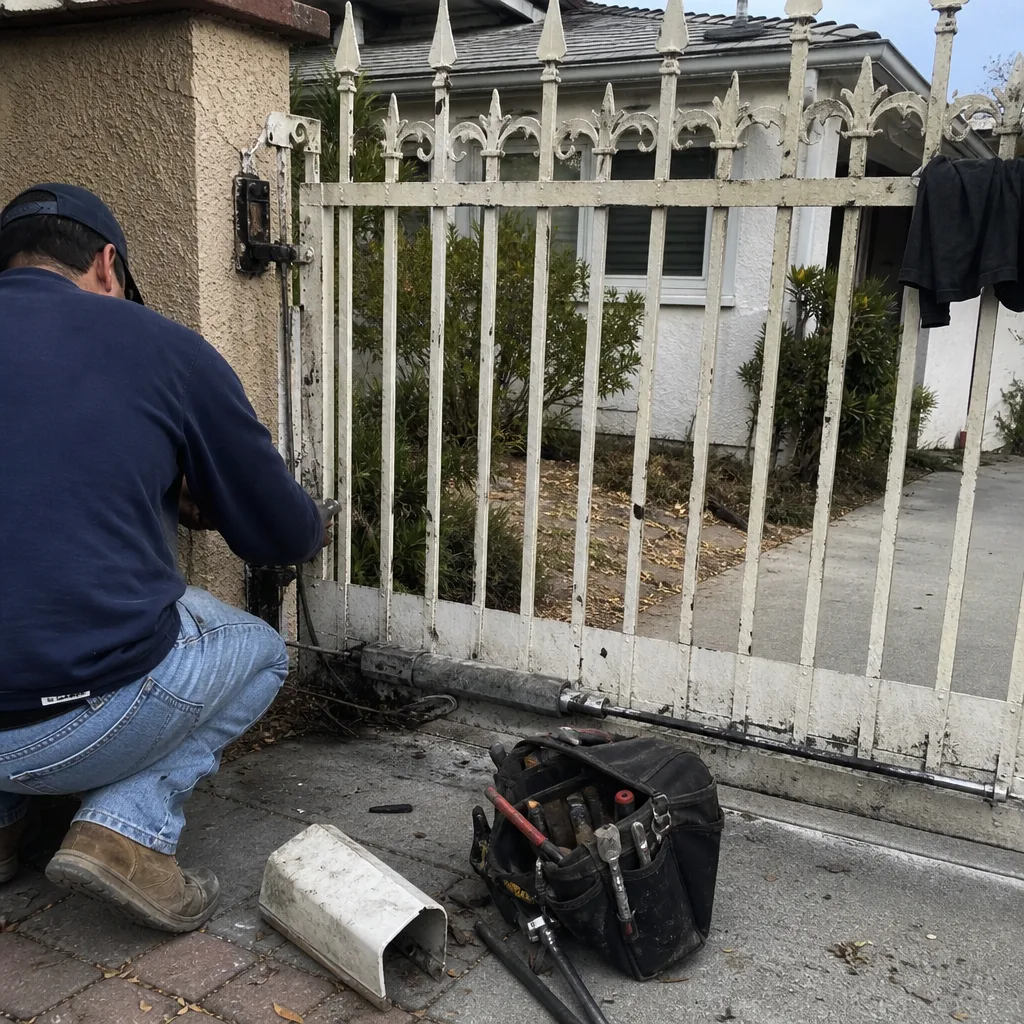 Before
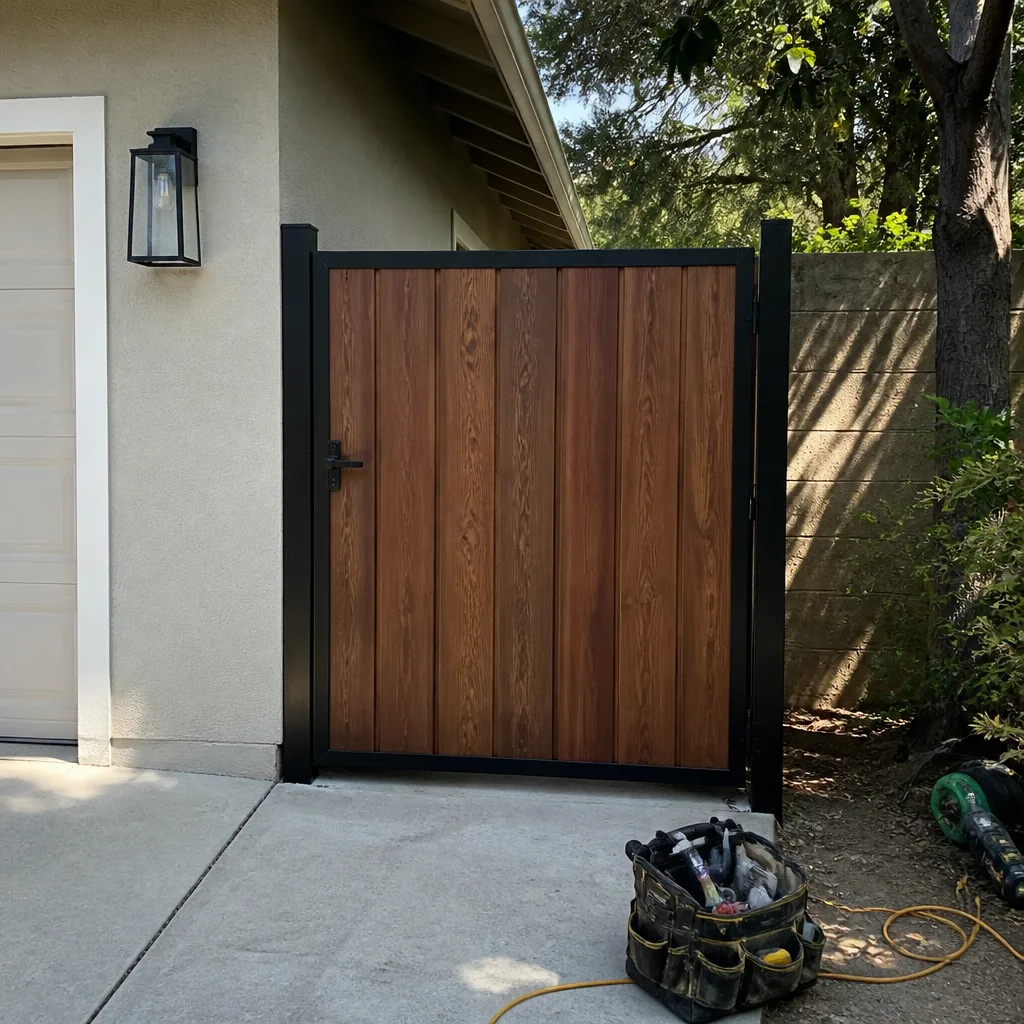 After
After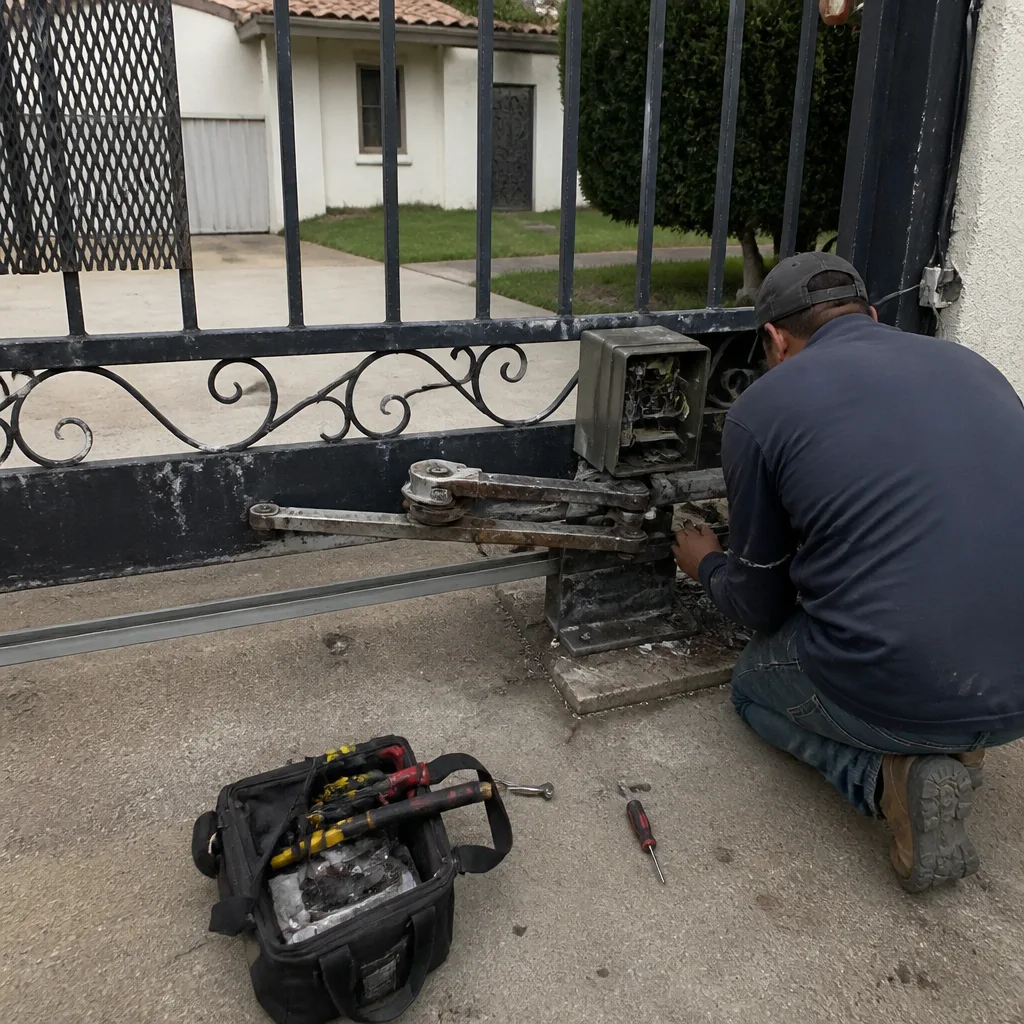 Before
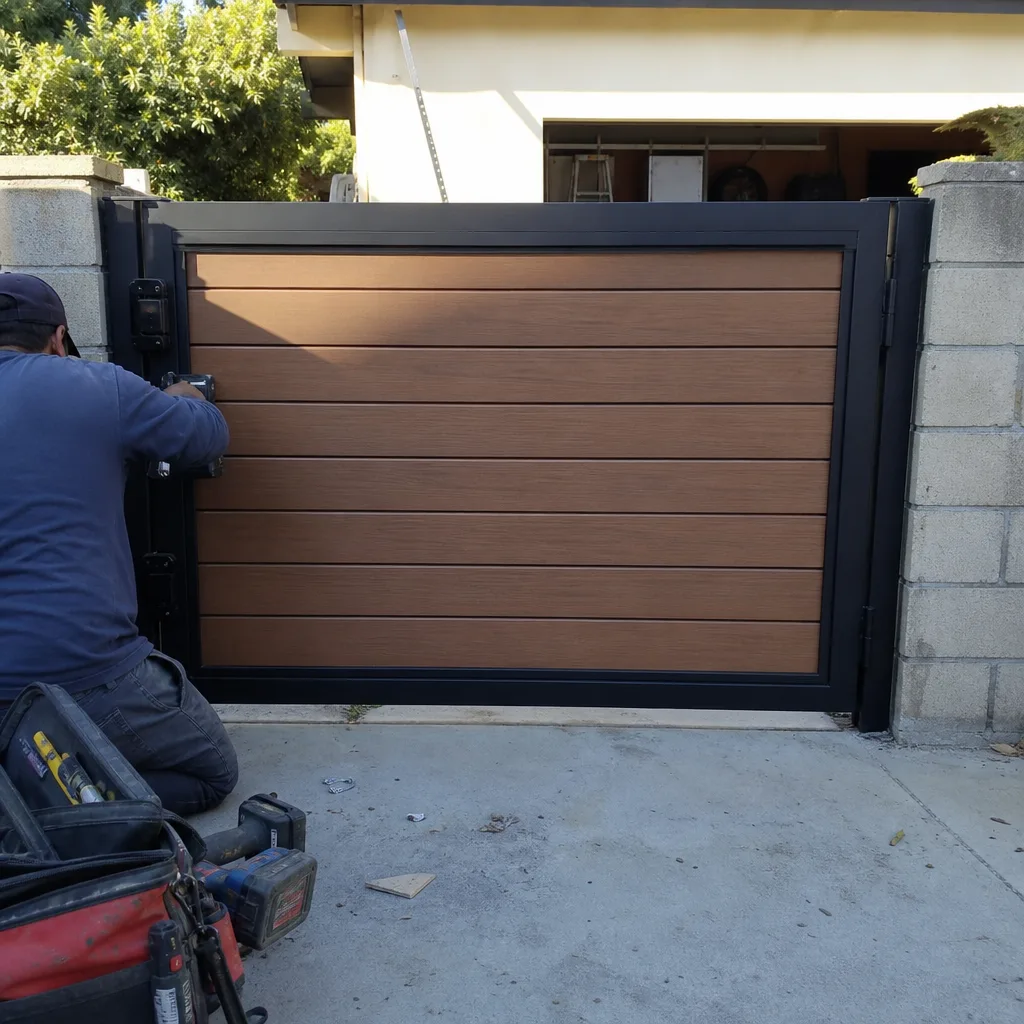 After
After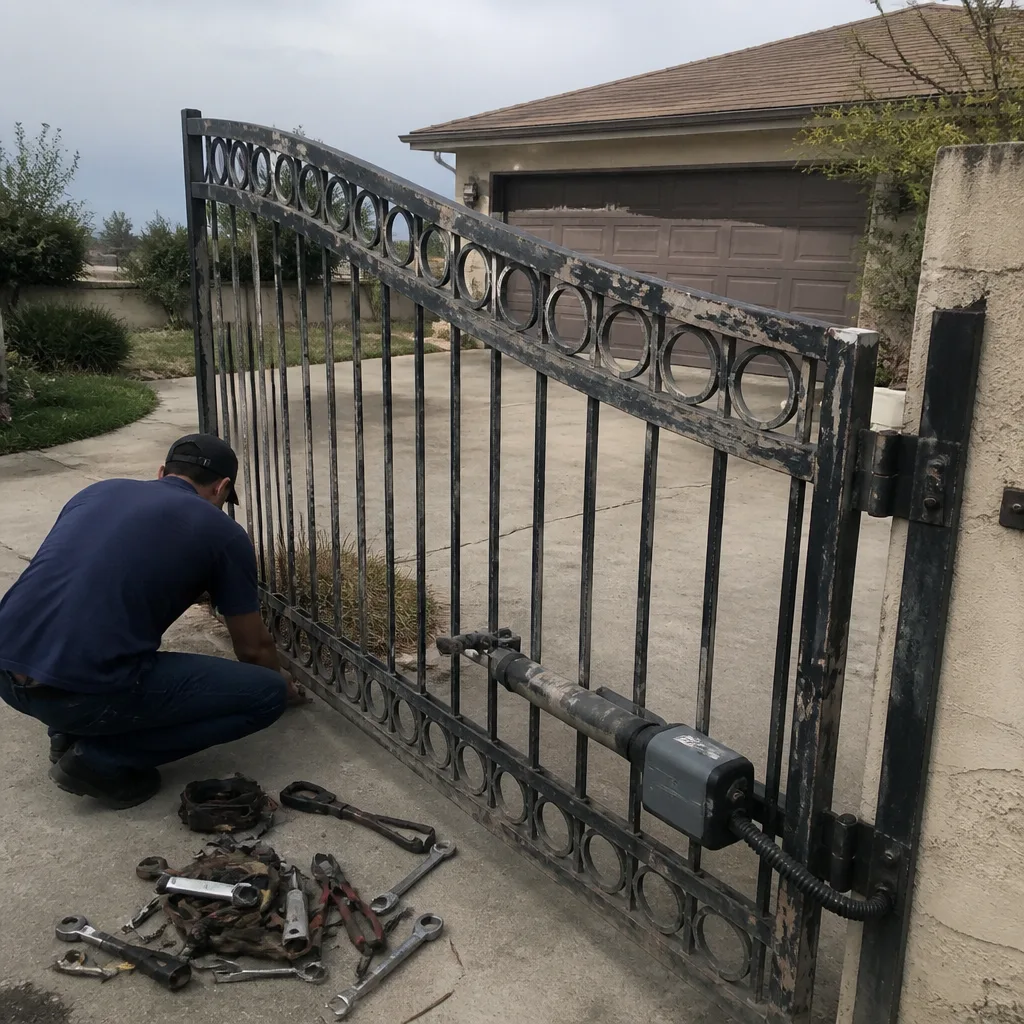 Before
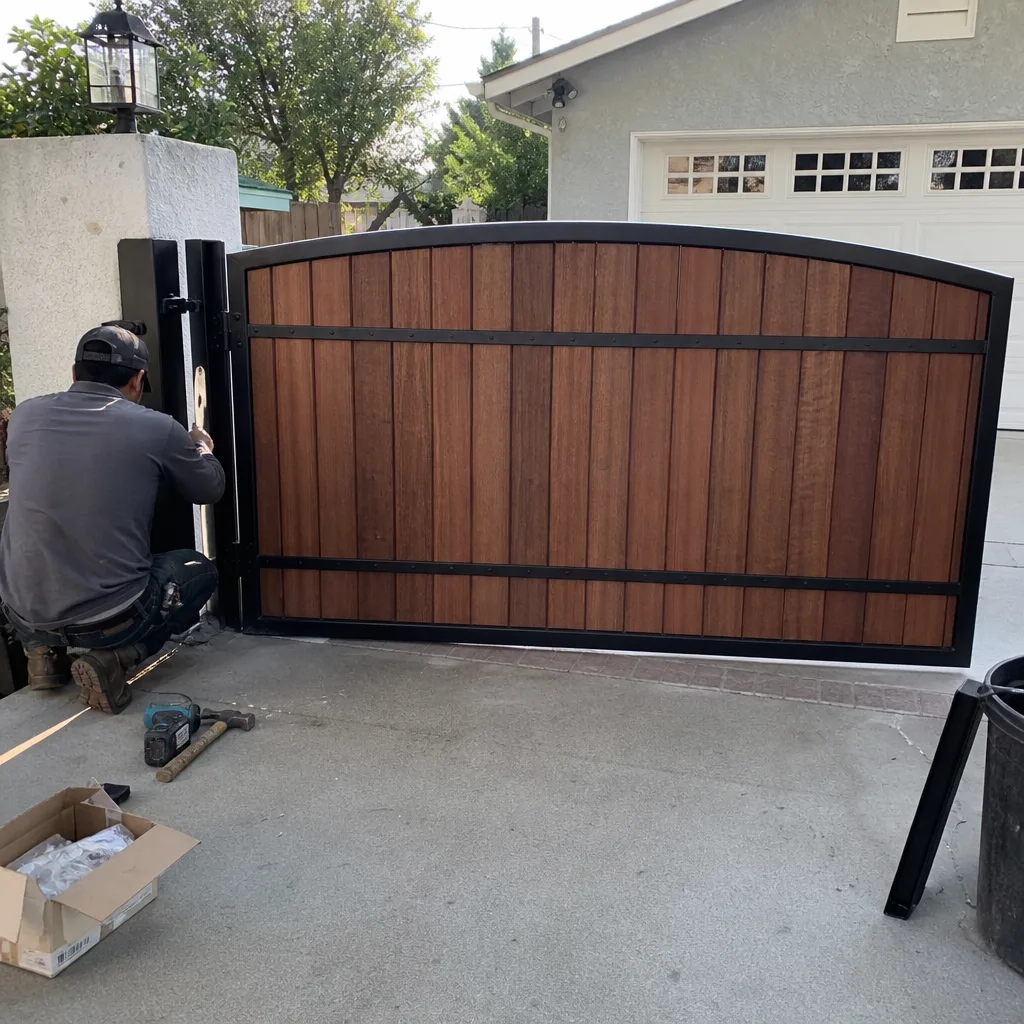 After
AfterGate Repair Warning Signs: A Arcadia Homeowner’s Reference Guide
When a gate reverses for no visible reason, most homeowners call it “acting up.” The gate is actually reporting a specific fault, and the fault code is in the blink pattern on the control board. A gate that groans, hesitates, or refuses to latch is not being temperamental. It is telling you exactly which component is failing, and if you know how to read the signal, you can describe the problem precisely enough to get a written price before a technician ever sets foot on your Arcadia property. This guide gives you that map: symptom to component, noise to cause, blink pattern to fault. For seasonal gate repair care in Arcadia, see our year-round homeowner’s guide. By the time you finish reading, you will know whether your gate needs a minor adjustment or a new motor, and you will know how to document what you are seeing so no contractor can blur the diagnosis.
Quick Answer
Gate warning signs fall into four categories: mechanical resistance (grinding, jerking, slow travel), electrical fault reporting (blink codes, non-response, intermittent function), safety-system degradation (reversing without obstruction, failing to stop under force), and structural wear (sagging, failing to latch, visible hinge displacement). Most warning signs point to a specific component, not a mysterious overall failure. A gate that works manually but not automatically is almost never a motor problem; a gate that reverses randomly is almost never a remote problem. Learning to read the symptom lets an Arcadia homeowner request a written quote without a diagnostic visit, and our step-by-step guide to hiring a gate repair contractor in Arcadia shows you what to ask for.
Table of Contents
- The Symptom Map: What Each Warning Sign Points To
- Reading Blink Codes on LiftMaster, FAAC, and Viking Operators
- Entrapment Sensor Warning Signs: The Safety Liability You Cannot Ignore
- “It Works Fine Manually”: What This Symptom Actually Means
- How to Photograph and Describe Warning Signs for a Written Estimate
- Arcadia-Specific Factors: Climate, Soil, and Gate Wear
- Failing Versus Failed: When a Warning Sign Becomes an Emergency
- Common Mistakes to Avoid
- When to Call a Professional
- Frequently Asked Questions
BeforeAfterThe Symptom Map: What Each Warning Sign Points To
Every gate symptom has a physical cause. The challenge for a homeowner is that two different causes can produce similar symptoms, and chasing the wrong one wastes time and money. Here is the map we use on service calls across Arcadia: what the gate does, what it usually means, and whether the problem lives in the drivetrain (the mechanical path from motor to gate leaf) or the electrical system (the board, wiring, sensors, and power supply).
Symptom: Slow operation, especially when cold or after rain.
- Drivetrain cause: The gate hinges are binding, the chain or belt has stretched, or the drive gear is wearing. In Arcadia, where winter mornings drop into the low 40s, stiffened grease in the hinge bearings is a common culprit. The motor is working harder than it should, and the strain shows up as slow travel.
- Electrical cause: Low voltage at the motor. This may be a failing transformer, corroded wire connections, or a tired capacitor. A motor running on reduced voltage will still move, but it moves like it is wading through mud.
Symptom: The gate reverses before fully opening or closing.
- Safety system cause: This is the classic photo-eye or edge-sensor fault. The gate thinks something is in the way. In most cases we see in Arcadia, the photo-eye is misaligned by an inch or two, or the reflective surface has accumulated dust from the dry summer months.
- Mechanical cause: The gate is meeting physical resistance it interprets as an obstruction. A sticking wheel, a bent track, or a leaf that has sagged enough to drag on the ground can trigger the obstacle-reversal circuit.
Symptom: Grinding, clicking, or rattling during travel.
- Drivetrain cause: Gear wear. Most residential operators use a plastic or nylon drive gear that is designed to strip before the motor burns out. When that gear loses teeth, you hear a rhythmic click or grind. In our experience, this is the single most common mechanical failure on swing gates in Arcadia’s older neighborhoods, where operators from the early 2010s are reaching end-of-life on their original gears.
- Electrical cause: A failing capacitor can make the motor chatter. The sound is usually a rapid clicking rather than a mechanical grind, and it often comes with hesitation on startup.
Symptom: The gate closes but will not latch, or blows open in wind.
- Mechanical cause: The gate leaf has sagged. Hinges wear, posts shift, and the latch no longer aligns with the striker. This is almost never an electrical problem, and we have seen Arcadia homeowners replace operators unnecessarily when the actual issue was a quarter-inch of hinge wear.
- Structural cause: The post itself has moved. In some Arcadia neighborhoods with expansive clay soils, post movement is more common than the average homeowner expects. A post that has shifted even half an inch changes the latch geometry enough to prevent secure closing. For a deeper look at how soil and foundation conditions affect gate structure, our Gate Installation in Arcadia guide covers site preparation and post-setting in local soil conditions.
Reading Blink Codes on LiftMaster, FAAC, and Viking Operators
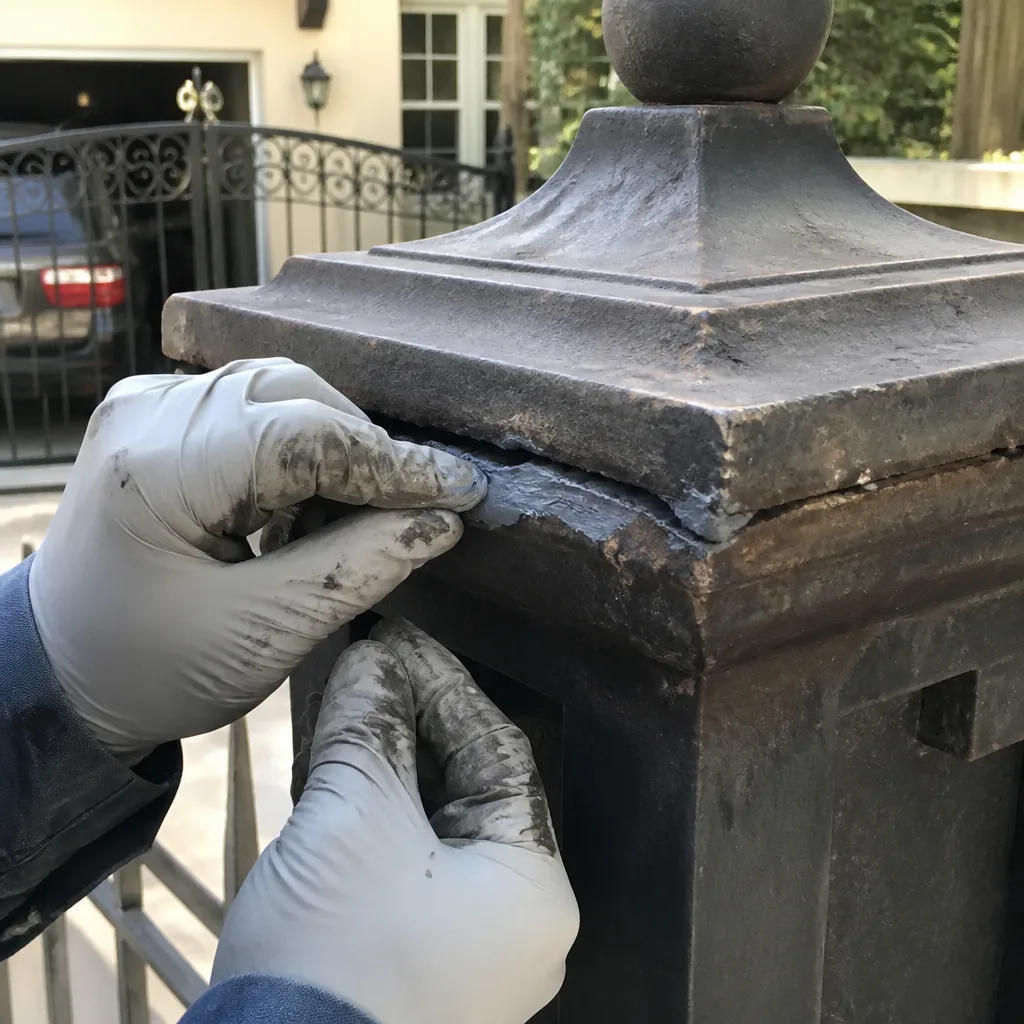
Before you call anyone, look at the control board. Most operators installed in Arcadia in the last decade have an LED that blinks in a specific pattern when a fault is present. You do not need to open the housing, and you do not need to touch the board. Look for the small window on the side of the operator or a translucent section of the cover. The light is doing the work.
Here is how to read the three most common operators we see on Arcadia driveways.
LiftMaster (most common on LA-series and RSW-series swing operators)
- Count the blinks, then the pause. The pattern repeats.
- 1 blink, pause, repeat: The operator is receiving a force signal from the safety inputs. Check for obstruction or a misaligned photo-eye.
- 2 blinks: The battery backup is low or failing. In Arcadia, where most homes with gate operators also have a battery backup, this is a common call after any extended outage.
- 3 blinks: The operator has reversed twice in a row. The control board is telling you there is resistance or a sensor trip.
- 5 blinks: Motor thermal overload or a failed capacitor.
FAAC (common on higher-end European operators installed on custom Arcadia gates)
- The FAAC board uses combinations of a red LED and a green LED, not a simple blink count.
- Red steady, green off: No power to the control board, or the board fuse is blown.
- Red steady, green blinking: A safety device is triggered. The FAAC is refusing to operate because it sees an obstruction.
- Both LEDs flashing together: The operator is in programming mode or has lost its limits. This often appears after a power surge, which Arcadia homeowners report during early-fall wind events.
Viking (common on heavier ornamental gates and some garage-side pedestrian gates)
- Viking boards use a single LED that blinks in a simple repeating sequence.
- 2 blinks: The APEX board has lost communication with the limit switch. The gate will usually move a few inches and stop.
- 3 blinks: The board has detected an obstruction or force fault. Check for binding at the hinge.
- 4 blinks: The receiver or loop detector is reporting a fault. This is intermittent and often tied to moisture in the junction box.
Take a video of the blinking pattern. Thirty seconds is enough. When you call for a quote, describe the pattern: brand, number of blinks, pause length. A contractor who knows these boards can tell you over the phone whether you are looking at a sensor adjustment or a board replacement, and the written estimate will be more accurate before the first site visit. If the operator in question is giving you trouble beyond what a blink code can explain, our Gate Motor & Opener in Arcadia page covers how we diagnose and quote motor work on all nine brands we service.
Entrapment Sensor Warning Signs: The Safety Liability You Cannot Ignore
This is the section that matters most, and it is the one most homeowners skip because the gate still works. A gate that does not stop when it meets resistance, or that reverses unpredictably, is not a minor annoyance. It is a safety hazard that exists under California’s gate safety regulations and UL 325, the standard that governs automatic gate operators. An entrapment injury on a residential gate is rare, but the liability is real, and the warning signs are usually present for months before anything happens.
Here is what we tell every Arcadia homeowner to watch for:
- The gate does not reverse when you push against it during closing. Every automatic gate installed after 2001 must have an inherent entrapment protection system: either contact sensors (edge sensors that reverse on contact) or non-contact sensors (photo-eyes that stop the gate before contact). If you can push against the closing gate and it keeps pressing, the force setting is too high or the sensor is dead. Call this in.
- The gate reverses without anything in the path. The photo-eye is misaligned or failing, and the gate is defaulting to safe mode. This is annoying, but it is also the system telling you the sensor is not reliable. A sensor that trips randomly may fail to trip when it matters.
- The gate freezes mid-travel, then resumes after a delay. This is often the thermal overload on the motor engaging. The motor is overheating, usually from binding resistance. The overload is doing its job, but the binding that triggered it also makes the force setting unreliable.
- You hear a soft clicking sound when the gate reaches the fully closed position. That is often the edge sensor or limit switch failing to register. The gate may overtravel slightly and put pressure on the closed position, which wears the hinge and strains the frame.
None of these are signs to watch and wait on. If the entrapment protection is not working reliably, the gate should be taken out of automatic mode until it is corrected. That means disconnecting the opener and operating the gate manually. We know that is inconvenient. It is also the correct thing to do when the alternative is a gate that might not stop for a child or a pet. A trained professional should handle any work involving gate force settings, photo-eye alignment, and edge sensor replacement. The spring tension and pinch points on a large swing gate are dangerous enough that a homeowner should not be adjusting force limits by feel.
“It Works Fine Manually”: What This Symptom Actually Means
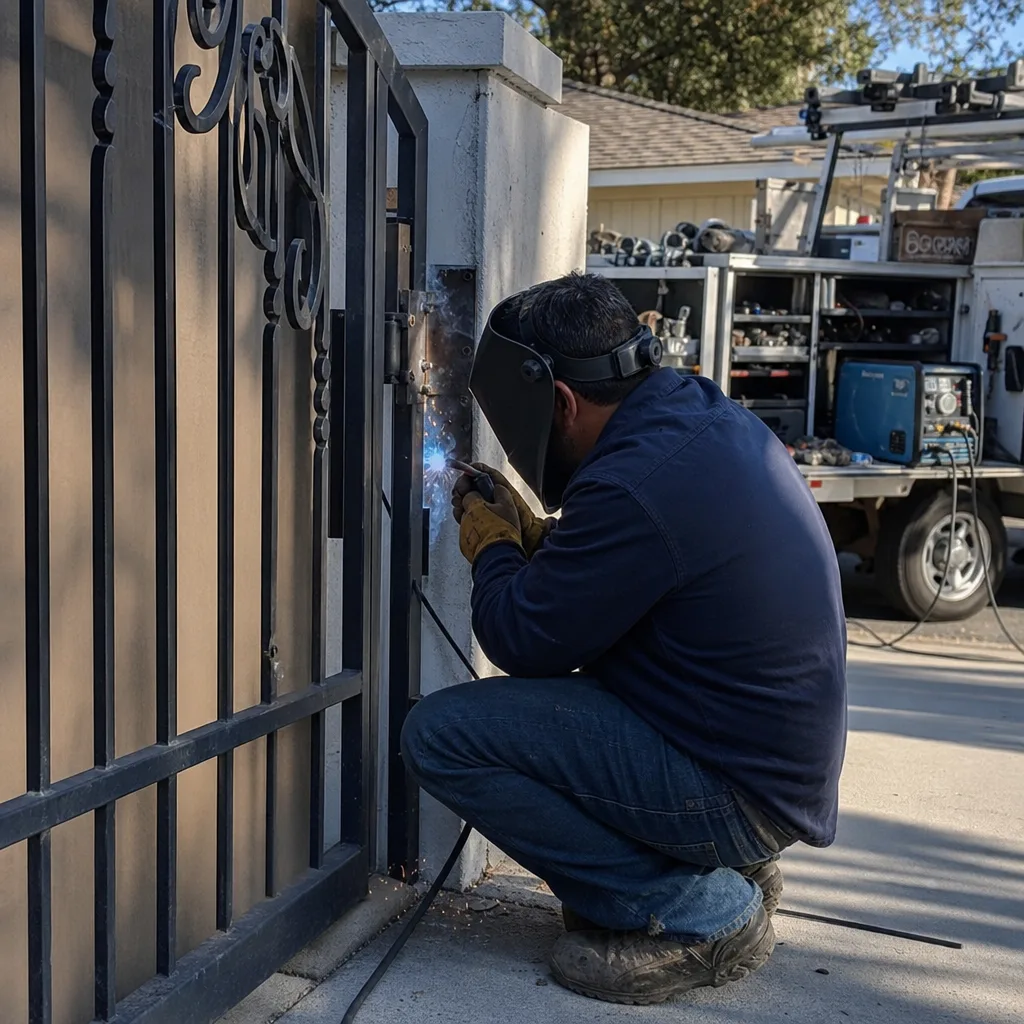
This is the most useful diagnostic sentence in gate repair, and we hear it constantly. A homeowner will say, “The gate works fine when I open it by hand, but the motor won’t move it.” To most people, that sounds like a motor problem. It is almost never a motor problem.
When a gate moves freely by hand, the mechanical path is not binding. The hinges are turning, the wheels are rolling, the leaf is not dragging. The problem is either in the power supply to the motor, in the control board’s ability to command the motor, or in the connection between the operator and the gate leaf.
The most common causes, in order of frequency on our Arcadia service calls:
- The operator’s drive gear or sprocket has stripped. The motor spins, but the mechanical connection to the gate is broken. You may hear the motor hum or see the shaft turn. We see this most often with nylon drive gears that were designed to fail as a sacrifice, protecting the motor.
- The capacitor is dead. A single-phase AC motor needs a capacitor to start. Without it, the motor hums but cannot begin rotation. This is a ten-minute fix with the right part, and the operator is often fine.
- The control board is not sending voltage to the motor. A relay on the board has failed. The board thinks it is commanding the motor, but the voltage is not arriving. This is common on LiftMaster and BFT boards after years of use.
- The disconnect lever or clutch is partially engaged. On many operators, there is a manual release mechanism. If that lever is not fully seated, the operator spins while the gate stays still.
The reason this distinction matters is cost. A motor replacement on most residential swing gates runs between $600 and $1,400 installed, depending on the brand and whether the arm bracket is intact. A capacitor replacement, drive gear, or relay repair is usually under $300. If you tell a contractor “the motor is dead” and they quote a motor, you may pay for a part you do not need. A contractor who asks you to describe what the gate does when you press the remote, and whether the motor makes any sound at all, is doing the diagnostic work that protects you from that.
How to Photograph and Describe Warning Signs for a Written Estimate
This is where you can save yourself a service call. A precise description, backed by a few photos, lets a contractor provide a written estimate without standing on your driveway. That is the entire point of the first Haven Standard clause: the price is written before anyone picks up a tool. But a written price is only accurate if the diagnosis is accurate, and the diagnosis starts with what you tell us.
Here is the process we recommend to every Arcadia homeowner who wants a real number on the page, not a range that could mean anything.
- Take a photo of the operator’s brand label and model plate. The label is on the side of the operator housing. It tells us the brand, model, and sometimes the year of manufacture. With that, we know which parts are available, whether the board is still supported, and what the common failure points are for that model.
- Take a video of the gate operating. One full open cycle, one full close cycle. If the gate is malfunctioning, film the malfunction. If there is a sound, get close enough that the sound records clearly. Fifteen seconds of gear grinding tells us more than a paragraph of description.
- Count the blinks and write them down. Brand, number of blinks, length of the pause. Do not open the housing. The window is enough.
- Photograph the hinge and latch area from both sides. A sagging gate shows up as a gap at the top hinge or wear at the bottom. The latch alignment tells us whether the post has moved.
- Write down the last time the gate worked normally. Was it after a storm? After a power outage? After a gardener worked near the gate? The timeline is a diagnostic tool.
Send the photos and description with your request for a quote. A contractor who gives you a written number based on the evidence you sent is treating the job the way it should be treated: as a mechanical diagnosis, not a sales opportunity. If the contractor refuses to quote without a site visit, they are within their rights, and some jobs genuinely require eyes on the ground. But for most warning signs, the evidence is in the symptoms, and the symptoms are portable.
Arcadia-Specific Factors: Climate, Soil, and Gate Wear
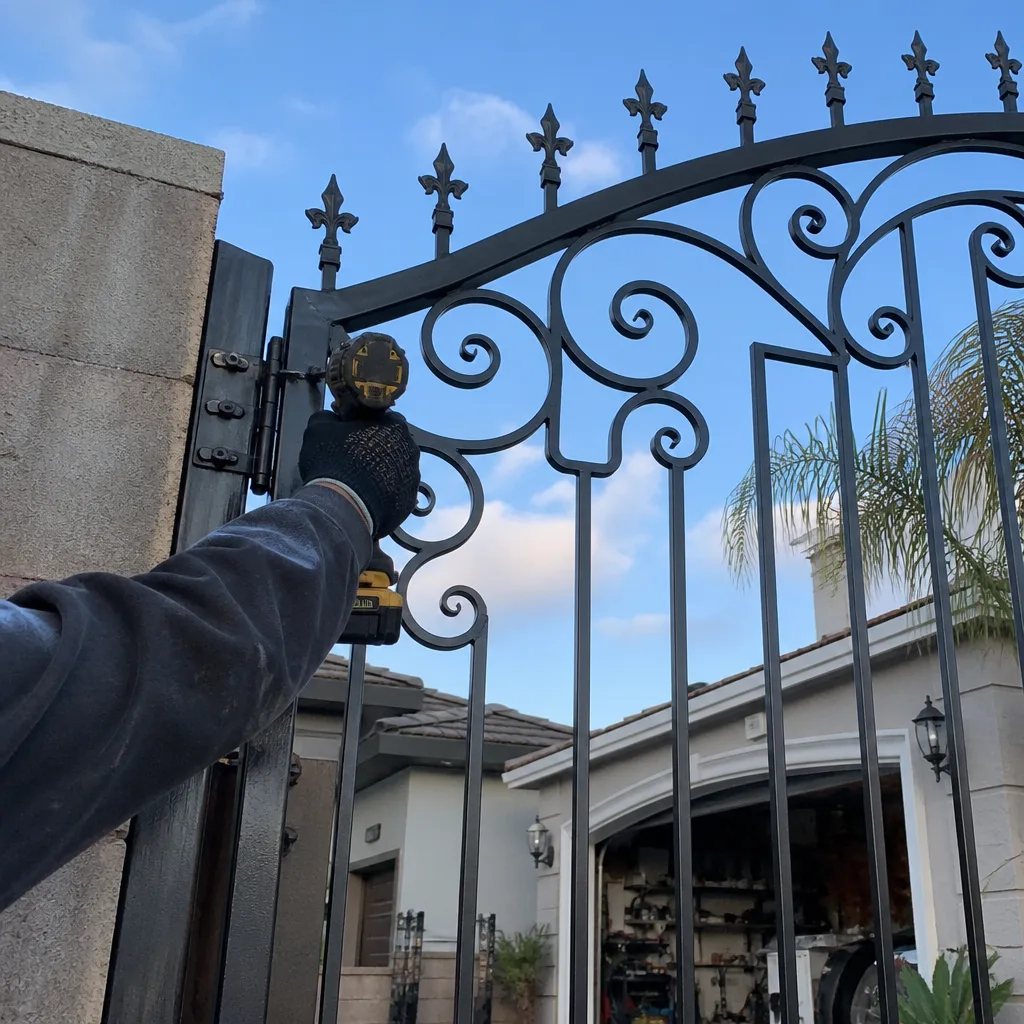
Your gate lives in Arcadia. It faces the same conditions every Arcadia driveway gate faces: hot dry summers, cool damp winters, occasional Santa Ana wind events that throw debris and strain the leaf against the operator, and soil conditions that vary by neighborhood. These are not trivial factors. They determine which components wear first and which warning signs are most likely to appear.
Heat and sun exposure. Arcadia summers routinely push into the high 90s. The control board inside the operator housing is rated for some heat, but repeated thermal cycling ages capacitors and solder joints. We see more capacitor failures in Arcadia gates that face west and get direct afternoon sun than in gates that sit in shade. The plastic drive gear that most swing operators use also becomes more brittle with heat cycling, which accelerates gear wear.
Rain and condensation. Arcadia gets most of its rain between November and March. Low-voltage wiring connections in the junction box at the gate base corrode when moisture sits in the box. The photo-eye lenses accumulate a film of dust during the dry months, then the first rain turns that film into a smeared coating that misaligns the beam. If your gate starts acting up in December after working fine in October, condensation in the wiring is a strong suspect.
Wind and debris. Santa Ana wind events are a fact of life in the San Gabriel Valley. A heavy ornamental gate in a north-facing Arcadia driveway is a sail. The operator’s force settings have to be set correctly, or the gate will fight the wind and trigger reversal. Some homeowners respond by pushing the force setting higher, which is the wrong response: it masks the real problem and increases the entrapment risk we discussed above.
Soil and post movement. Arcadia sits on a mix of alluvial soils from the San Gabriel Mountains. Some neighborhoods have expansive clay that swells with winter moisture and shrinks in summer. Over years, a gate post in expansive soil can shift enough to throw off the latch alignment and add drag to the hinge. If your gate suddenly will not latch in January but latches in August, post movement from soil moisture is a real possibility, and the fix may be post re-setting rather than latch adjustment. Our Gate Repair in Arcadia page covers how we assess post movement and hinge wear during a standard repair visit.
Failing Versus Failed: When a Warning Sign Becomes an Emergency
There is a difference between a gate that is showing early wear and a gate that has crossed into active failure. The warning signs guide exists to help you act on the early signals before the gate stops working or becomes dangerous. But every Arcadia homeowner should also know which signs mean the gate should be secured out of service until a professional arrives.
A gate that fails while open is an inconvenience. You can operate it manually, and your driveway access is not blocked. A gate that fails while closed is a different problem. If the operator is dead and the gate is latched, can you even get a vehicle out? Many Arcadia homes have a pedestrian gate beside the driveway gate, but not all do. If the gate fails closed and will not release, the urgency changes. A same-day response is the difference between a delayed morning and a day where you cannot leave your own property.
Signs the gate has crossed into flagrant failure:
- The operator makes a continuous humming or grinding sound with no gate movement. The motor is running under load, and something is about to fail catastrophically.
- The gate moves a few inches and stops, every time, on the same spot. This is a travel or limit fault, not an intermittent nuisance.
- Smoke, a burning smell, or visible scorching near the operator housing. Kill the power at the breaker and do not operate the gate.
- The gate leaf has dropped visibly and drags on the ground or the track. The structure is failing, not just the automation.
None of these are a “keep an eye on it” situation. Secure the gate, cut power if there is any sign of electrical damage, and call. A live person answers the phone 24 hours a day, and the same-day response for a gate that has failed closed is part of the service, not an upcharge.
Common Mistakes to Avoid
- Replacing the remote battery before checking anything else. If the gate makes no sound and the operator LED is dark, the problem is not the remote. If the gate makes a sound and does not move, the remote is working. A dead remote battery is one of the least common failure points on an automatic gate, yet it is the first thing most homeowners try.
- Adjusting the force setting to “fix” a reversing gate. The force setting is an entrapment safety feature. Turning it up to stop nuisance reversals is the equivalent of disconnecting the seatbelt buzzer because it is annoying. You have made the problem quieter and the gate more dangerous.
- Saying “the motor is dead” without evidence. As covered above, a gate that works manually but not automatically is rarely a motor failure. A precise symptom description gets you a more accurate quote.
- Ignoring the blink code. The blinking LED on the control board is the operator’s diagnostic readout. It is free information. Ignoring it and calling a contractor who has to start from scratch is leaving money on the table.
- Greasing the hinges with whatever is in the garage. White lithium grease on a gate hinge may quiet it temporarily, but it traps dust and creates a paste that accelerates wear. Gate hinges in Arcadia’s dry, dusty summers need a dry lubricant or a proper bearing service, not a spray can from the toolbox.
- Waiting for the “next service” to mention a small noise. A small rhythmic click today is a stripped gear in three months. We have documented thousands of cases like this at Vance Gate Repair Arcadia home since Adrian Vance founded the company in 2014. The earlier the symptom is reported, the cheaper the fix.
- Using a handyman for entrapment sensor work. The force setting, the photo-eye alignment, and the edge sensor are governed by UL 325 standards and California safety requirements. A general handyman may not know what the permitted force threshold is or how to verify it. Gate automation is a specialized trade, and the safety margin is not forgiving.
When to Call a Professional
You should call when the warning sign involves any of the following: entrapment sensors that are not working reliably, any sign of electrical failure including burning smells or scorching, a gate that has failed closed and blocks your access, a visibly sagging or dragging gate leaf, or grinding that has become constant. These are not DIY situations, not because a homeowner cannot learn, but because the cost of getting it wrong is a gate that hurts someone or a repair that fails again in a month. A professional will document what was found, set the force and travel limits correctly, and leave you with a record of the work. For reliable gate repair in Arcadia, call (562) 267-0589. Vance Gate Repair Arcadia offers free estimates in Arcadia. Call (562) 267-0589, describe the warning sign, and get a written price before anyone picks up a tool.
Frequently Asked Questions
Most single-component repairs on residential gates in Arcadia run between $180 and $400. That covers a capacitor replacement, photo-eye realignment, relay replacement, or hinge adjustment. Full operator replacement, when it is actually needed, runs between $600 and $1,400 for a swing gate depending on the brand and whether the arm bracket is intact. Every price we give is written and agreed before work starts, so the number on your invoice matches the number on your quote. Call (562) 267-0589 for a specific quote based on your gate’s symptoms.
Yes. A live person answers the phone 24 hours a day, seven days a week, and a gate that has failed closed is treated as an emergency. Same-day response is available for Arcadia and the surrounding areas. Call (562) 267-0589 and describe what the gate is doing.
Probably not. A gate that moves freely by hand has a functioning mechanical path. The problem is usually in the drive gear, capacitor, control board relay, or disconnect mechanism, all of which cost less than a motor replacement. Send us a video of what happens when you press the remote, and we will give you a written estimate based on what the evidence shows. Gate motor and opener repair in Arcadia starts with the symptom, not with the sales pitch.
Random reversal is almost always a safety sensor issue. The photo-eye is misaligned, the lens is dirty, or the edge sensor is failing. In Arcadia, where dry-season dust coats the lenses and winter rain smears the coating, this is one of the most common calls we handle. A misaligned photo-eye is usually a same-visit fix. A failing edge sensor may require replacement, which we quote in writing before proceeding.
Count the blinks between pauses. One blink indicates a safety input trip. Two blinks indicates a battery backup fault. Three blinks indicates the operator has reversed twice and is in fault mode. Five blinks indicates thermal overload or a failed capacitor. Take a video of the pattern and send it with your quote request. The blink code is diagnostic data, and it comes to us free.
We service and repair all of those brands, plus LiftMaster, FAAC, DoorKing, Elite, and Mighty Mule. The operator on your gate does not determine who can service it. A contractor who tells you the brand is “obsolete” and you need a full replacement may be telling the truth or may be steering you toward a sale. We quote repair on the existing motor first, and replacement only when repair is no longer cost-effective. For an honest assessment of your current operator, call (562) 267-0589.
The Bottom Line
A gate that is making a noise, moving differently, reversing unexpectedly, or showing a blinking light is giving you a diagnostic report. The information is there. The question is whether you read it or ignore it. Arcadia homeowners who learn the symptom map, read the blink codes, and document what they see are the ones who get accurate written quotes and avoid paying for parts they do not need. The common thread is evidence: what the gate is doing, what the light is saying, what the photo shows. A contractor who works from evidence is a contractor who writes the price before the work and leaves a documented record after it. Browse our more guides & resources for additional homeowner tips. That is how we have worked since 2014, and it is how every gate repair should work.
Written by Adrian Vance, Owner at Vance Gate Repair Arcadia, serving Arcadia since 2014.